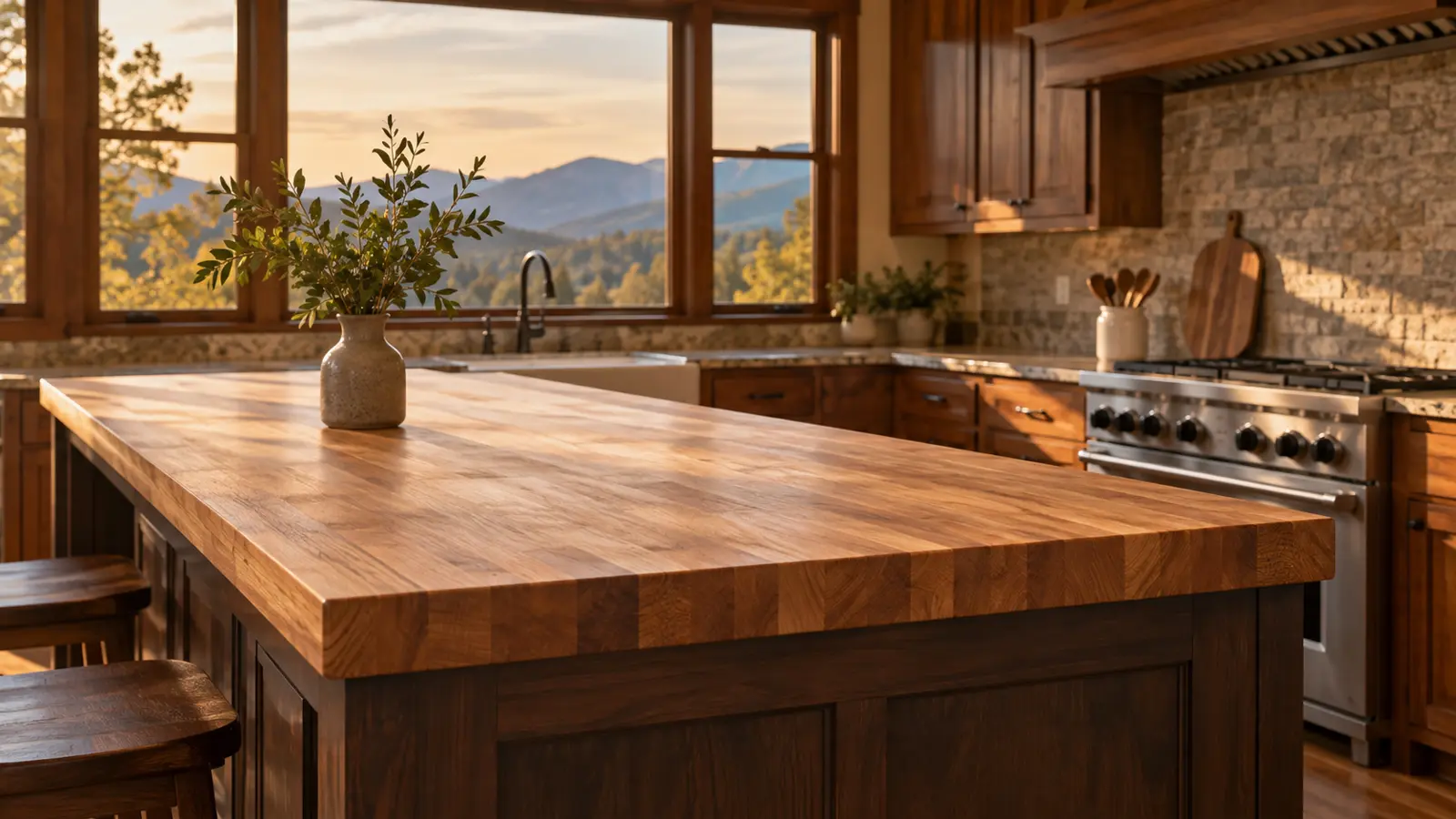
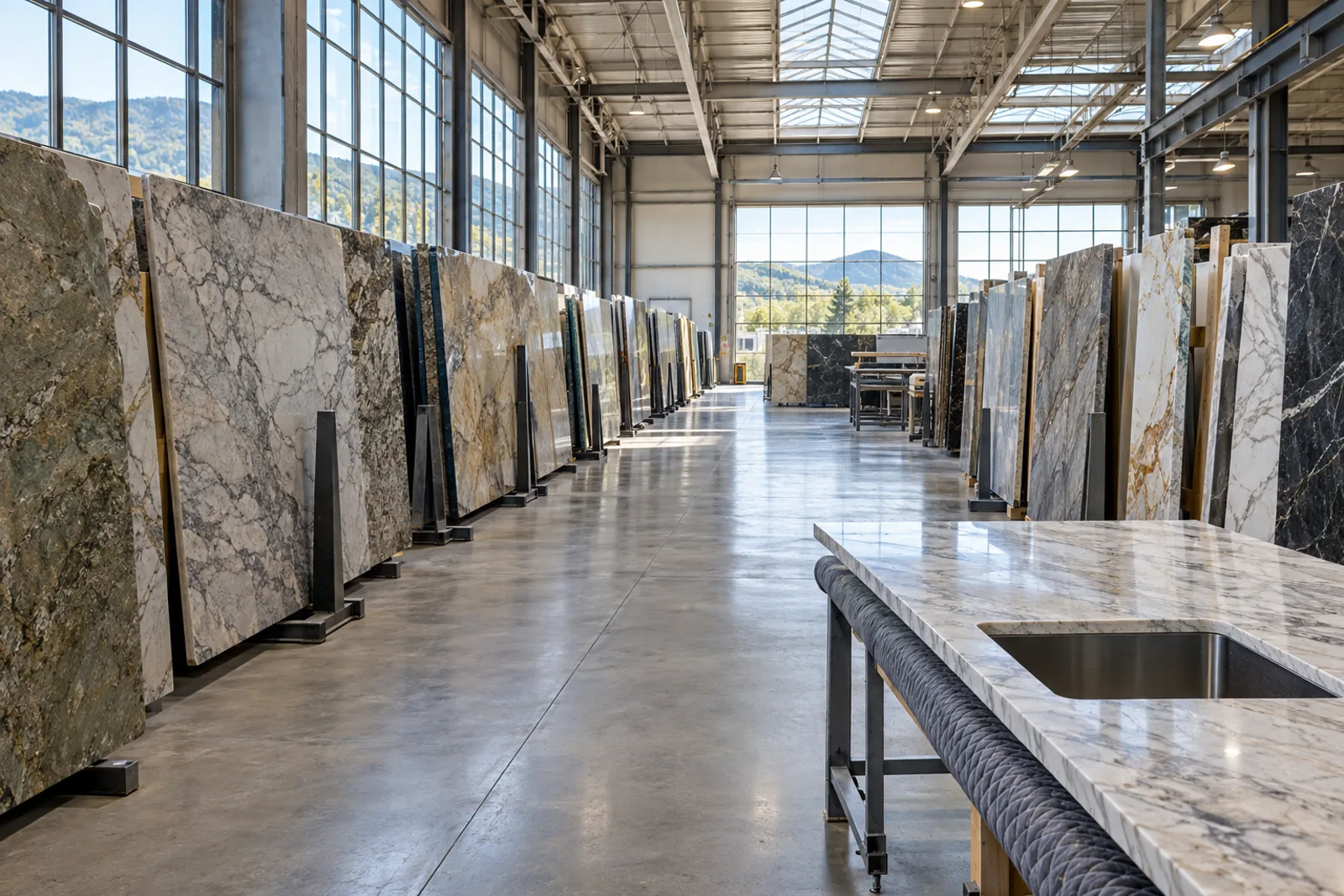
The water drop test
Put a few drops of water on a bare spot and give it a little time. Beads mean the seal is holding. A dark patch that spreads into the stone means moisture is getting in, and it is time to reseal.

Our countertop sealing & polishing in Asheville, NC protects porous stone from stains and restores a tired shine. Buncombe Custom Countertops tests how your top is behaving, then seals what needs sealing and polishes what has gone dull, rather than selling you work you do not need.
Get a free countertop estimate
Natural stone is full of microscopic pores, and a sealer fills them so liquids sit on the surface long enough to be wiped away. Kitchens are hard on stone, because oil, acids, coffee and wine all show up there daily. Without that protection, oil, wine and coffee can soak in and leave stains that are hard to remove. A good sealer is invisible. It does not add gloss or change the color of the stone.
Polishing is a separate job, and it deals with the surface rather than the pores. Serving Asheville, Candler and Arden, we check both at the same visit, so you know whether your counters need sealing, polishing, or neither before a dollar is spent.
Why Buncombe Custom Countertops
We test first, then treat only what needs it.
You do not need a calendar to know when it is time. Stone tells you, if you ask it the right way. The test takes a minute, uses nothing but water and is worth repeating a few times a year, especially around the sink and the cooktop where the sealer wears out first. Dense, low-absorption stones can go for years, while softer or more open stones need attention sooner. These are the signs and checks we use:
Put a few drops of water on a bare spot and give it a little time. Beads mean the seal is holding. A dark patch that spreads into the stone means moisture is getting in, and it is time to reseal.
Oil soaks into stone more readily than water. A drop of cooking oil near the cooktop that leaves a dark spot shows the pores are open, even when water seems to bead.
Dark rings that appear under bottles and cups and do not dry out are a clear signal that moisture is getting in.
Pale stones show absorption faster than dark ones, so test the lightest area of the counter first. A dark granite may look fine and still be due.
Granite, marble and quartzite each take sealer differently, and engineered quartz is non-porous and does not need sealing at all.
Sealer goes onto stone that is spotless and completely dry, or the product will trap moisture and residue. We remove grease and soap film with a stone-safe cleaner, let the stone dry, then apply a penetrating sealer chosen for the material. It is left to soak in for the time the manufacturer specifies, then the excess is wiped away before it can dry into a haze.
Penetrating sealers work inside the stone, so they do not wear off the way a surface coating does. Many last for years, though the interval depends on the stone and how hard the kitchen works. After the sealer has cured, we repeat the water test to make sure it covers evenly, especially near the sink, where the stone gets the most moisture.
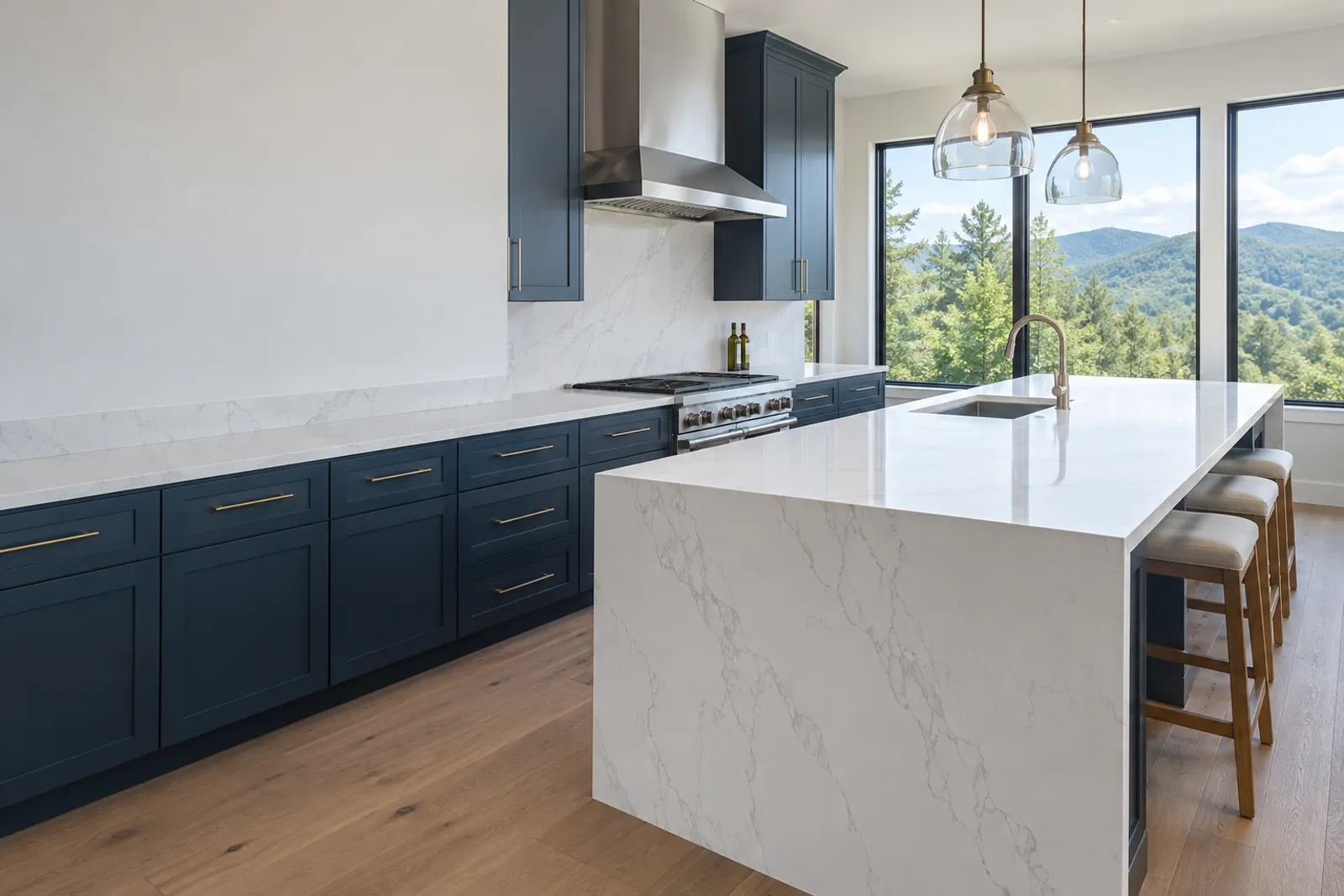
A dull countertop is not always a sealing problem. Daily wiping, cleaners and years of use can wear down the polished face, and hard-water film can add to the effect. Polishing deals with that, and the right approach depends on how deep the dullness goes.
A cloudy surface is sometimes just residue, and a thorough clean can bring back some shine. We try that first, because it costs less than a mechanical polish.
Diamond pads in progressively finer grits smooth the stone and bring up its natural gloss. It works well on granite and quartzite that have lost their luster.
If you prefer a quiet satin surface to a high gloss, we can hone a polished top. It hides fingerprints and water spots and updates a kitchen without a new slab.
A polished surface is sealed again afterward and kept with mild soap and water. Avoid harsh acidic cleaners that dull it again.
Different stones ask for different care, and the same product can help one and harm another. Granite is the most forgiving, and a good sealer protects it for years. Marble is softer and reacts to acids, so it often needs more frequent attention and can show etch marks that sealing will not prevent. Quartzite sits between them, and the tests tell us which category a given slab falls into.
A short guide:
If you are unsure what your top is made of, we can identify it at the visit.
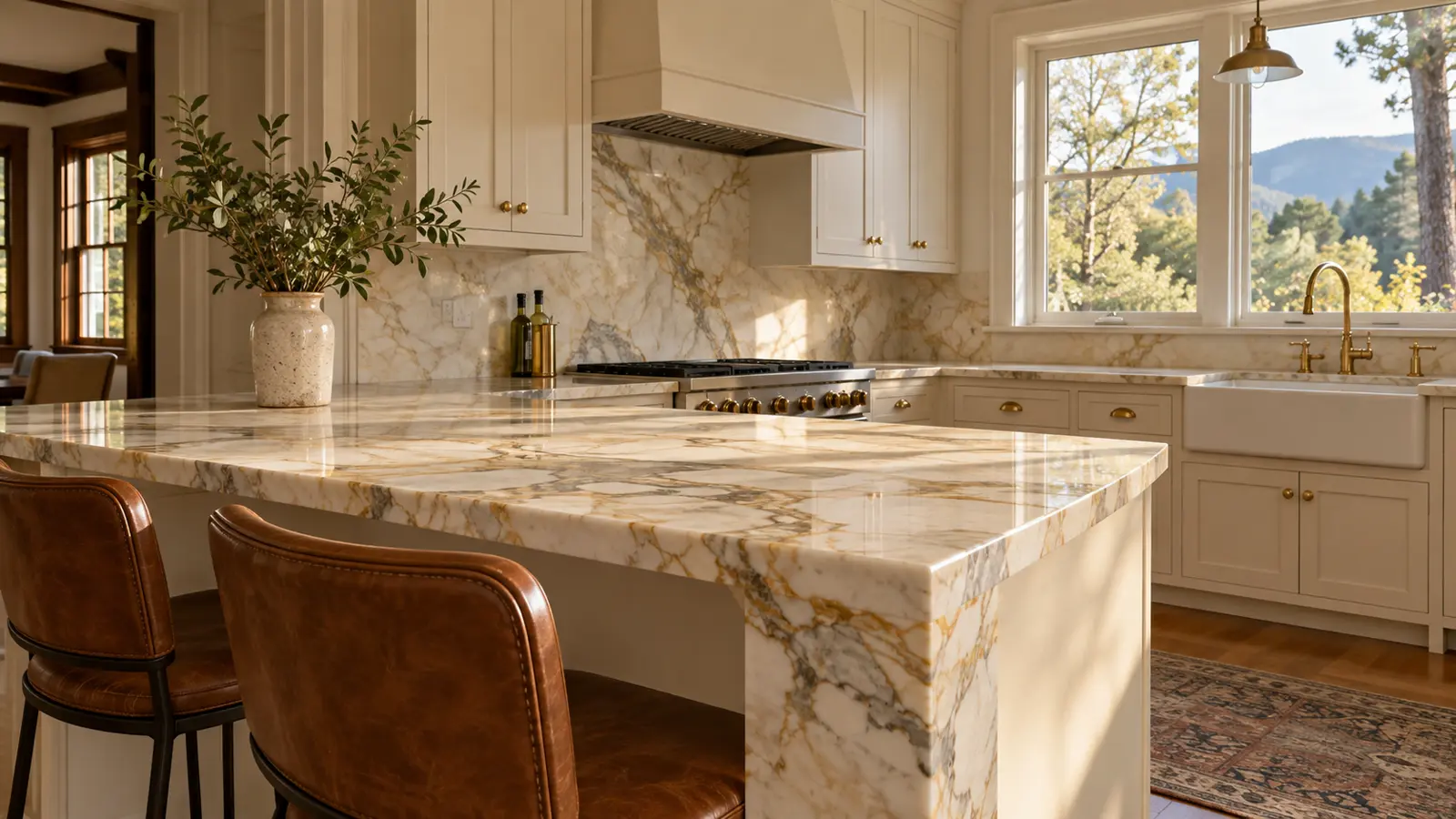
Sealing a kitchen is one of the least expensive ways to protect stone, and it is commonly estimated at roughly $150 to $400 for a visit that includes cleaning and application. Polishing a worn surface is typically estimated at roughly $8 to $20 per square foot, depending on how much the finish has dulled and how much stone there is to work on.
Things that move these figures:
Treat these numbers as estimates. Your written quote, prepared after we have seen the stone, is where the real price appears.
Rental owners and offices can schedule sealing between occupants, and a regular visit keeps surfaces consistent across units. If you manage several properties, ask about grouping them. We can test each top and note which ones are due, so you only pay for what is needed. For turnover work, a quick pass between tenants usually means a clean, dry surface, a sealer application, and a short wait before the unit is ready again. Keeping a simple record of each visit also helps you plan the next one.
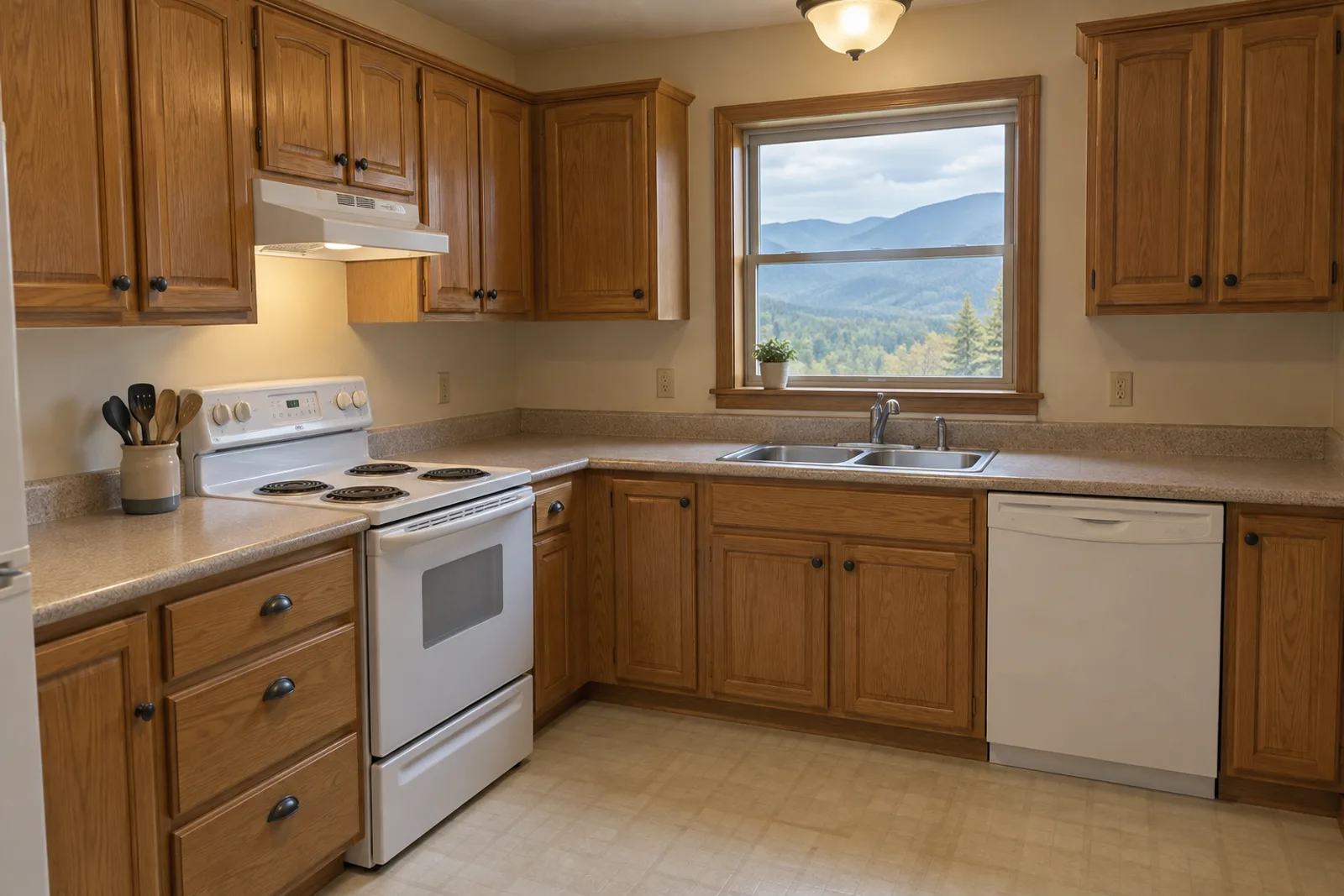
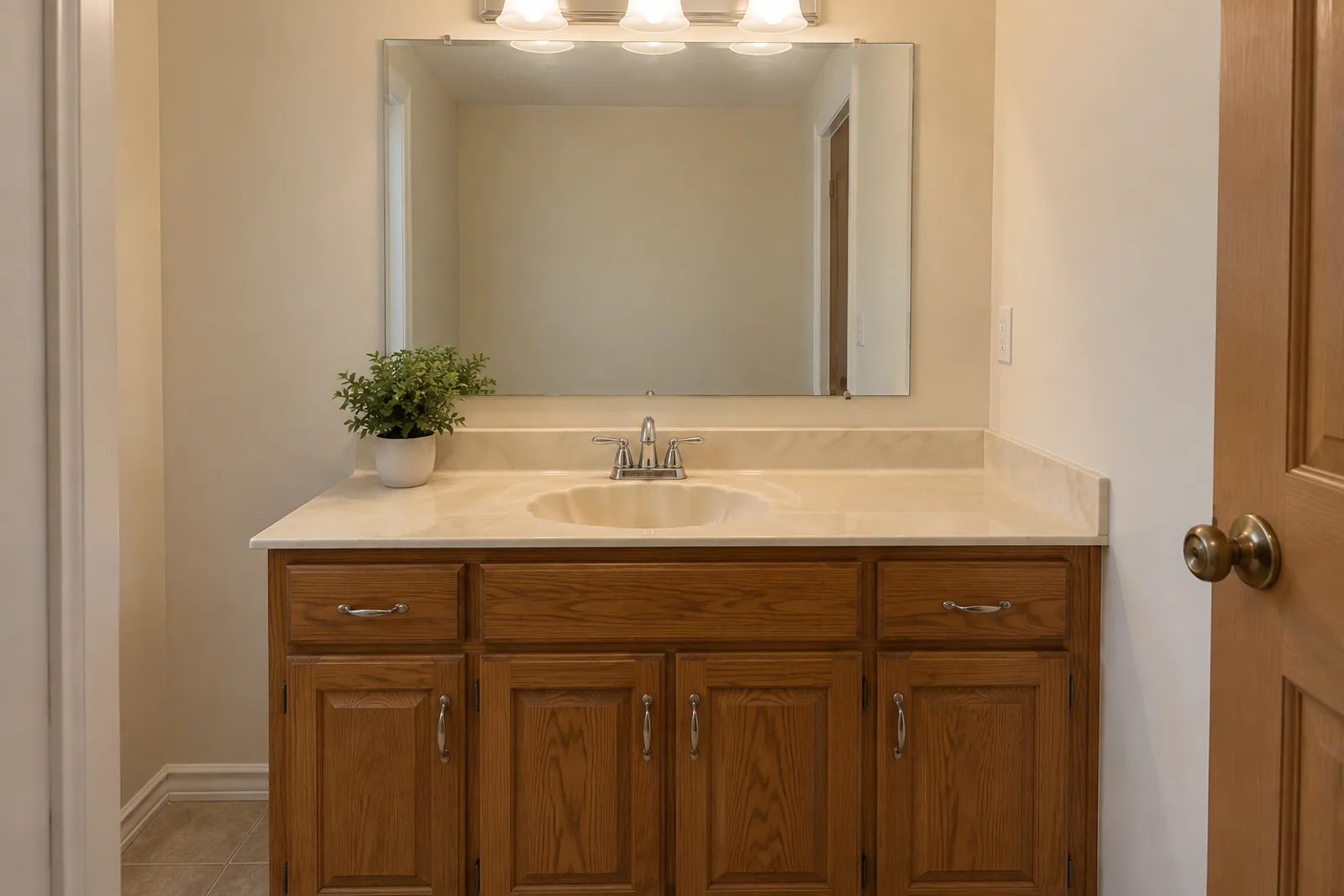
Drag the handle. The cabinets stayed; only the top changed.
 BeforeAfter
 BeforeAfter
The process
We identify the stone and run absorbency tests in several spots, starting with the lightest and busiest areas.
You receive a quote covering what needs sealing, what needs polishing and the price, before any work starts.
We lift residue, let the stone dry, apply the sealer and polish where the finish has dulled.
We give you cure times, repeat the water test and leave simple care instructions.
Questions
It depends on the stone, so let a test decide. Granite can go a year or more between seals, softer marble tends to need it sooner, and quartz never needs sealing. Check with water drops a couple of times a year.
Not visibly. Penetrating products work below the surface, so the color and sheen you see stay the same. A change in gloss means polishing or honing, and we handle those as separate jobs.
No, because engineered quartz does not absorb liquids, so there is nothing for a sealer to do. Everyday cleaning with mild soap and water is enough, and light surface marks can often be buffed out.
You can, with a good sealer matched to your stone. The stone has to be spotless and completely dry, and the excess has to be wiped off before it hazes. We are happy to do it for you and confirm the coverage with a follow-up test.
Normal use returns in stages. Light use is generally fine after a few hours, while the product keeps curing for a day or two. We give you the exact window for the product we used, and ask that you wipe up spills quickly in the meantime.
In most cases, yes. If the dullness is residue, cleaning helps first. If the polish has worn, mechanical polishing with fine diamond pads restores the gloss on granite and quartzite, followed by a fresh sealer.
Yes, provided the stone proves absorbent when tested. Some dense granites need little, and we will say so. Marble and many lighter stones benefit a lot, because stains are far harder to remove than to prevent.
Not always. Sealing protects against stains, and polishing restores the surface finish. We test the stone and quote only what your counters need, and many homeowners do both in one visit for efficiency.
Free measures across Buncombe County. Builders, cabinet shops and property owners can send drawings for a bid.
Licensed, bonded & insured. Calls only, we do not receive text messages.