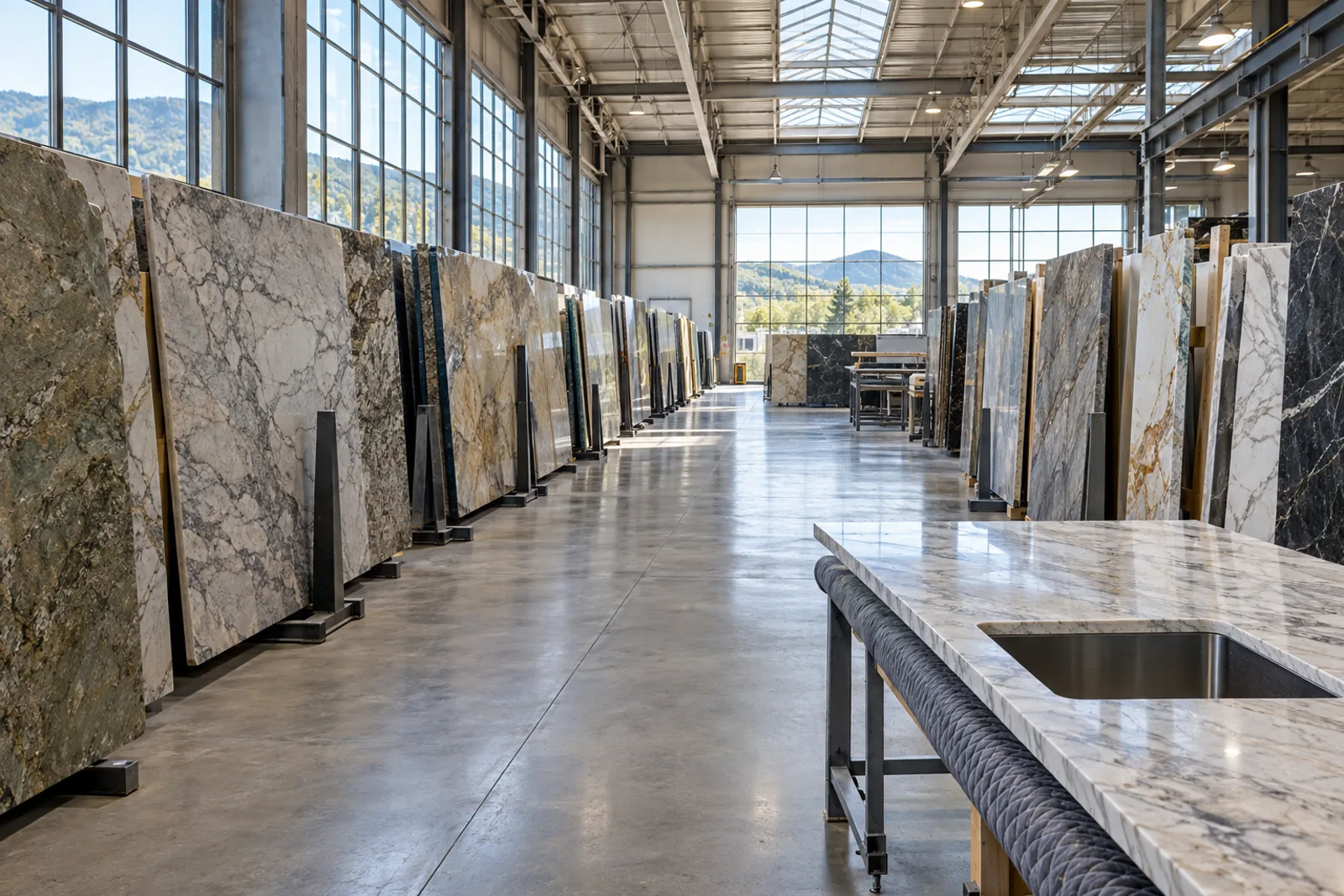
Etching
Dull, slightly rough patches where acid has eaten into the surface. They often follow spills near a kitchen or a vanity and are among the easiest damage to remove, since the grind takes off only the affected layer.

Buncombe Custom Countertops provides marble floor resurfacing & refinishing in Asheville, NC, by grinding away a hair-thin layer of worn stone and polishing what is underneath. Etching, scratches and traffic dullness come out of the stone instead of being covered up, and the floor is sealed so it stays that way.
Get a free countertop estimate
Marble is solid stone all the way through, so a dull or etched floor can be refinished by removing a very thin layer instead of tearing it out. The work uses diamond abrasives and water, stepping through finer and finer grits until the surface reaches the finish you choose. There is no wax or film to peel, because the shine comes from the stone itself.
We start with a visit to look at the floor, check how level the tiles sit and judge how much stone is left to work with. Serving Asheville, Black Mountain and Swannanoa, we give you a written quote that names the level of work, the finish and the sealer, so you know the plan before furniture is moved.
Why Buncombe Custom Countertops
The crew that measures your kitchen is the crew that sets the tops.
Marble is made of calcium carbonate, which reacts to acids. That is why a splash of juice, wine or a harsh bathroom cleaner leaves a dull spot called an etch, and why floors lose their shine along the paths people walk. Different kinds of damage need different levels of work, so we sort them first. These are the conditions we look for on every floor:
Dull, slightly rough patches where acid has eaten into the surface. They often follow spills near a kitchen or a vanity and are among the easiest damage to remove, since the grind takes off only the affected layer.
Grit carried in on shoes acts like sandpaper on a polished surface. Light scratches clear with a fine honing pass, while deeper ones need a coarser first step and more passes.
Tile edges that sit at slightly different heights catch a toe and show up in raking light. A flattening pass brings them level, though it removes more stone than a simple polish does.
Oil, rust and organic stains sit below the surface and respond to cleaning or poulticing rather than grinding. We tell you which marks will lift and which may leave a faint shadow.
A honed finish is soft and matte, and a polished finish is mirror-bright. Both are made mechanically by working up through finer and finer diamond abrasives, and neither depends on a topical coating. The choice is mostly about how the room is used and how you want it to look in daylight.
A honed floor conceals etching and scratches better, because a surface that is already matte shows little change as it wears, and it grips better when wet, a plus in bathrooms and at the back door. A polished floor delivers the formal, reflective look marble is known for, and it shows each new etch and scuff more clearly. If you are unsure, we can finish a test patch in a closet or a corner so you see each result on your own stone, under your own lights, before the whole floor is done.
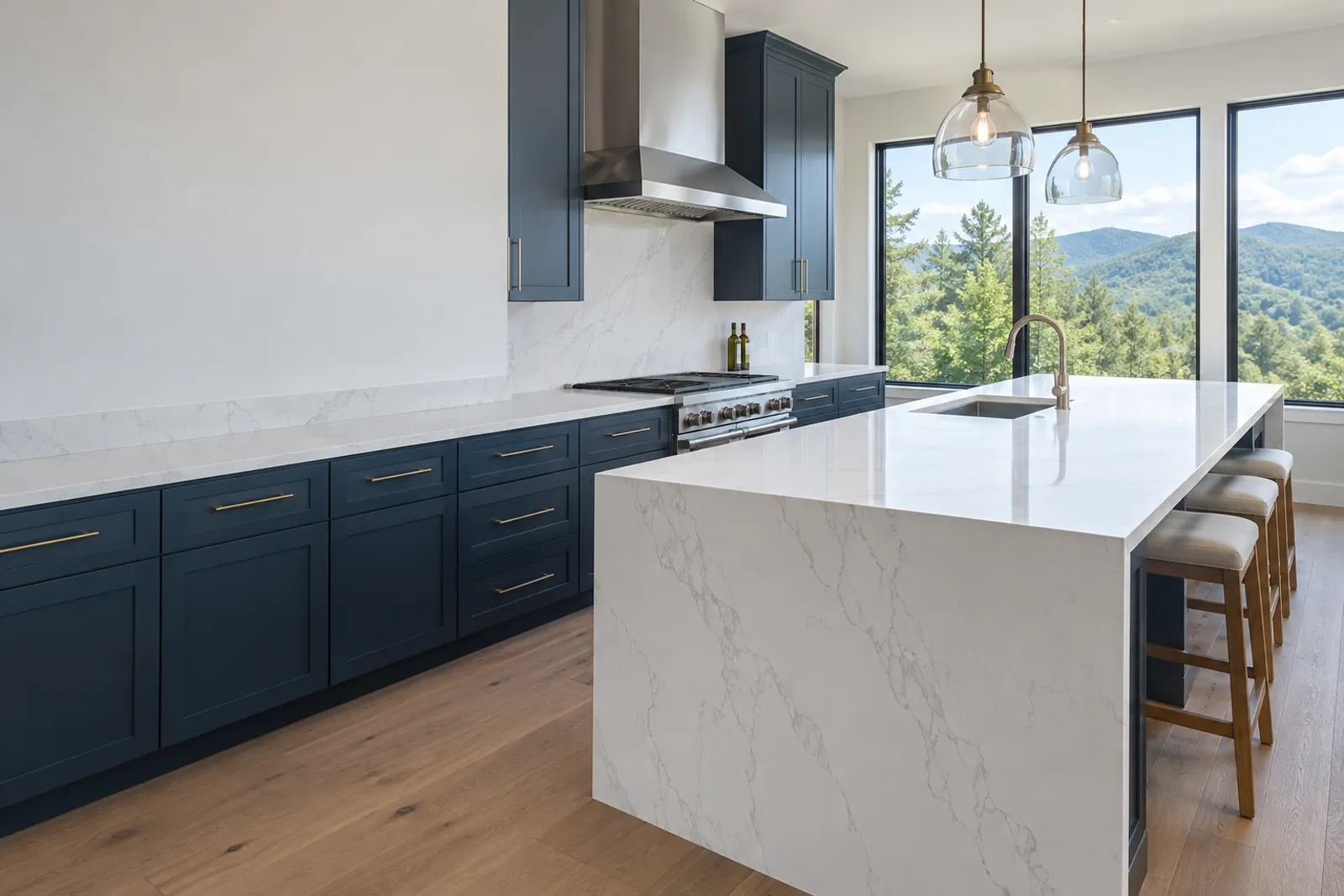
Restoration is a series of passes, each one erasing the scratch pattern left by the pass before it. The process is wet, which keeps dust down, and the slurry is collected and removed rather than left behind. A full job moves through the following stages:
We check tile thickness, loose or hollow tiles and the condition of the grout, then mask baseboards, doorways and cabinets so the work stays contained.
Chips, cracks and small holes are filled with an epoxy tinted to the stone, and failed grout is raked out and replaced, so every repair is ground flush with the floor around it.
Diamond pads work from the coarsest grit needed down through finer steps. A badly scratched or lipped floor starts coarse, a lightly worn one starts much finer.
A final polishing step brings the shine if you chose it, and an impregnating sealer then soaks into the stone so spills bead up instead of soaking in, with no coating left on top.
Restoration has limits, and we say them out loud before you spend anything. A few cases need more than a grind:
After the floor is finished, the care routine is short. Pick a neutral cleaner made for natural stone, and skip vinegar, lemon and general bathroom sprays. Put mats at each door to catch grit, wipe acidic spills quickly and expect to reseal on a schedule that depends on traffic and the sealer used. In a home near trails and gravel drives, entry mats protect a marble floor better than any product.
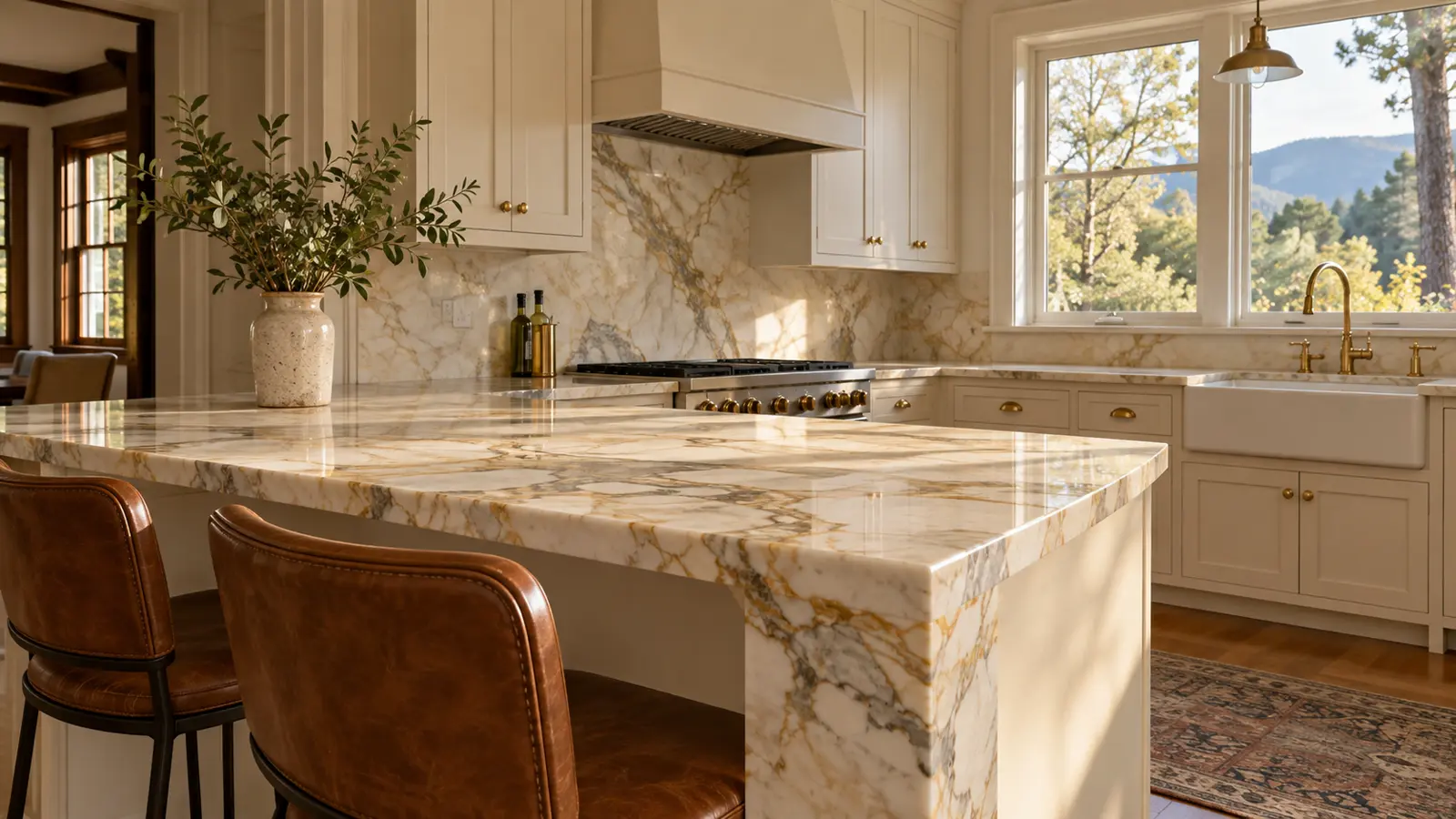
Marble floor work is priced by the square foot, and the level of work is what moves the number most. Every figure below is an estimate, because the written quote after we inspect your floor sets the real price, and a floor in poor condition can land outside these ranges.
Estimated ranges, per square foot:
Chip and crack filling, grout replacement and tile re-setting are quoted per repair after we see them. A small bathroom often has a minimum job size, and furniture removal, stairs and tight layouts affect the labor. The more stone that has to come off, the more passes the job needs, which is why condition and thickness decide the price.
Restoring a marble floor is often cheaper and faster than replacing it, and it keeps an original floor in an older building. Property managers with marble lobbies or hotel-style bathrooms can schedule work room by room so the rest of the building stays in use. Remodelers can bring us in after other trades finish, so the final polish is not scuffed by tool traffic. Realtors and owners preparing a home for sale often ask for a hone and seal before listing. Call about a trade account for repeat work.
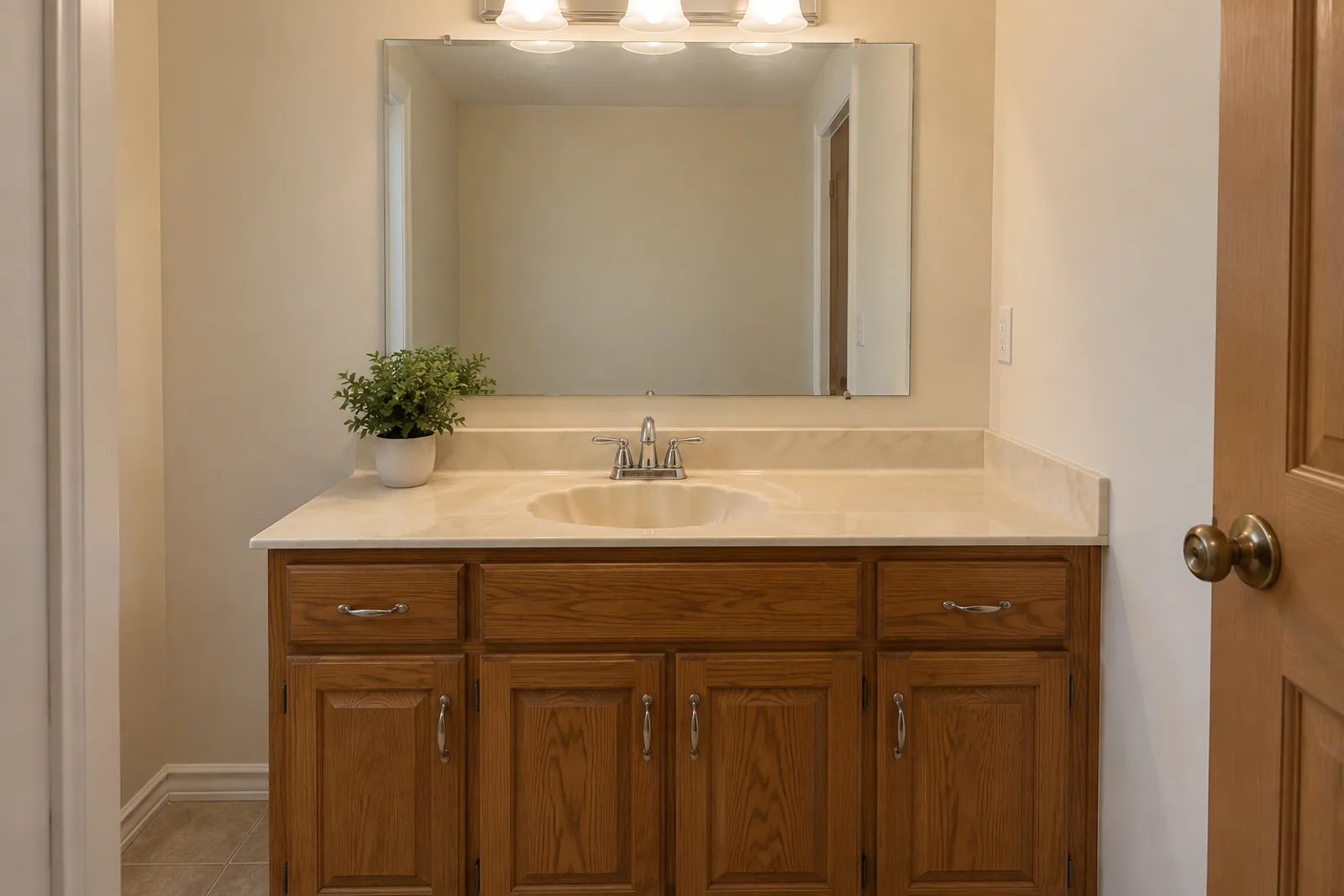
Drag the handle. The cabinets stayed; only the top changed.
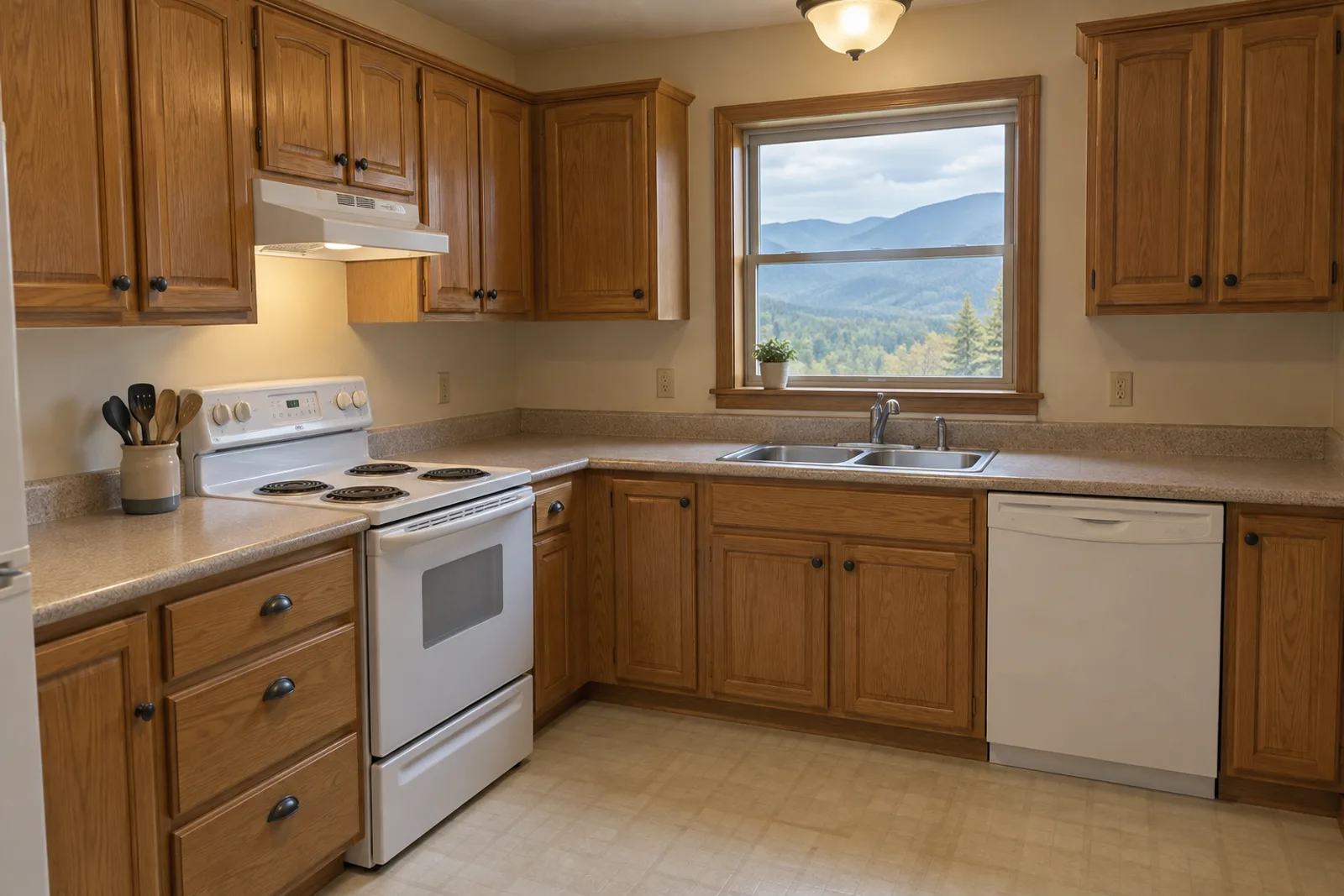
 BeforeAfter
 BeforeAfter
The process
We come to the house, look at the cabinets, the walls and the way in from the driveway, and talk through materials and edges.
You get the slab, the edge, the cutouts, the seam plan and the dates in writing. Nothing is cut until you sign off.
Once the cabinets are set and level, we template them, then cut and finish the tops in the shop to that template.
We set and join the tops, then walk the finished kitchen with you before we call it done.
Questions
Yes, because the stone is the same all the way down. Grinding off a very thin layer reveals fresh stone beneath, so etching and light scratches are taken out rather than painted over. How well it works depends on how much stone is left and how deep the damage runs.
In most cases, by a wide margin. Nothing gets torn out or hauled away, you buy no new tile, and the original floor stays put. The cost depends on condition, and a quote after an in-person look will tell you whether replacement would ever be worth it.
Pick honed for a soft matte look that masks etching and feels safer on wet feet, as in bathrooms and mudrooms. Pick polished for a mirror shine, knowing that new marks show sooner. Both are mechanical finishes, and a test patch on your own floor settles it quickly.
No. The shine comes from fine diamond abrasives working the stone itself, and protection comes from an impregnating sealer that soaks in. Wax and film coatings sit on top, then yellow and peel, which makes the next restoration harder.
Less than people expect. Grinding is done wet, which holds dust down, and the slurry is collected and removed. We mask doorways and cabinets first. The room can be walked on once the floor is dry and the sealer has cured as the maker directs.
Almost all, though not without limit. A floor that has been ground many times may have too little stone above the setting bed, and a tile that cracked from a moving subfloor will do it again until the base is stabilized. We check thickness and the substrate before quoting.
Yes. Chips and cracks are filled with tinted epoxy and ground flush, and failed grout is raked out and replaced before the final passes, so repairs blend into the finished surface instead of showing as patches.
Choose a neutral cleaner made for natural stone, keep vinegar, lemon and generic bathroom sprays away, and lay mats at the entrances. Wipe up acidic spills quickly, and plan to reseal when water stops beading on the surface.
We will look at it and quote the right level of work. Free measures across Buncombe County.
Licensed, bonded & insured. Calls only, we do not receive text messages.