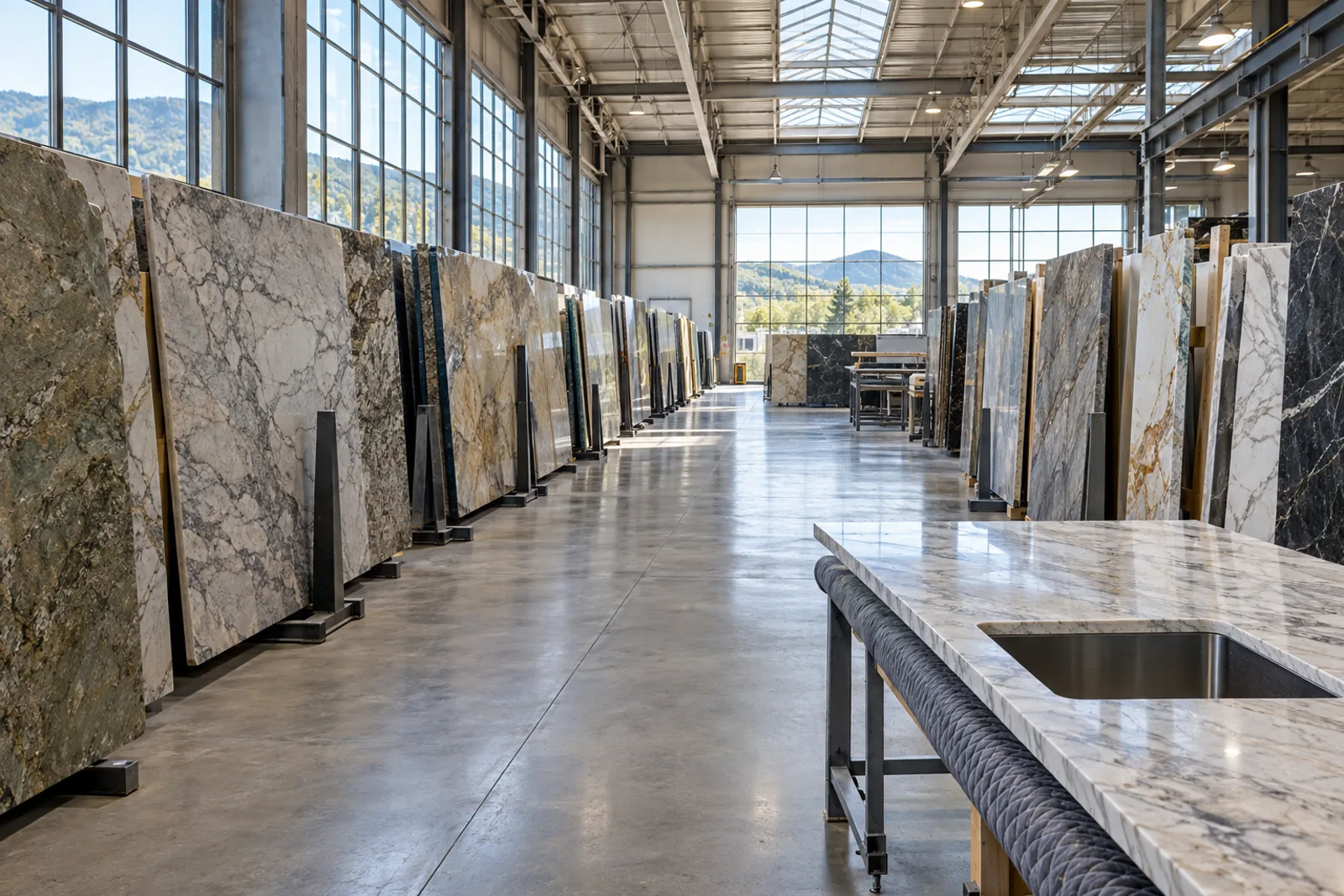
Zero reveal
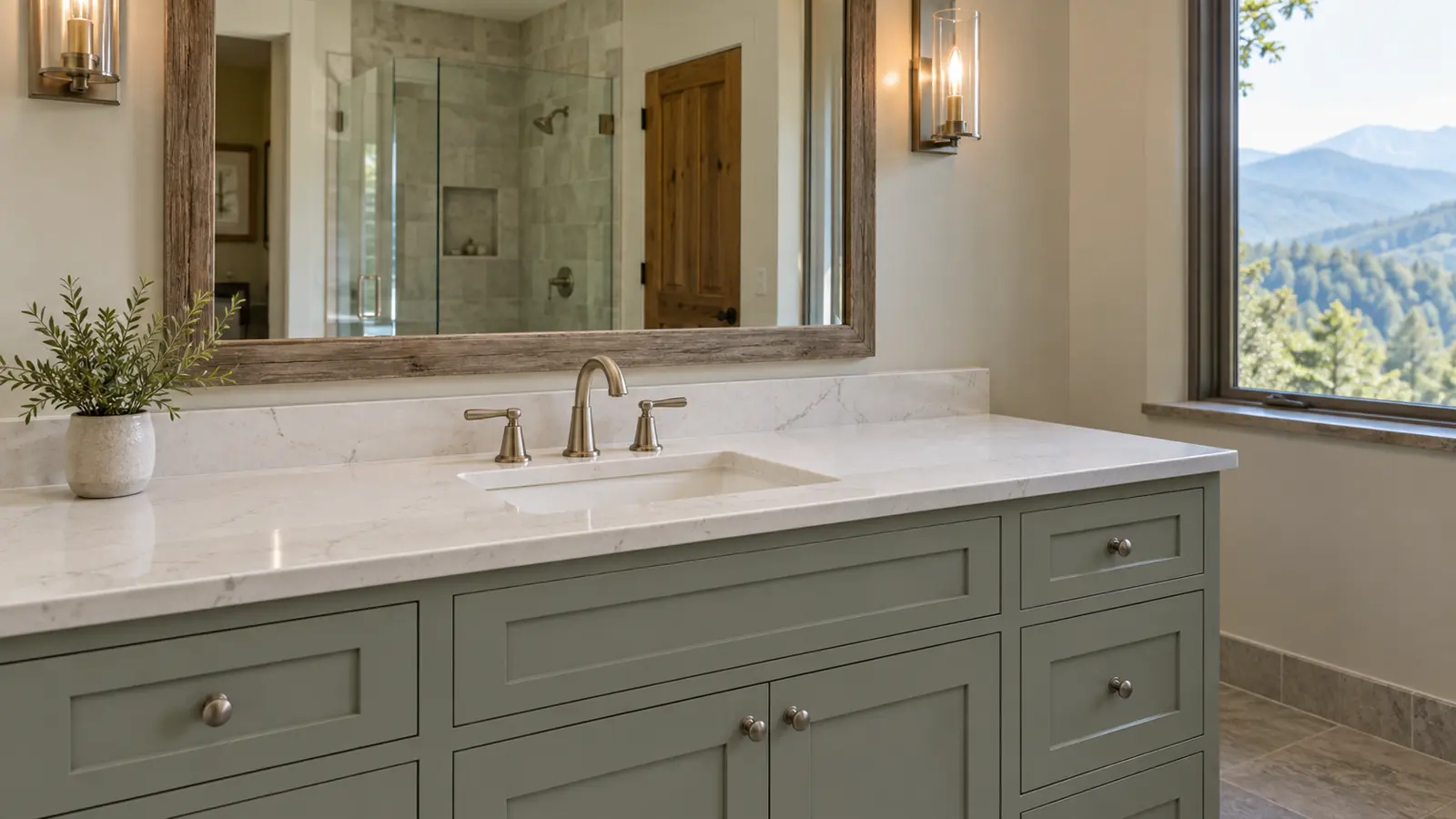
The stone sits flush with the basin wall, which gives the cleanest line and the easiest wipe-down. It also asks the most of the cut, because there is no rim to hide a wobble.

Buncombe Custom Countertops provides undermount sink cutouts & installation in Asheville, NC, in granite, quartz, quartzite and marble. The opening is cut in our shop to the sink you bought, the edge is polished, and the basin is mounted on hardware that carries its weight, so you can wipe crumbs straight over the edge for years.
Get a free countertop estimate
An undermount sink hangs below the stone, which means the cutout is a finished edge you see every day and the mounting is the only thing holding a basin full of water. Getting it right takes an opening that matches the sink to a fraction of an inch, a smooth polished reveal and support that does not rely on caulk. We handle all three on every job.
Tell us the sink early. The model number, or the sink itself at the measure, lets us work from the maker's template instead of a guess. Serving Asheville, Candler and Arden, we schedule the sink delivery, the measure and the shop cut so they line up, and the sink opening is on the written quote with the faucet holes and any second sink.
Why Buncombe Custom Countertops
The crew that measures your kitchen is the crew that sets the tops.
Two decisions made before cutting decide how the finished sink looks and works: the reveal and the sink itself. The reveal is how much of the basin rim shows inside the opening, and the sink decides the weight the stone and its supports must carry. A stainless basin, a fireclay basin and a cast iron basin are three very different loads, so we ask about the sink before we price the job. Think through these points with us at the measure:
The stone sits flush with the basin wall, which gives the cleanest line and the easiest wipe-down. It also asks the most of the cut, because there is no rim to hide a wobble.
A narrow band of rim stays visible around the opening. It is more forgiving to cut and protects the stone edge from the sink, though a little debris can collect on the ledge.
The stone overhangs the basin slightly. It looks sharp and hides the rim entirely, but crumbs catch on the lip, so it suits people who wipe with a cloth rather than sweeping into the sink.
A large single bowl needs more unbroken stone behind it, while a double bowl leaves a thin divider zone at the corners. We check the stone left around the opening before we settle on position.
Shop cutting gives a better edge than cutting over a cabinet. The slab lies supported on the bench, the cut follows a template made from your sink, and the corners are rounded and the edge is ground and polished before anything is carried to your house. Cutting a sink hole on site, with the stone resting on cabinet frames, is how chips, uneven lines and weak corners happen.
The rounded corners matter for strength as much as looks. Stone is weakest at a sharp inside corner, where stress gathers, so the corners of a sink opening get a radius, and the narrow strip of stone between the opening and the front edge is measured before the cut. If the layout leaves that strip too thin, the sink position is the thing to adjust, and we raise it at the template because a small shift costs far less than a crack.
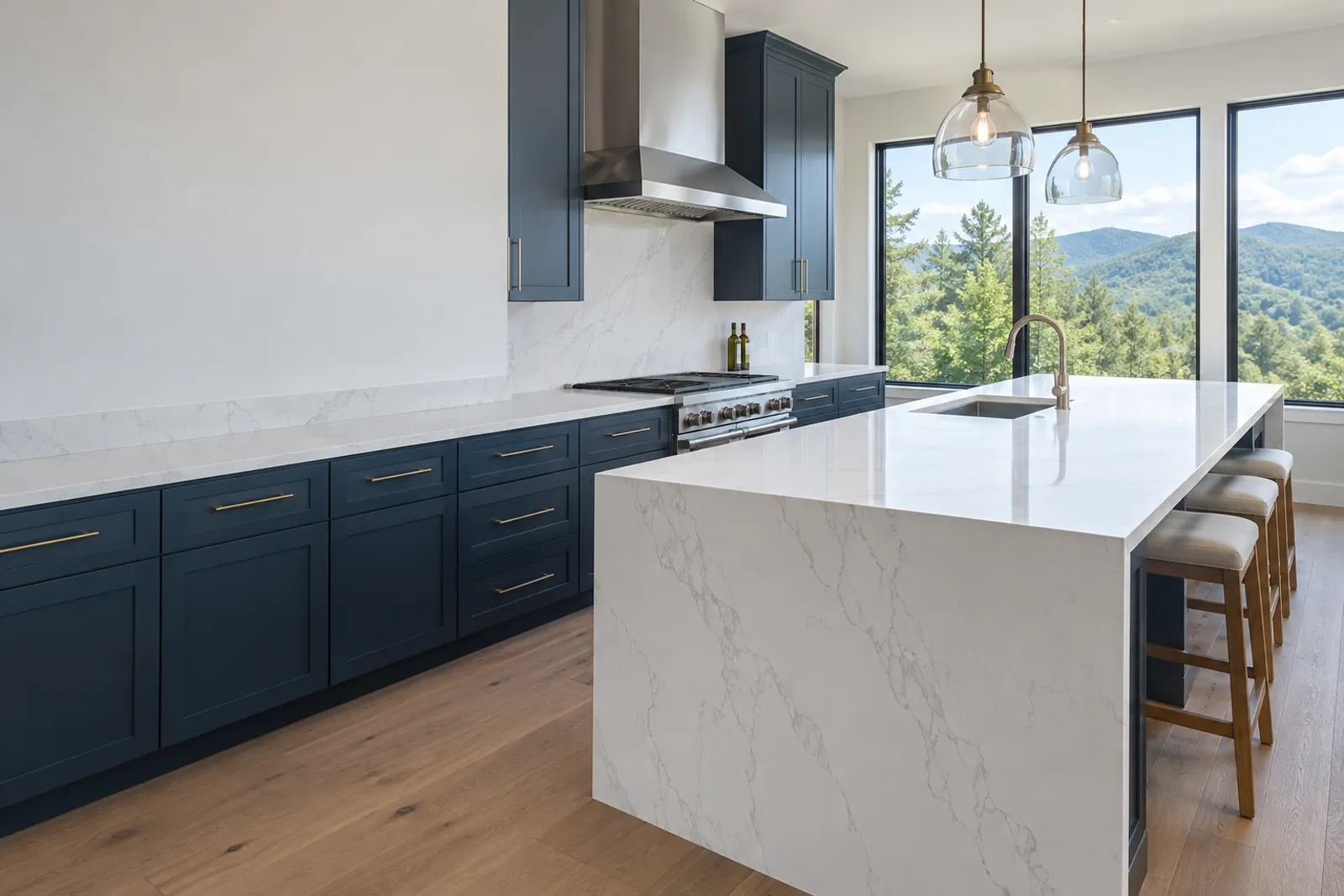
Never trust caulk to hold a sink. It only blocks water at the joint, but the weight is carried by brackets, clips or a support frame fixed to the underside of the stone or to the cabinet. We size the mounting to the basin, then seal the perimeter so water cannot creep between sink and stone. Here is what that means in practice:
Clips and brackets are bonded to the stone with epoxy and tightened against the sink rim, so the basin is pulled up into the opening and held there.
Cast iron and big fireclay sinks can weigh well over a hundred pounds before any water goes in. For those we add rails or a frame bearing on the cabinet, so the stone is not left carrying the basin.
A bead of sealant around the rim keeps splashes from reaching the cabinet below. On porous stone we seal the cut edge as well, so moisture does not wick into it.
Disconnecting and reconnecting the faucet and drain is done by a licensed plumber, and that line is kept separate on the quote so you can see it.
Converting an existing top is sometimes possible, and sometimes it is not. We make the call at an in-person look, working through a short list:
When the answers are yes, the opening is enlarged, the new reveal is polished and the basin is mounted, often in a single visit and for far less than a new top. When one answer is no, we say so before cutting, because widening a hole in a weak spot is how a good countertop ends up in two pieces. The same inspection applies if you only want to swap one undermount for another of a different size.
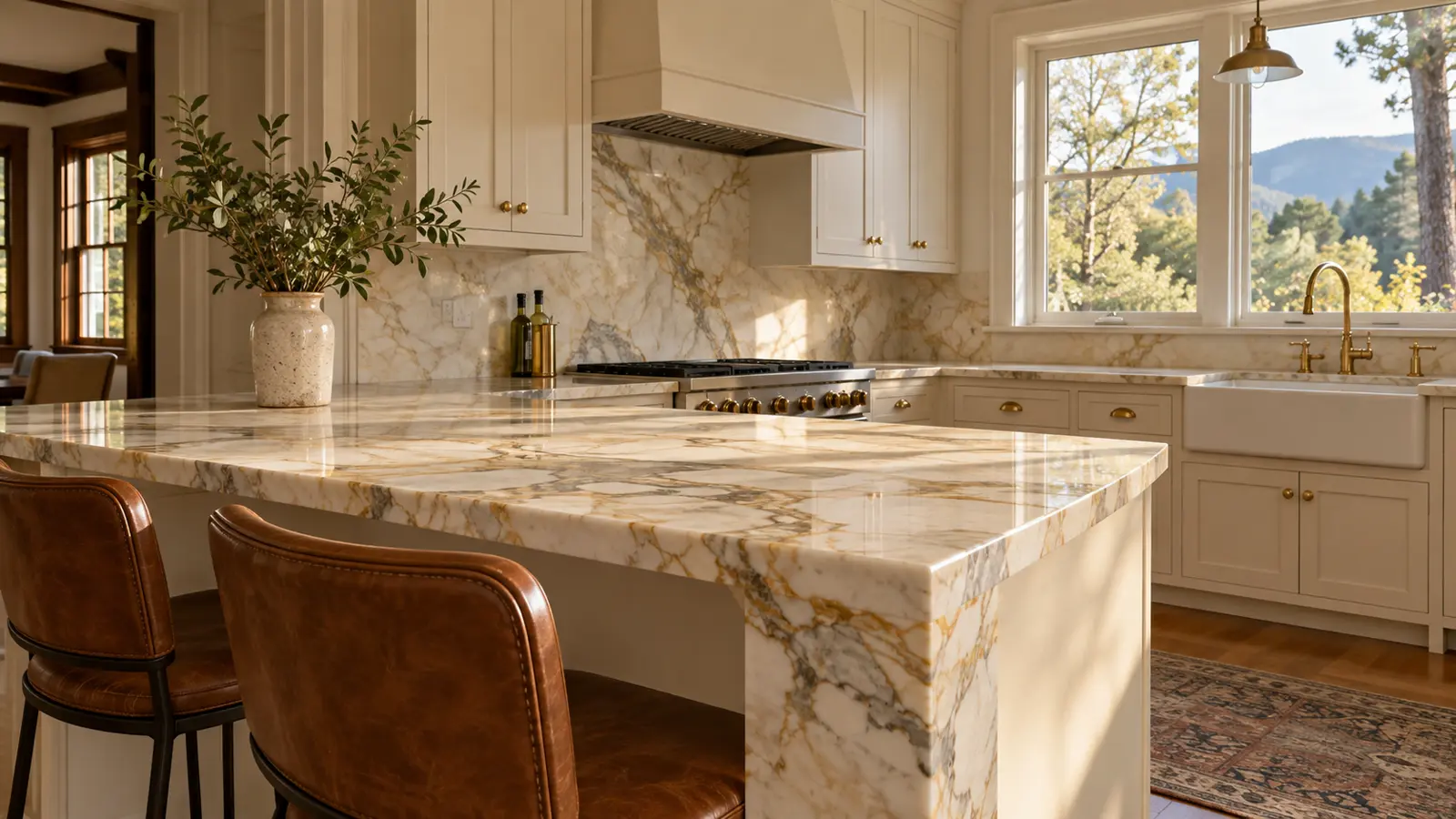
Sink openings are part of the job on a new top we fabricate, and the number on your quote depends on the stone, the sink and how many openings you want. Every figure here is an estimate only. Once we have looked at your counter and your sink, the written quote is what fixes the final amount.
Estimated ranges for common sink work:
Stone type, thickness, the sink's weight, how tight the layout is around the opening and how easy it is to reach under the cabinet all move these numbers. Plumbing is priced on its own line.
Sink delivery is the item that most often delays a countertop job. If your supplier sends the basin to us or to the jobsite before the template, we can cut to the real unit and avoid a second trip. Builders with repeat floor plans can give us the sink model per plan so every kitchen is cut the same way. Cabinet shops can ask for a support detail drawing for heavy basins before the boxes are built. Ask about a trade account if you send us several kitchens a year.
Drag the handle. The cabinets stayed; only the top changed.
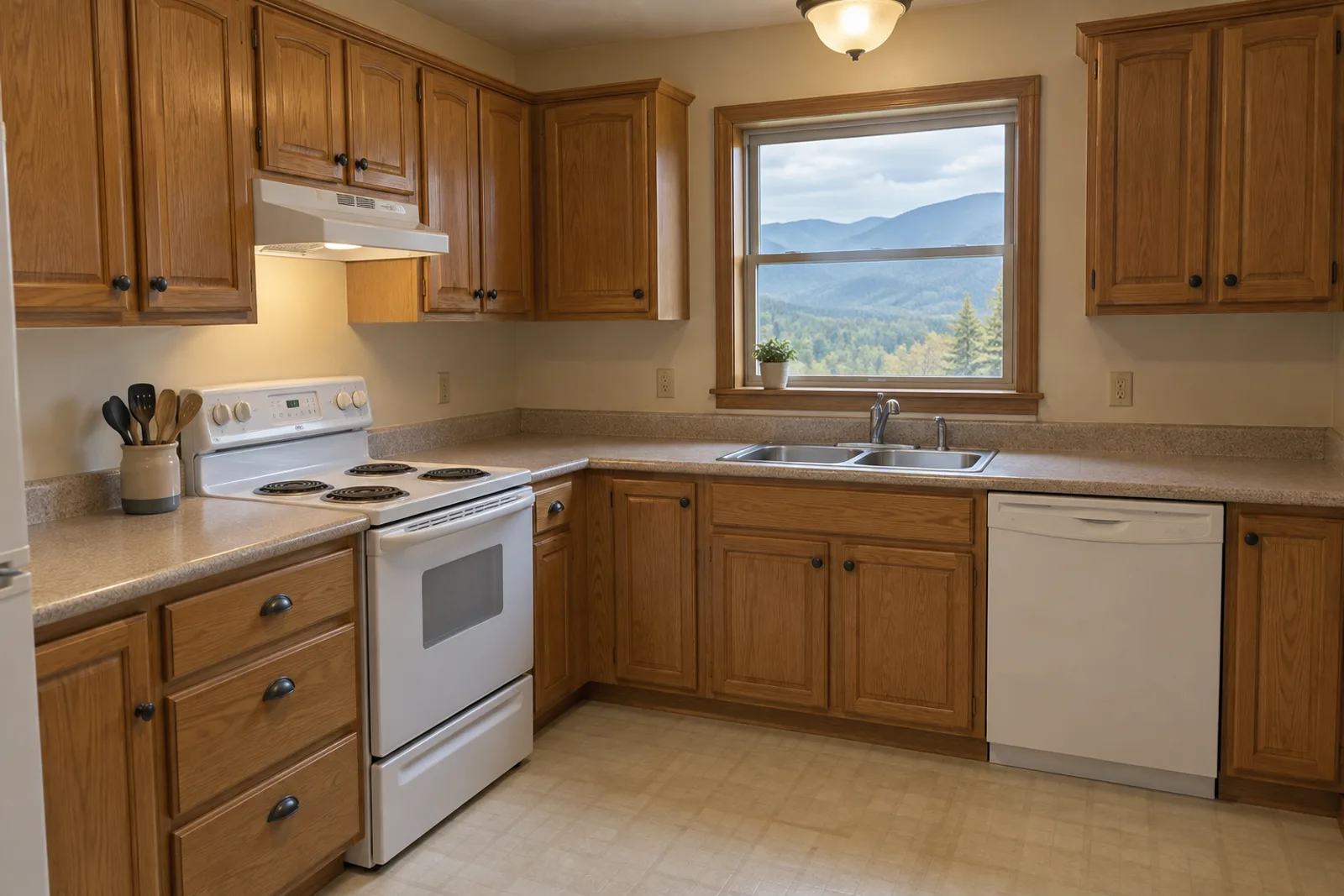
 BeforeAfter
 BeforeAfter
The process
We come to the house, look at the cabinets, the walls and the way in from the driveway, and talk through materials and edges.
You get the slab, the edge, the cutouts, the seam plan and the dates in writing. Nothing is cut until you sign off.
Once the cabinets are set and level, we template them, then cut and finish the tops in the shop to that template.
We set and join the tops, then walk the finished kitchen with you before we call it done.
Questions
Yes, or at minimum its exact model number. Every opening is cut from the sink maker's own template, and a rough measurement is how a basin ends up rattling in a loose hole or refusing to seat. If the sink is still on order, give us the model and we use its published dimensions.
Mounted from below the slab, an undermount lets a hand push scraps off the edge and into the bowl. A drop-in rests on top, and its raised rim traps grime. In exchange, the undermount calls for a polished opening and strong support, where a drop-in is a simpler cut.
Zero reveal is the cleanest and easiest to wipe, positive is the most forgiving, and negative looks sharpest but catches crumbs on the lip. Most kitchens do well with zero or a small positive reveal. We show you all three at the measure and cut the one you pick.
Yes, when it is mounted correctly. Brackets and clips bonded to the underside carry the basin, and a heavy cast iron or fireclay sink gets rails or a frame as well. Caulk only keeps water out. A basin left hanging on a bead of silicone is the one that eventually drops.
Frequently it can, provided the stone is thick, sound and free of cracks near the sink. We widen the hole, finish its edge and then install the basin. Before that we look at the top, since cutting close to a crack, a seam or a dishwasher gap can split it.
Granite, quartz, quartzite and marble all do well. Thin or laminated tops may need added support, and some softer or more porous stones deserve extra sealing on the cut edge. We flag any of that before the cut, not after.
Yes, those holes are part of fabrication and follow your faucet layout. Give us the faucet model, plus any filter tap or dispenser, at the measure so each hole lands in the right place and the spacing suits the stone.
A licensed plumber handles the faucet and drain, and that cost is kept on its own line on the quote. We coordinate the timing so the old sink comes out, the stone goes in and the plumber reconnects on the same visit when the schedule allows.
Send us the sink model and book a free measure anywhere in Buncombe County.
Licensed, bonded & insured. Calls only, we do not receive text messages.