Skip to content
Call (828) 470-1105Licensed, bonded & insured

Seamless Countertop Joining & Seam Matching in Asheville, NC

Buncombe Custom Countertops provides seamless countertop joining & seam matching in Asheville, NC, so a long run of stone reads as one surface. Any kitchen longer than a single slab needs at least one joint, and we decide where it falls, carry the veining across it and set it flat before the crew leaves your house.

  • Free in-home measure
  • Slab approved before any cut
  • Licensed, bonded & insured

Get a free countertop estimate

About seamless countertop joining

A seam is unavoidable on most kitchens, and a good one is a thin, flat, color-matched line you have to hunt for. Slabs come in fixed sizes, so a long wall, an L-shaped run or a big island is built from separate pieces. Our job is to choose where those pieces meet, cut the edges true and bond them so the joint sits level and the finish carries straight across.

That planning starts at the measure, with you standing in the room. We look at the sightlines from the doorway and the dining table, the position of the sink and cooktop, the joints in the cabinets underneath and the route the pieces will travel into the house. The seam plan goes on your written quote before any stone is cut, so nothing about the joints is a surprise on install day.

Why Buncombe Custom Countertops

How We Work

The crew that measures your kitchen is the crew that sets the tops.

Written quoteSlab, edge profile, cutouts and seams listed line by line
Slab firstYou approve the slab, or the quartz sample, before we cut
Templated on siteMeasured on your cabinets after they are set and level
Access checkedThe drive, the steps and the carry path looked at before install day

Where a seam should go, and where it should not

Seam location is a design decision first and a structural one second. Slabs generally run about ten feet long, so a counter beyond that length, or any L or U layout, needs a joint, and the best spot depends on how the room is used. The rules we work to are simple: keep the joint out of the main sightline, away from where you chop and prep, and clear of the weak points around openings. These are the placement checks we walk through with you at the measure:

Inside corners of an L

In an L layout the usual answer is two straight pieces joined near the corner, not one piece with a notched corner. An inside corner cut from a single slab concentrates stress at the notch, while a straight joint is stronger and often easier to hide.

Distance from the sink and cooktop

A joint a few inches from an undermount opening leaves thin stone that can crack under the weight of a full basin. We keep seams well clear of sink and cooktop openings and shift them whenever the layout allows.

Over the dishwasher gap

Stone that spans an appliance opening has no cabinet under it, so a joint there has nothing carrying the load. We place seams over solid cabinet bases and rails instead.

The sightline test

Stand where you stand most, whether that is the doorway, the table or the sofa. A joint hidden from those spots matters more than one hidden from someone kneeling beside the dishwasher.

Matching the pattern across the joint

Matching begins with which slab and which end goes where. Quartz with an even pattern is forgiving, because two pieces from the same lot sit together easily and the joint can be very tight. Veined marble, quartzite and busy granite behave differently, since the pattern has a direction and a scale that can collide at a seam. We lay the pieces out in their final order, shift them until the veining lines up and show you the layout before any cutting happens.

Book-matching goes one step further. When a block is sliced into consecutive slabs, neighboring faces mirror each other, so opening them like a book reflects the pattern across the joint. It suits a waterfall island or a tall backsplash, and it depends on getting consecutive slabs, which is worth confirming with the stone supplier before you commit. Not every stone is sold as a matched pair, so we check how much usable stone each slab gives us before promising the look.

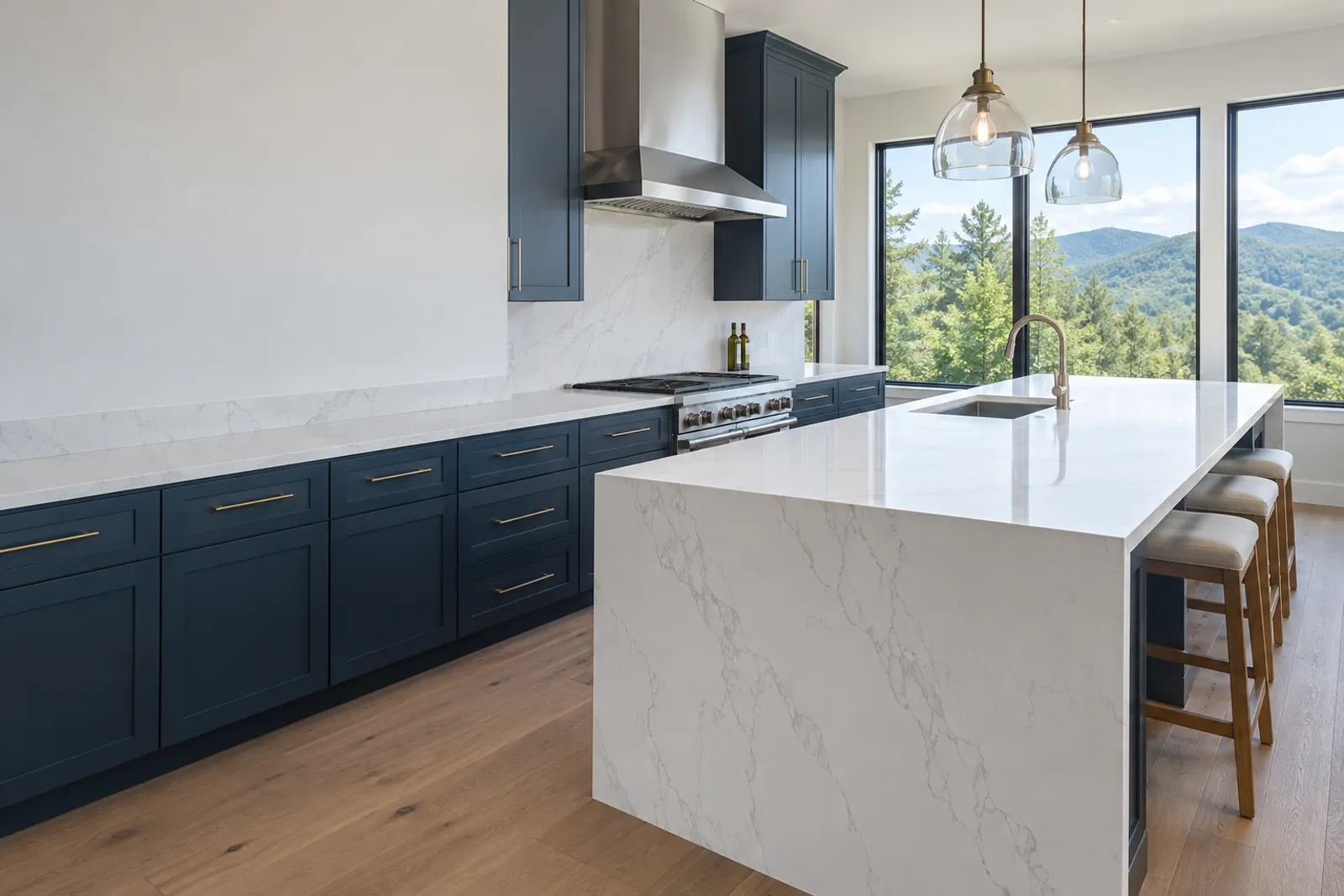
Navy shaker cabinets with white quartz counters and a waterfall-edge quartz island, a stainless hood, glass pendants, wood bar stools and black-framed windows onto green wooded hills

How the joint is made and finished

A seam that holds is built from three things: straight mating edges, a level base and the right adhesive. The edges are cut and dry-fitted in the shop, so a gap shows up there and not in your kitchen. On install day the pieces are drawn together, the epoxy is tinted to the stone and the joint is brought flush. Here is what each step is for:

Dry fit in the shop

The two mating edges are set together on the bench before anything leaves the building. If the line is not tight or the pattern does not read, we recut, which costs far less than fixing it on top of your cabinets.

Color-matched epoxy

The adhesive is mixed with pigment to suit your stone, and the shade is tested on a scrap piece first. Dark stone shows a pale joint line quickly, so the match matters most on black and deep gray tops.

Drawing the joint flush

Seam setters or clamps pull the two pieces together while the epoxy cures, and a straightedge across the line confirms that a fingernail will not catch at the joint.

Final polish

After the epoxy has cured, the joint is scraped flush and polished to the same finish as the stone on both sides, so the sheen does not change at the line.

What makes a seam fail, and what we check first

Most failed seams trace back to what is under the stone, not the adhesive. A short list of conditions causes nearly every callback:

  • Cabinets that are out of level, so the two pieces sit at different heights and the joint takes a twisting load.
  • A joint over an unsupported span, such as a dishwasher gap, with nothing below to carry it.
  • Repeated heat or impact right on the line, for example a hot pot set down on the joint day after day.
  • Epoxy that was mixed off-shade or left rough while it cured, which leaves a visible or ragged line.

For that reason we check the cabinet run with a level at the measure and again before templating. If a base needs shimming or a rail needs adding, you hear about it then, before the stone is cut. The same logic applies when you call about a seam someone else set: we look at what is under it before offering to re-bond it, because gluing a joint back over a sagging cabinet only buys a few months.

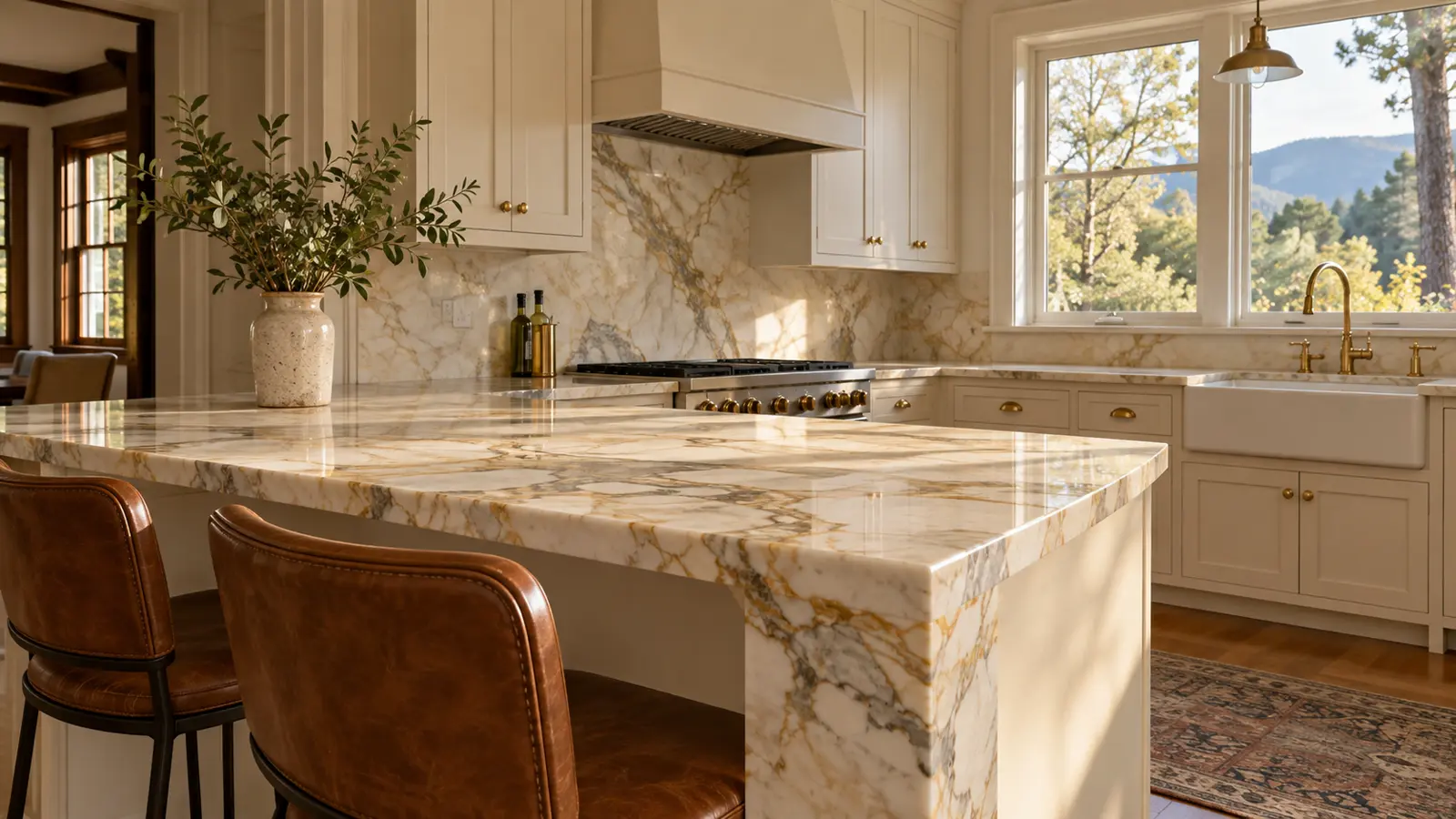
Kitchen peninsula in warm Calacatta gold marble with rich gold and grey veining, two leather bar stools in the foreground, cream cabinets and brass hardware in a 1920s bungalow kitchen

What seam work costs in Asheville

Seams on a top we fabricate are part of the job and carry no separate line, so the only seam costs are upgrades and repairs. Treat every figure below as an estimate, because the written quote you receive after we have seen the stone and the cabinets is what sets the real price.

Estimated ranges for seam-related work:

  • Re-bonding a separated seam on existing stone: roughly $200 to $500 per joint.
  • Cleaning out a discolored epoxy line, refilling it in a matched shade and re-polishing: roughly $250 to $600 per joint.
  • Leveling and re-setting a joint that has lippage between the two sides: roughly $300 to $700 per joint.
  • Extra slab material to carry a book-matched layout across an island or backsplash: roughly $300 to $1,200 more, depending on the stone and how much usable yield each slab has.

What moves those numbers is the stone and its color, the number of joints, the length of the run, whether the cabinets need work first and how hard the pieces are to carry in. A long island section that has to go up a stairway or around a tight turn is handled differently from one that rolls in through a garage, and the quote reflects that.

Seam planning for builders, cabinet shops and rental owners

Planning seams before the cabinets are ordered saves the most money. A builder who sends the plan early can move a cabinet run a few inches so a joint lands at a corner instead of mid-span. Cabinet shops and remodelers can email drawings and we mark a seam layout on them for the bid. Owners of rentals and vacation homes usually choose fewer, tighter quartz seams that handle heavy turnover and need little attention. If you send repeat work, ask about a trade account.

Same Cabinets, New Countertops

Drag the handle. The cabinets stayed; only the top changed.

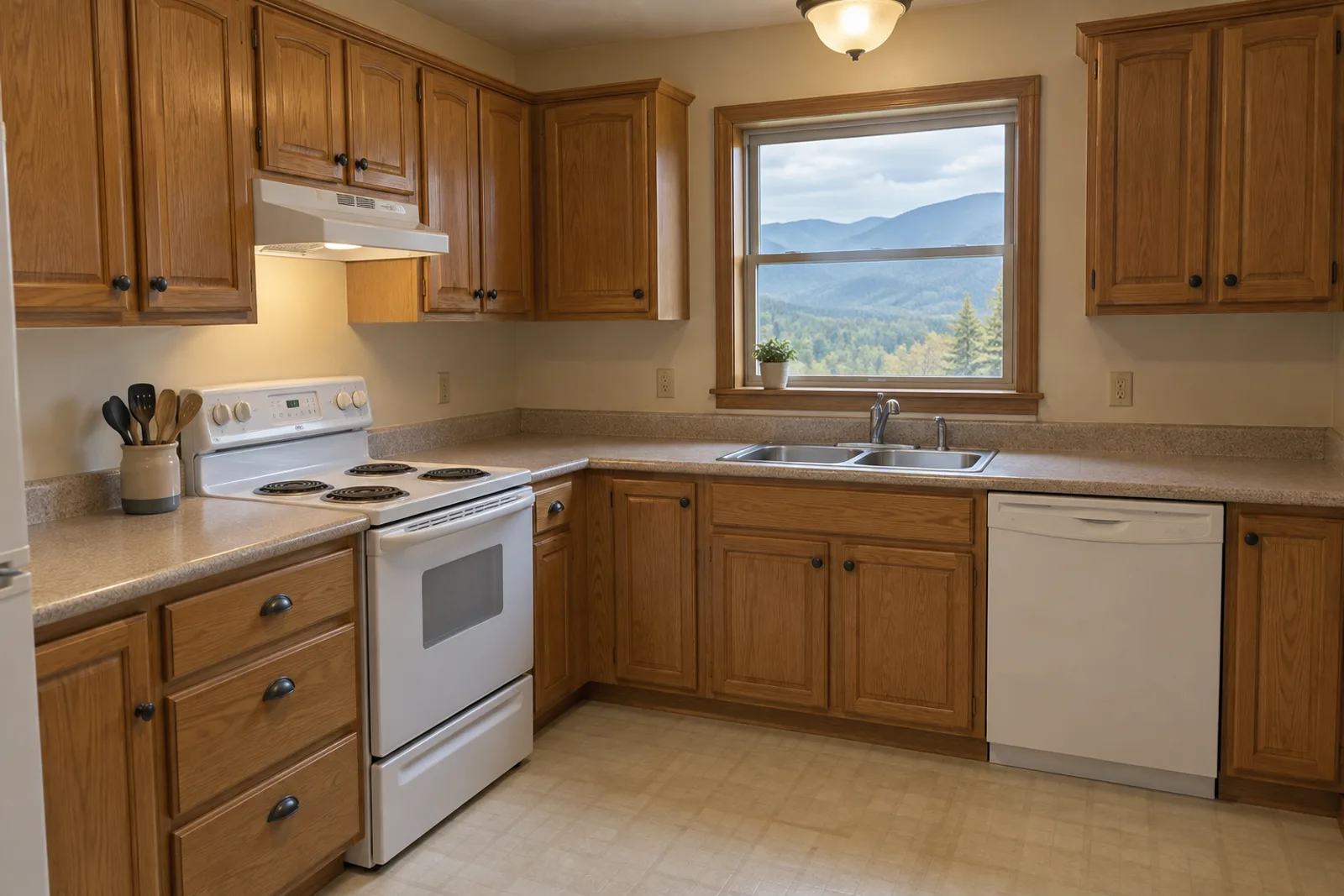
Kitchen with honey oak cabinets, beige laminate counters, a white electric range and dishwasher, and a double stainless sink under a window onto blue mountain ridgesThe same kitchen and oak cabinets with charcoal stone counters and a matching backsplash, an undermount stainless sink and the same window onto the ridgesBeforeAfter
Laminate to stone, cabinets kept
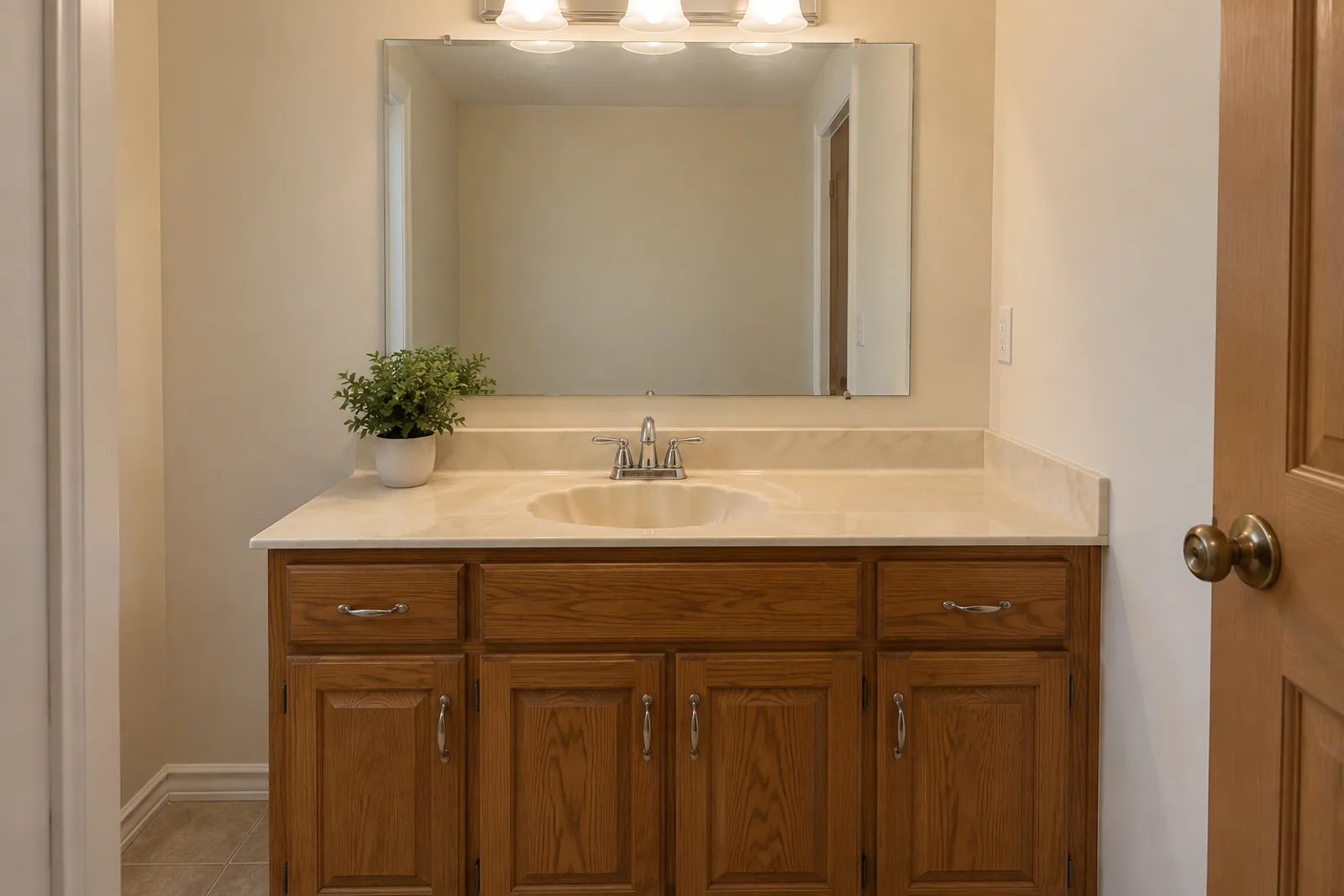
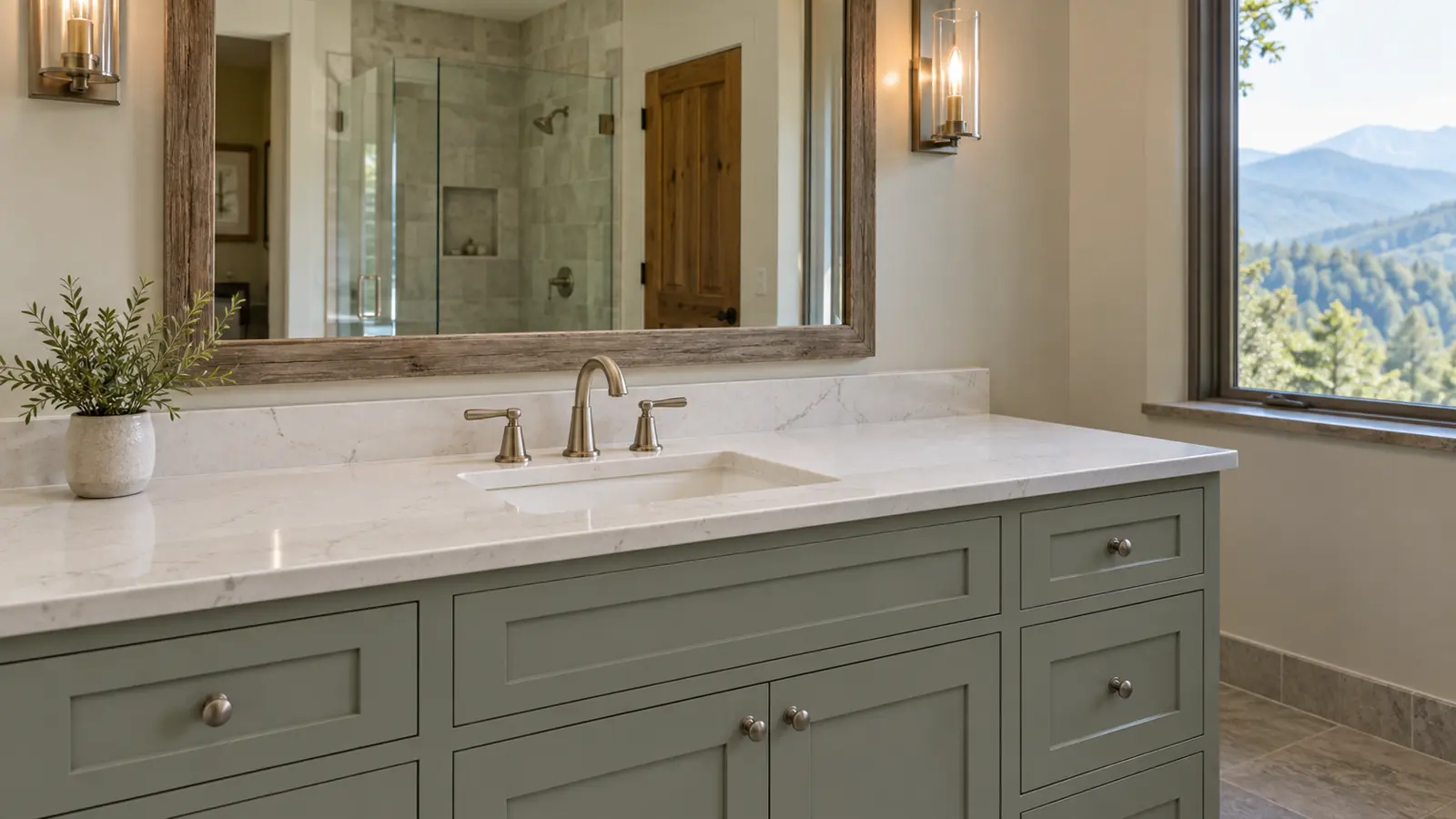
Bathroom vanity with an oak base, a beige cultured marble top with an integrated basin, a brushed nickel faucet and a wide mirrorThe same oak vanity with a white quartz top in soft grey veining, a rectangular undermount basin and a widespread brushed nickel faucetBeforeAfter
Cultured marble to quartz with an undermount basin

The process

How a Countertop Job Runs

  1. The measure

    We come to the house, look at the cabinets, the walls and the way in from the driveway, and talk through materials and edges.

  2. The written quote

    You get the slab, the edge, the cutouts, the seam plan and the dates in writing. Nothing is cut until you sign off.

  3. Template and fabrication

    Once the cabinets are set and level, we template them, then cut and finish the tops in the shop to that template.

  4. Install and walk-through

    We set and join the tops, then walk the finished kitchen with you before we call it done.

Questions

Countertop Seams: Common Questions

Can a countertop seam be completely invisible?

No seam vanishes entirely, but a well-made one comes close. Put the joint outside the sightline, carry the pattern across it and tint the epoxy to your stone, and guests rarely spot it until you show them where it is.

Why does my kitchen need a seam at all?

Slabs only come so big, generally around ten feet long, so a long wall, an L-shaped layout or a large island has to be built from more than one piece. Very large porcelain formats can reduce the number of joints, but that is a different material with its own limits.

Which material hides a seam best?

Quartz hides seams best, because its pattern repeats evenly and two pieces from the same lot look alike. Light, busy granite and mottled quartzite also camouflage a joint well. Solid dark colors show the line most, which is why shade-matching the epoxy matters so much on them.

Does a seam make the countertop weaker?

Not when it is bonded well and supported from below. The failures we see come from joints that cross an unsupported span, sit near a sink or cooktop opening or rest on cabinets that are out of level. We check all three before any stone is cut.

Where does the seam go in an L-shaped kitchen?

Usually near the inside corner, as two straight pieces rather than one piece with a notched corner. A single L-shaped cut puts stress at the notch, so the joint is stronger and often less visible than the alternative. We confirm the spot with you at the measure.

Can you fix a seam another installer made?

Often, yes. A separated or cracked joint can usually be re-bonded, a stained epoxy line can be cleaned out and refilled in a matched shade, and lippage can be ground flat and re-polished. We inspect the cabinets first, since a sagging base will undo the repair.

Does book-matching cost extra?

It can, because it needs consecutive slabs and some stone is lost to the layout. Whether it is worth it depends on the pattern: on a waterfall island or a tall backsplash it makes a visible difference. We price the extra yield on your quote so you decide with the number in front of you.

Can I see the seam layout before you cut?

Yes, and you should. We mark the layout on the slab or arrange the pieces in the shop so you see where each joint falls and how the pattern crosses it. Changes are easy at that stage and expensive afterward.

Free in-home measure

Planning a seam layout for your kitchen?

Free measures across Buncombe County. Send a sketch or drawings if you want a seam plan before we visit.

Call (828) 470-1105

Licensed, bonded & insured. Calls only, we do not receive text messages.

Call (828) 470-1105Licensed, bonded & insured