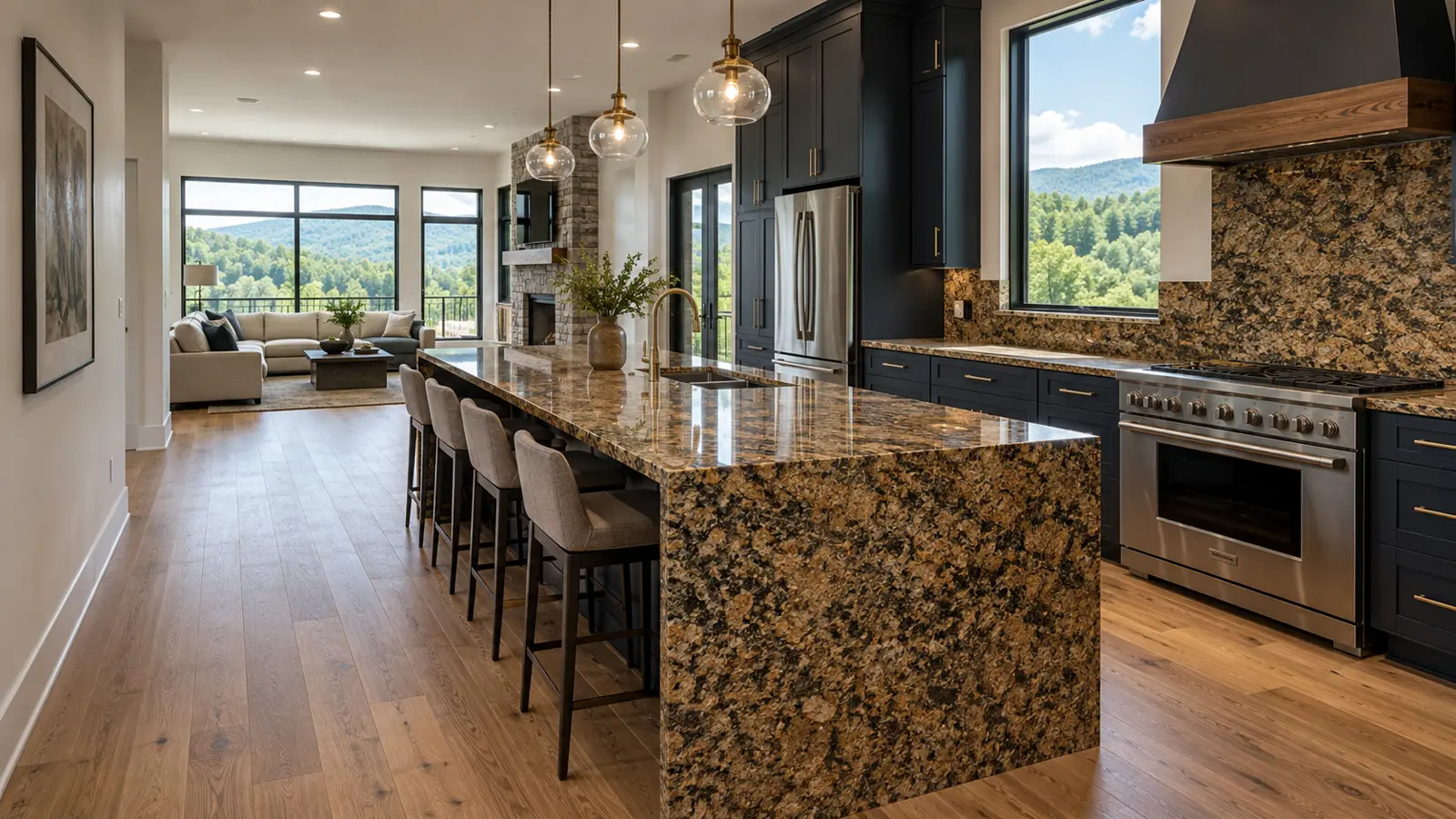
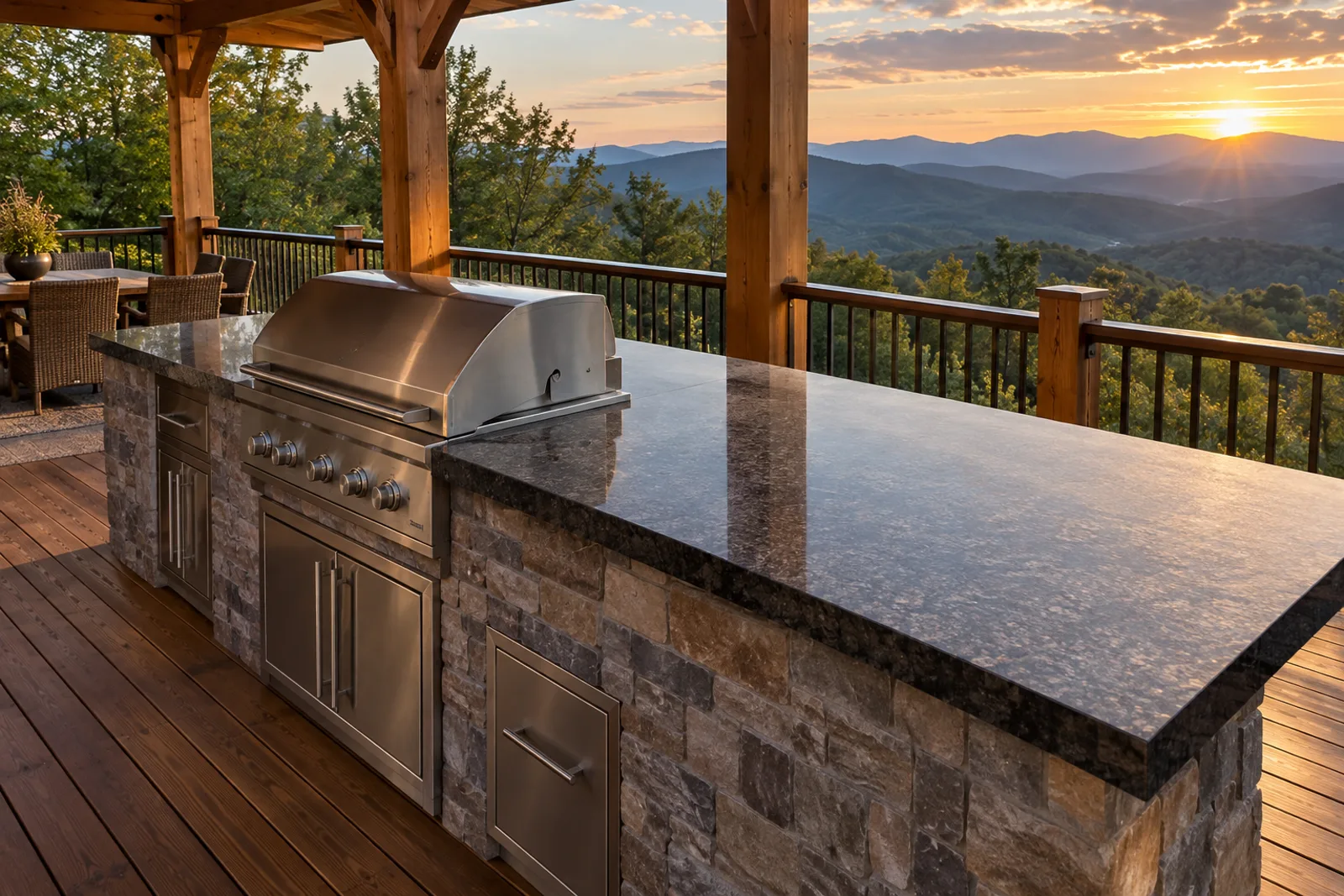
Hard maple
Pale, tight-grained and hard. It suits an island that gets daily chopping and a kitchen where the wood should read as clean rather than dark.

Buncombe Custom Countertops is a trusted Buncombe County specialist in butcher block countertops in Asheville, NC, specializing in edge grain maple island tops, walnut accent counters, and end grain chopping sections. We offer oil-finished and sealed wood tops.
Get a free countertop estimate
Or call (828) 470-1105. Calls only, we do not receive text messages.
Our team provides wood tops cut to fit beside stone countertops, delivering a warm work surface for home kitchens and hard-wearing counters for coffee bars and shops, for both residential and commercial projects. We template on your installed cabinets, then our own crew cuts every sink and cooktop opening in the shop and finishes its raw edges before the top leaves for your house.
From a sealed finish around an undermount sink to a full kitchen run of wood, our team handles every detail. We are serving Asheville, Candler, Woodfin and Fairview, and every other part of the county, with free in-home measures.
Why Buncombe Custom Countertops
The crew that measures your kitchen is the crew that sets the tops.
Butcher block is built from strips of hardwood glued into a slab, and the species and the grain direction decide how it looks and how it works. Hard maple is the traditional choice, the wood butcher shops used for generations, and it stays the most popular for a light, even top. Walnut, birch and teak are also used, sometimes in alternating strips for a striped look.
Pale, tight-grained and hard. It suits an island that gets daily chopping and a kitchen where the wood should read as clean rather than dark.
Deep brown with a lot of figure. Walnut is the pick when the wood is the feature, often on an island against white or gray stone.
Birch is a light, plain hardwood that suits a painted or Shaker kitchen. Teak brings a golden brown color and is often laid in alternating strips with a paler wood.
Edge grain shows long strips along the length of the top and is the usual choice for a full counter. End grain shows the checkerboard of the board ends and costs more because it takes far more glue joints to build. Many owners use edge grain for the counter and set an end grain chopping section into the island.
A wood top beside a sink needs a sealed film finish, not only oil, because oil finishes have low water resistance and standing water softens the wood and stresses the glue joints. That one decision prevents most butcher block failures.
A penetrating oil, usually food-grade mineral oil or a blend with beeswax, soaks into the wood and slows how fast food liquids get in. It is the finish to cut on. It also needs attention: a wood top maker's care guide calls for oil at least once a month, more often if the top is washed a lot, and a dry-looking surface is the sign it is due.
A varnish or polyurethane type finish forms a film on the surface. It resists water and most household cleaners and cleans up with mild soap. You should not cut on it, because a knife opens the film and lets water in.
Around an undermount or farmhouse sink we recommend the sealed finish on the whole top, and every cutout edge is finished in the shop before install so no raw end grain faces the water. We set the sink into the opening; a licensed plumber disconnects and reconnects the water and drain. If you want a cutting surface too, we build it as a separate oiled section away from the sink.
Wood gains and loses moisture with the humidity of the room, and it swells and shrinks across its width as it does. A top that is screwed down tight at every point cannot move, and something gives: a split, a raised joint or a top that pulls away from the wall.
Mountain houses in this county can swing from a damp summer to a dry, heated winter. That is exactly the change a wood top has to be installed to live with.
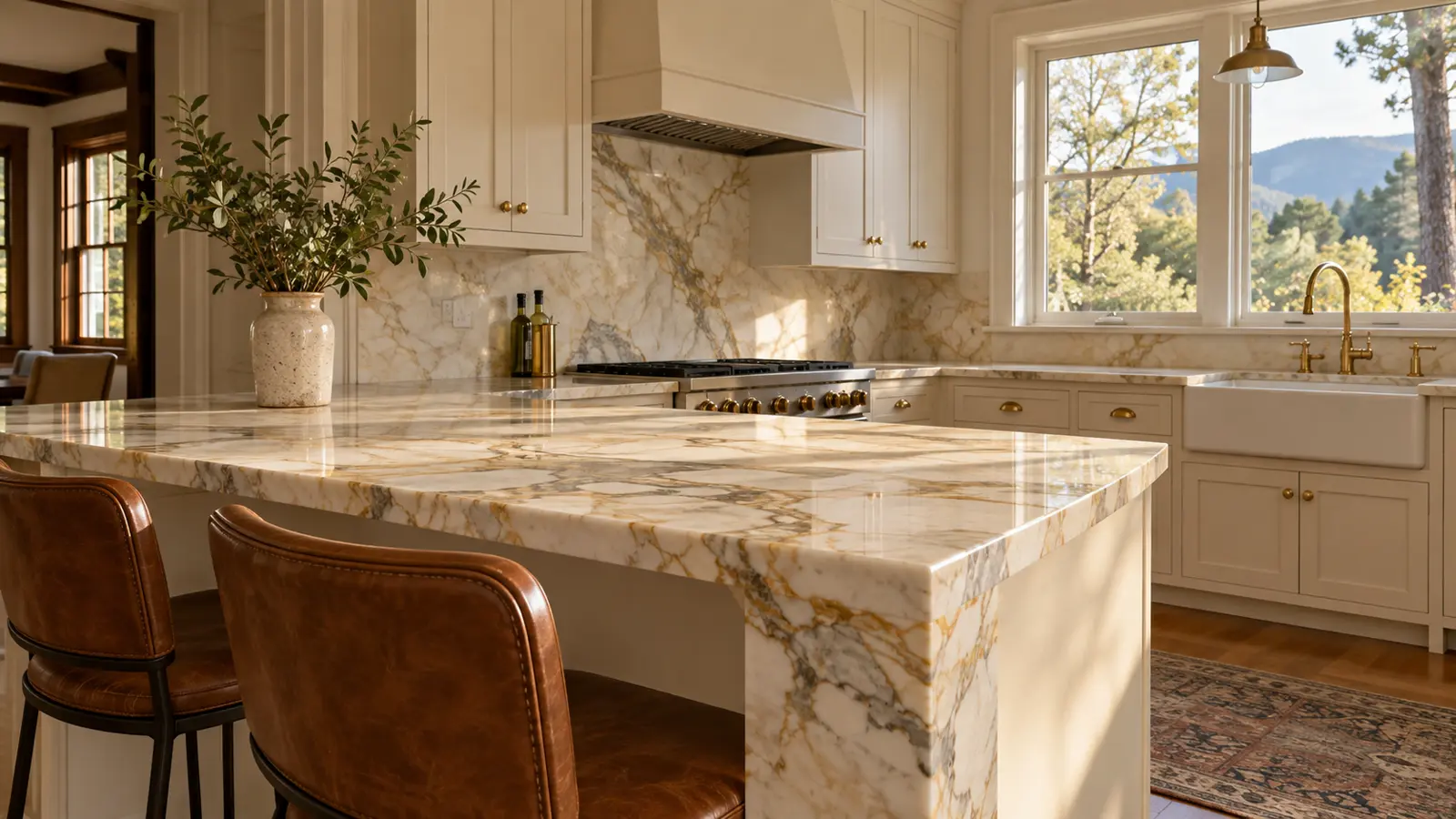
Butcher block pairs well with stone on the perimeter, and it is one of the most common ways it goes into a kitchen. The stone takes the sink, the range and the acid and heat, and the wood takes the island where people gather, bake and chop.
Where wood and stone meet, the heights have to line up. A kitchen counter usually stands about 35 to 36 inches from the floor, and a wood top and a stone top are rarely the same thickness, so we build up the cabinet or the wood to bring the two surfaces level where they run side by side. When the island is separate, you have more freedom and can choose a thicker slab of wood for presence.
Because we fabricate stone as well as wood, one crew templates the whole kitchen and brings both. There is no second trade to coordinate and no gap between the stone install and the wood.
A butcher block kitchen is typically estimated at roughly $2,000 to $5,000 installed, and wood usually runs about $40 to $100 per square foot installed, with species and grain moving the price most. Maple edge grain sits at the lower end, walnut and end grain at the upper end.
These numbers are estimates only, and they can change with lumber prices and your layout. The final price is the one in your written quote after the free measure.
Wood tops are not only for homes. Coffee bars, bakeries and retail counters use butcher block for its warmth, and a sealed finish makes it practical where it gets wiped all day. Cabinet shops and remodelers can order wood tops fabricated to their drawings, finished and ready to set, alongside stone for the same job.
Homeowners anywhere in the county can call for a free measure. Trade buyers can send drawings and the finish they want for a quote.
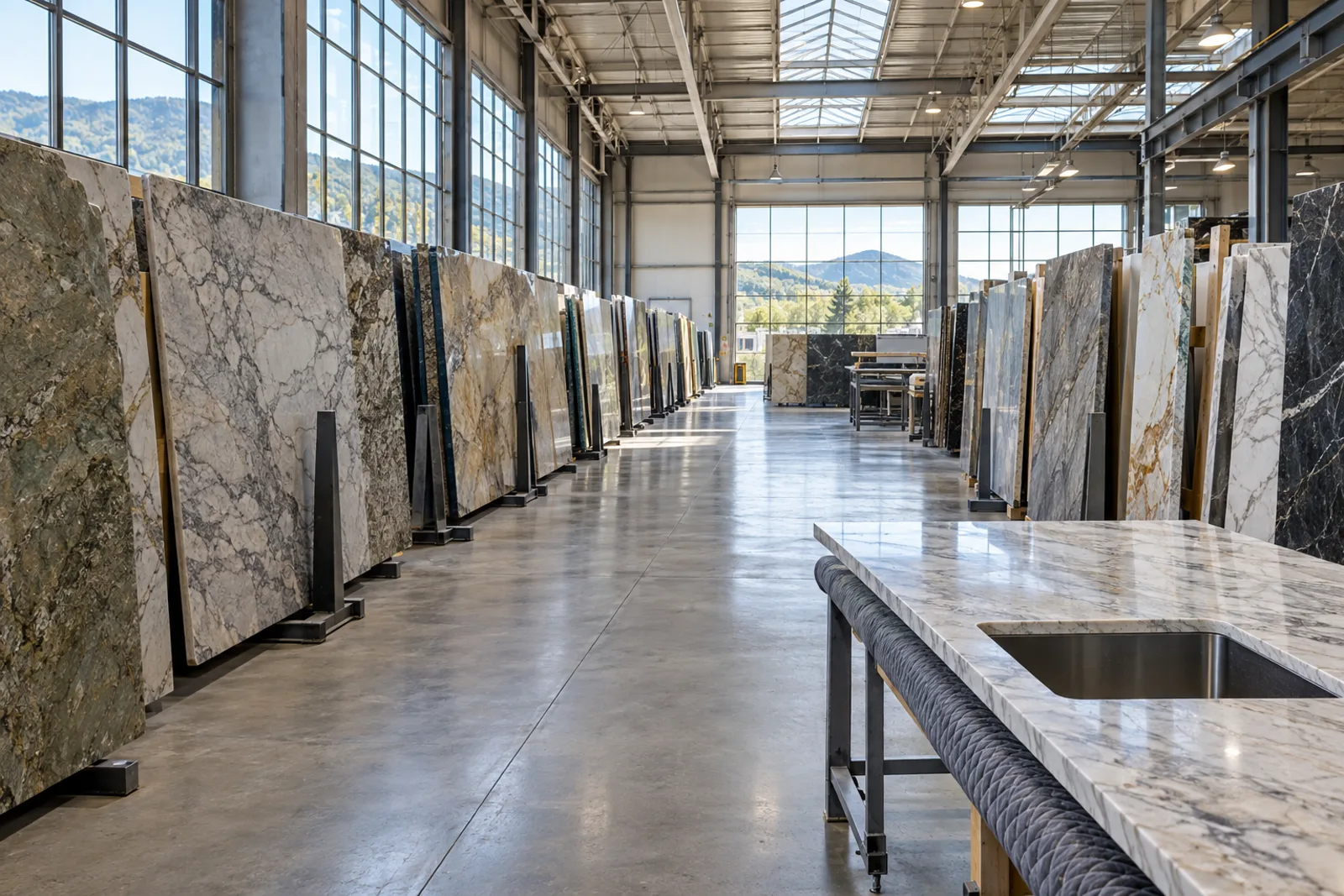
Drag the handle. The cabinets stayed; only the top changed.
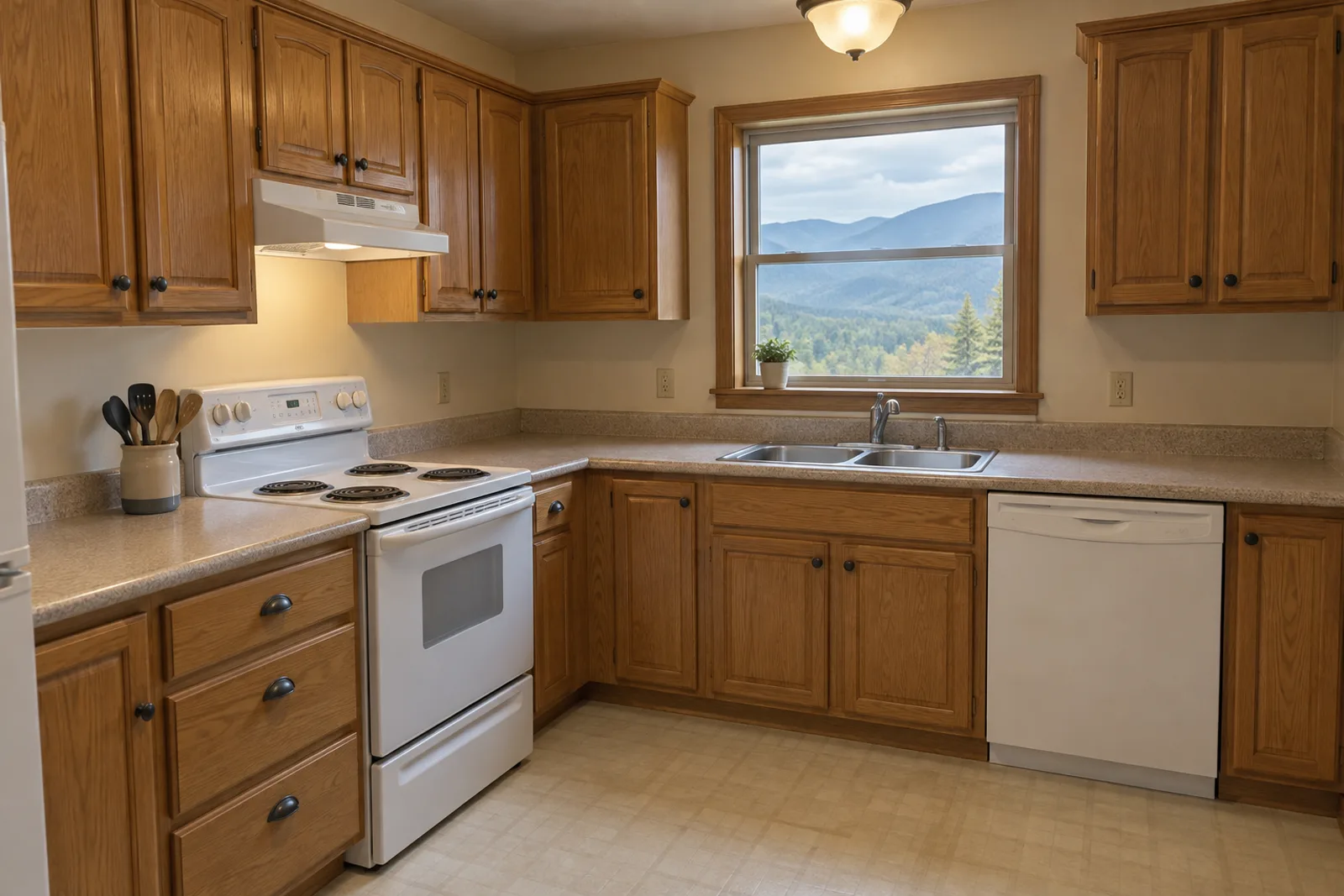
 BeforeAfter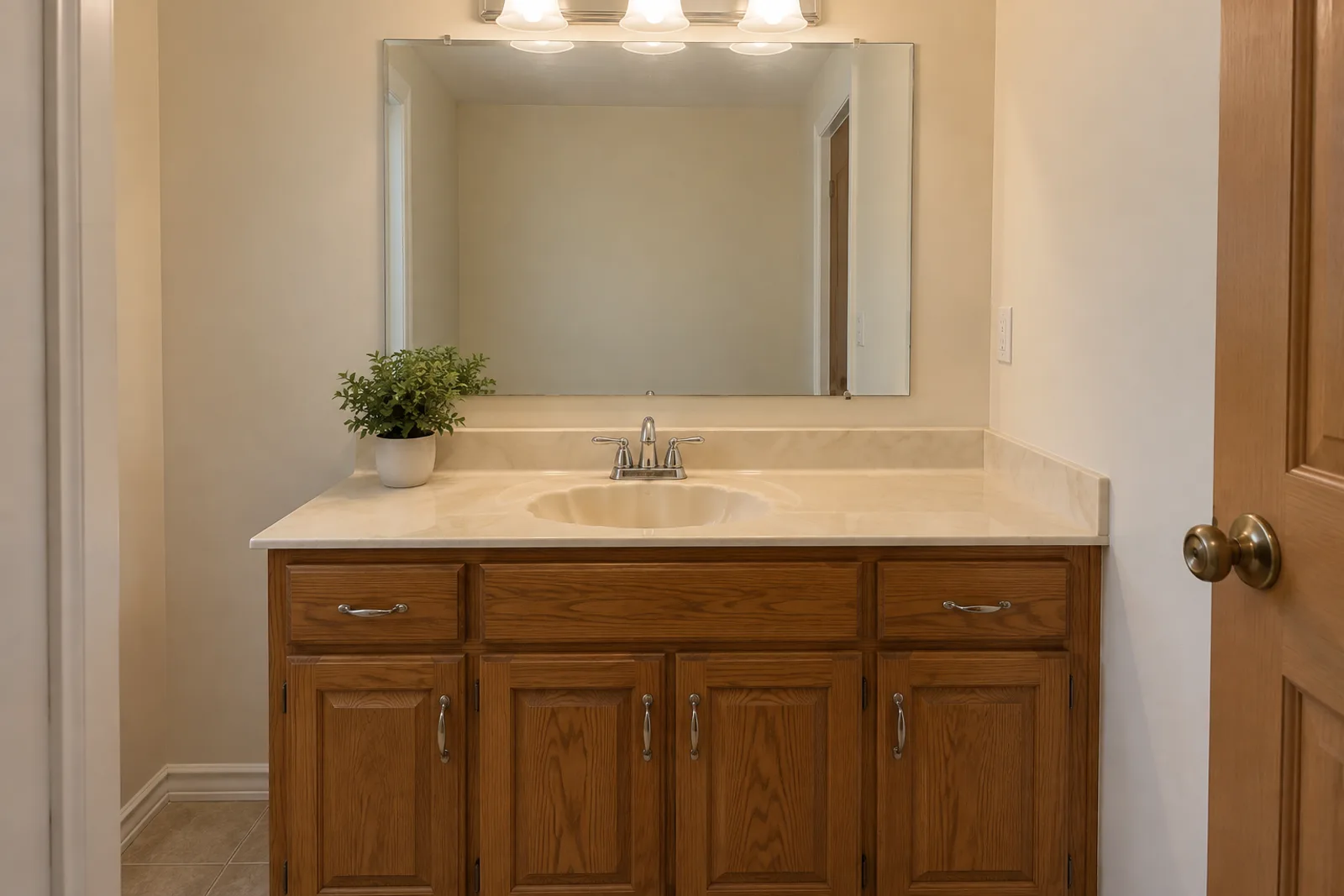
 BeforeAfter
The process
We come to the house, look at the cabinets, the walls and the way in from the driveway, and talk through materials and edges.
You get the slab, the edge, the cutouts, the seam plan and the dates in writing. Nothing is cut until you sign off.
Once the cabinets are set and level, we template them, then cut and finish the tops in the shop to that template.
We set and join the tops, then walk the finished kitchen with you before we call it done.
Questions
Yes, we fabricate and install them across Buncombe County. A well-built wood top lasts for decades when it has the right finish for where it sits and is fastened so it can move. Scratches and dull spots can be sanded out, which stone cannot offer.
You can, with a sealed film finish on the top and every cutout edge sealed in the shop. An oil finish alone is not enough right at a sink. A licensed plumber handles the water and drain connections.
An oiled top needs oil at least about once a month, and more often if it is washed a lot. When the wood looks dry, it is time. A sealed top does not need oiling; it gets wiped with mild soap and water.
Species, grain, thickness and finish drive most of it, then cutouts, height matching to any stone, tear-out and access. End grain walnut costs the most. The wood top price you pay is the one printed on your written quote.
Usually. Wood is lighter than stone, so sound cabinets carry it easily. We check that the boxes are level and solid at the measure and shim them where needed before we template.
Most worn butcher block can be sanded and refinished instead of replaced. Replacement makes sense when water has blackened the wood deep into the grain or glue joints have opened along the sink.
We look at the cabinets, the sink, any stone that stays, and the way into the house. We talk through species, grain and finish, and you get a written quote. Once you approve it, we template on the cabinets and build in the shop.
Yes. We work across Buncombe County, including Asheville, Candler, Woodfin, Fairview, Arden, Weaverville, Black Mountain and Swannanoa.
Free measures across Buncombe County. Builders, cabinet shops and property owners can send drawings for a bid.
Licensed, bonded & insured. Calls only, we do not receive text messages.