Why the vein has to match over the corner
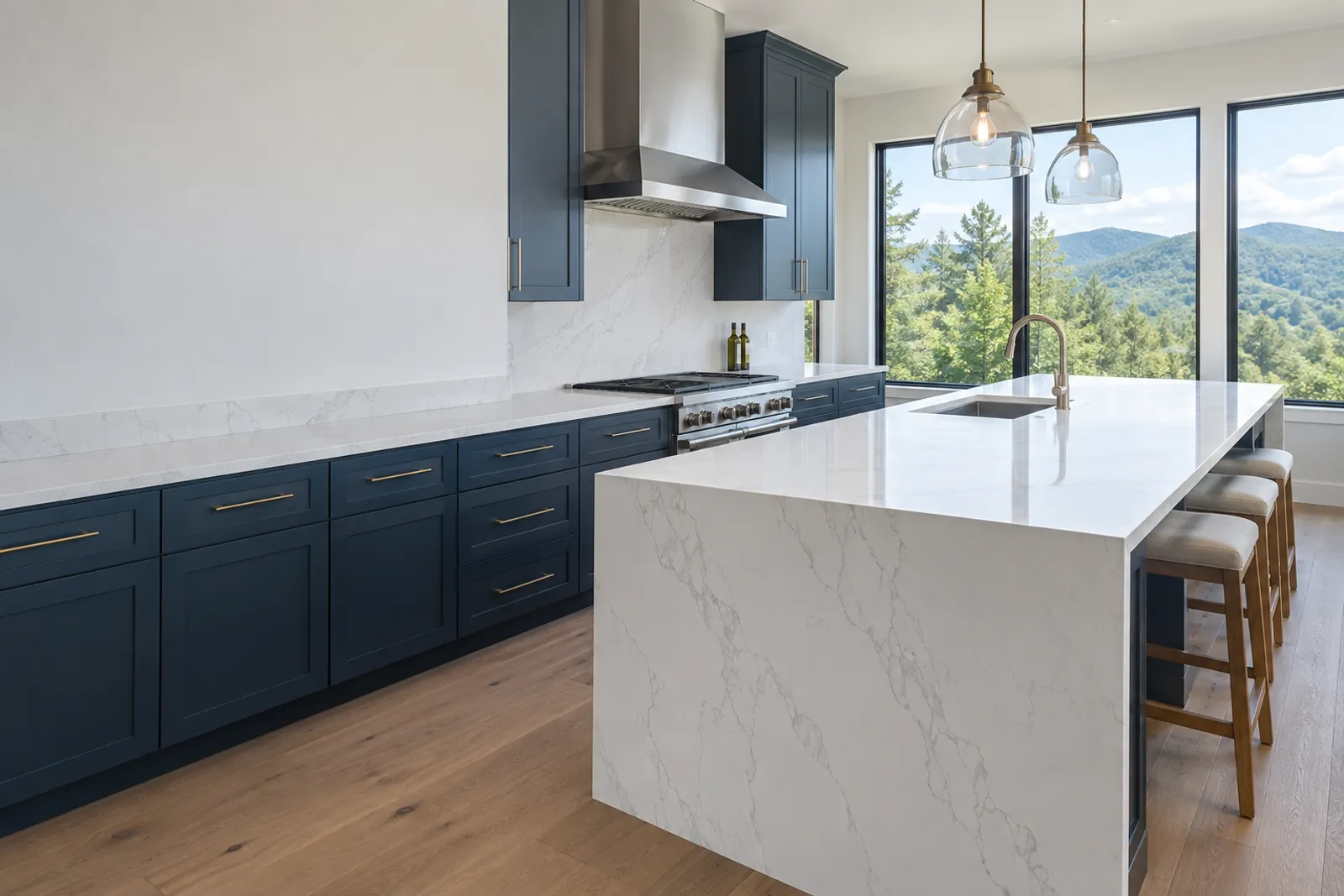
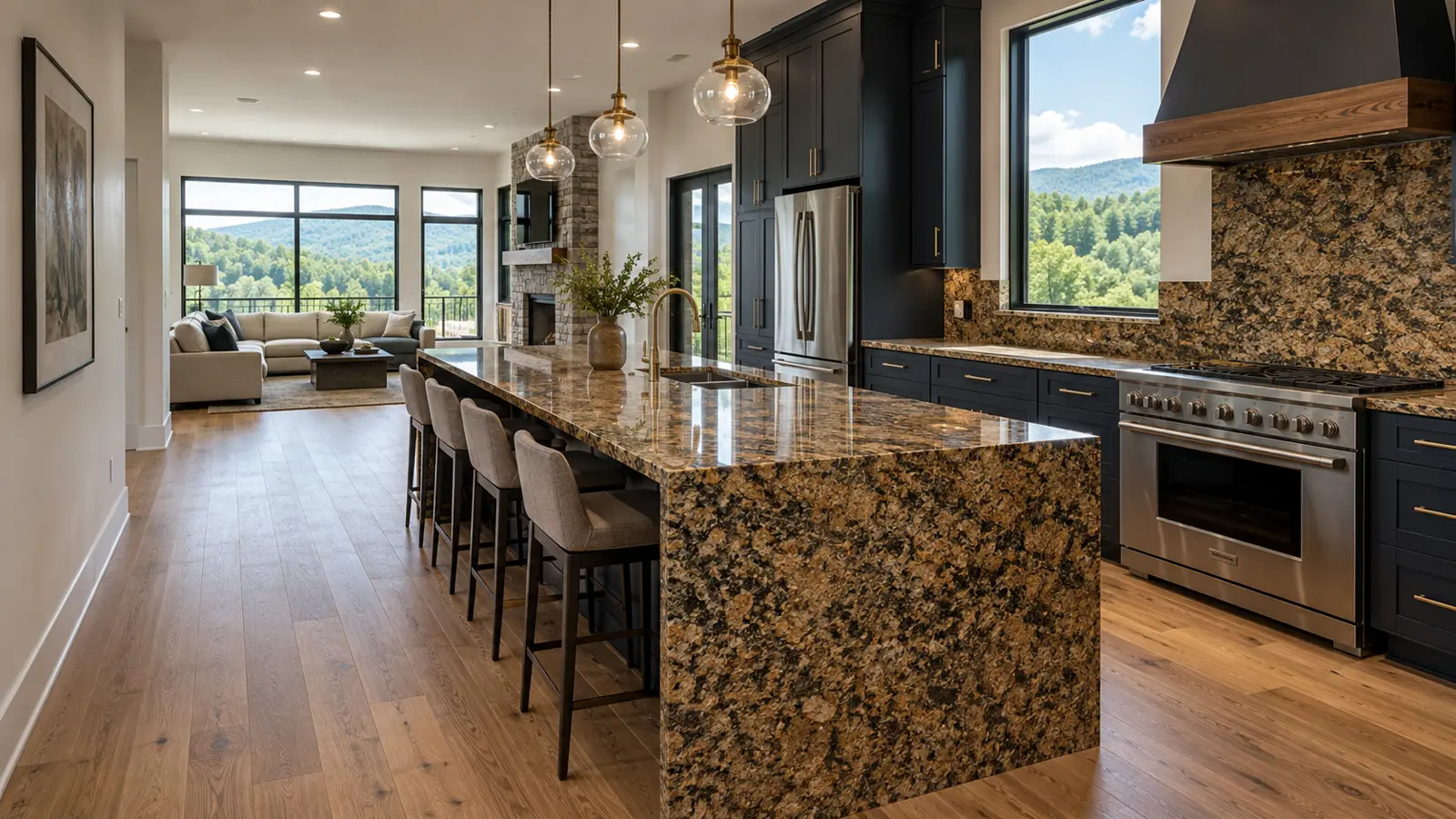
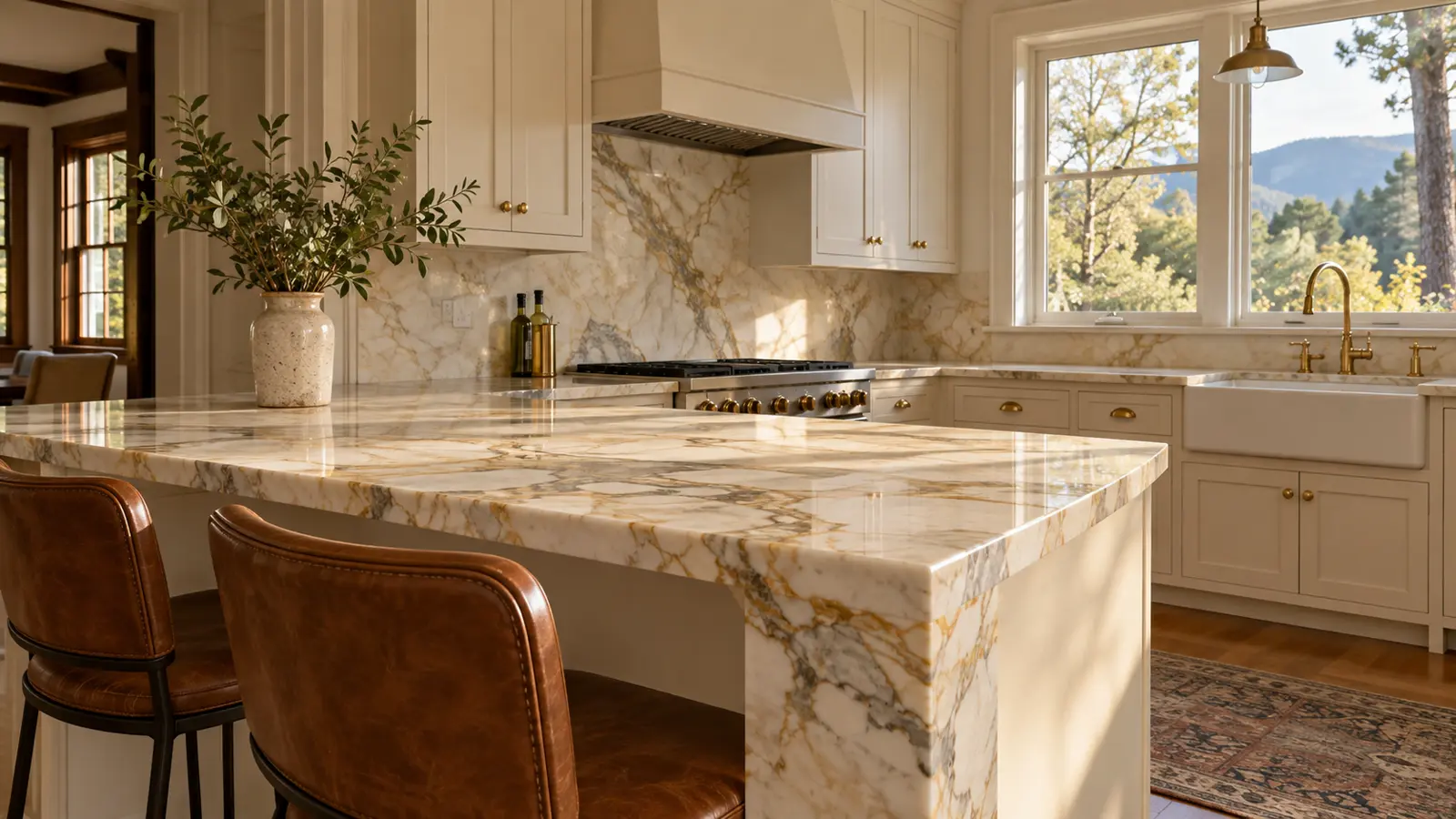
A waterfall countertop in Asheville only works if the vein runs over the corner without a break, because the whole point of the design is that one sheet of stone appears to fold down the side of the island. If the pattern stops at the joint, the eye reads two pieces glued together, and the premium you paid for the look is lost.
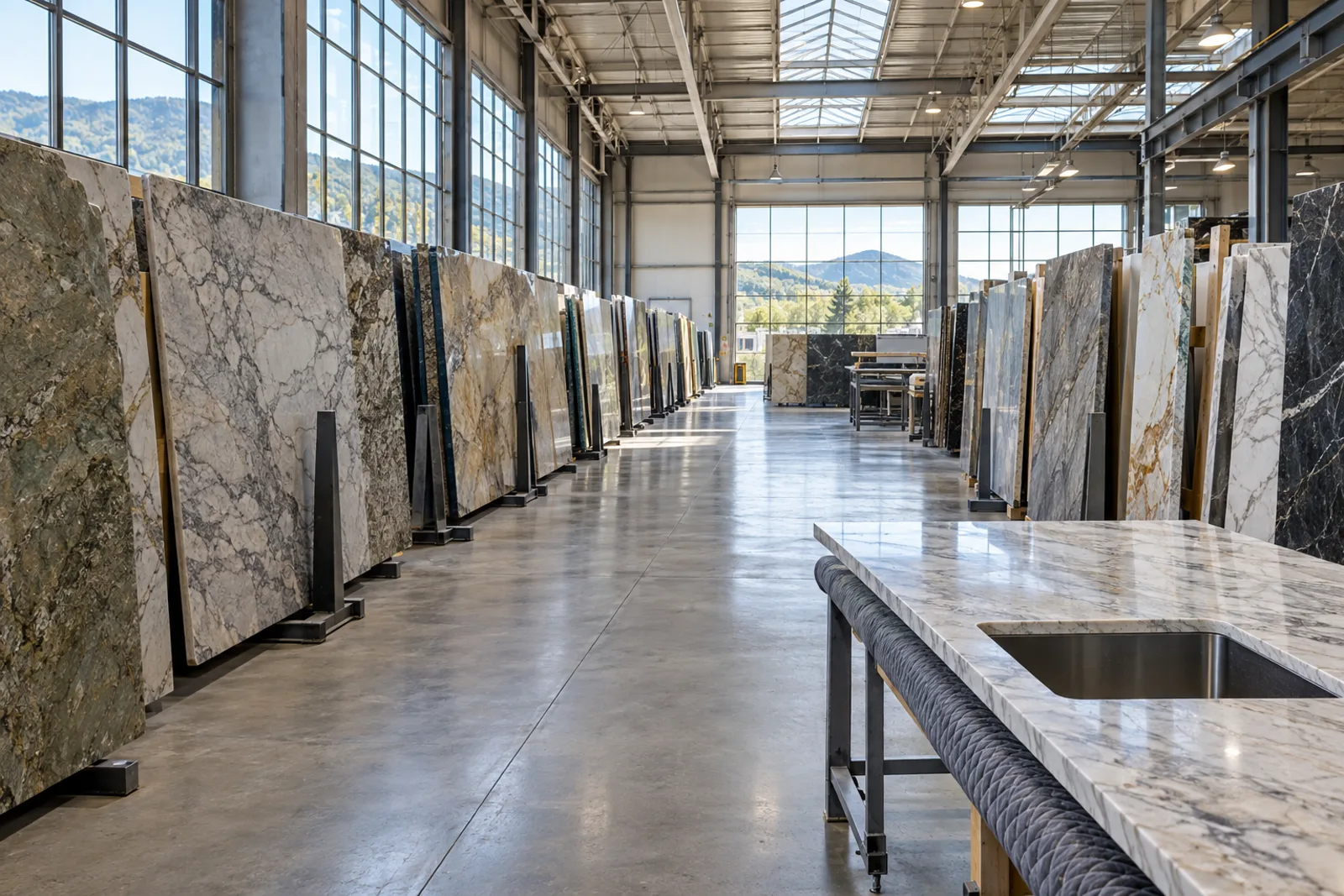
That is why the side panel is cut from the same slab as the top, from the stone right next to it. Bookmatching, the practice of setting two adjoining cuts so they mirror each other like the pages of an open book, is how fabricators carry a pattern across a joint in both wood and stone. Trade guidance on waterfall work describes the veins being aligned by the fabricator so they flow over the edge without breaking.
Which stones show it most
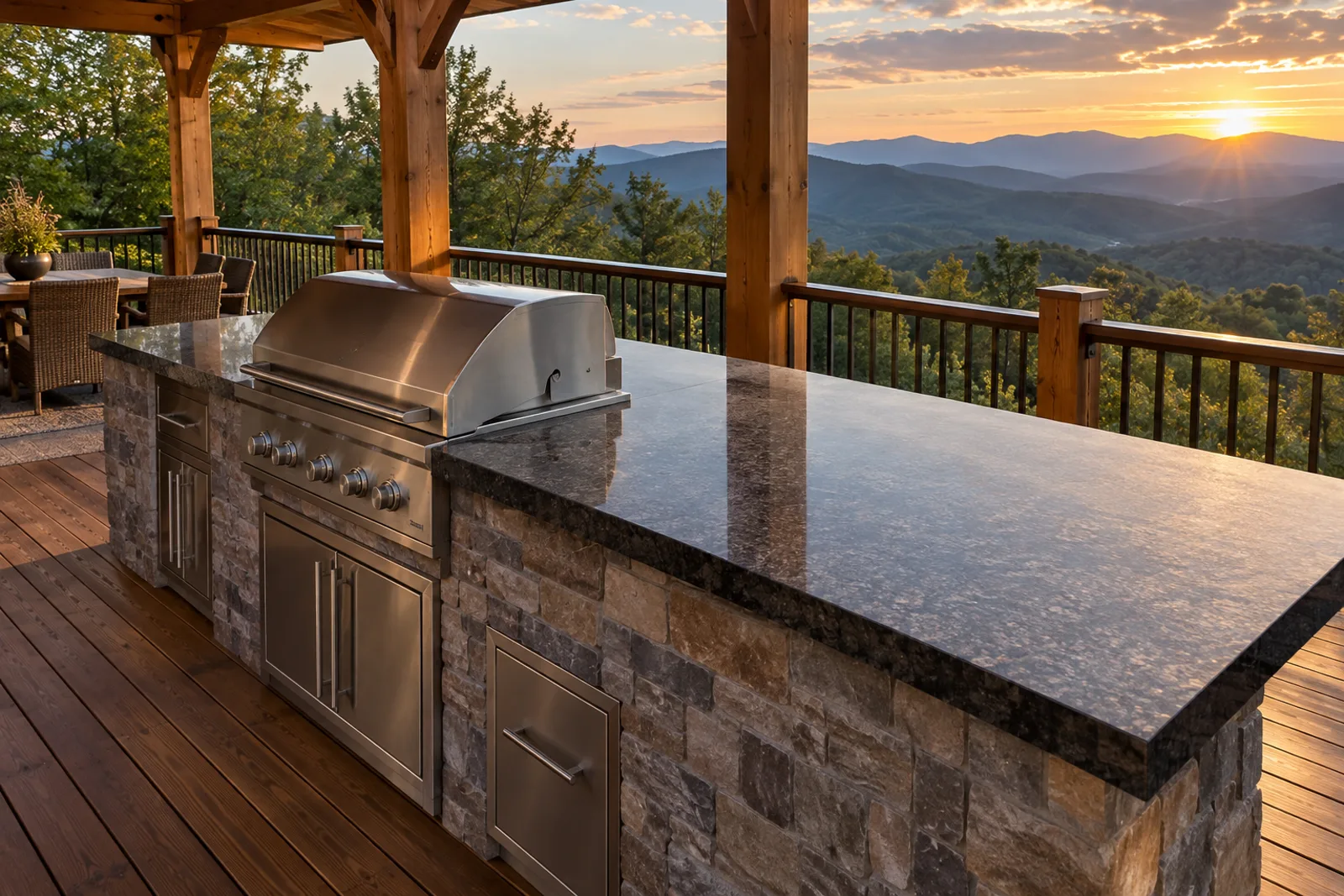
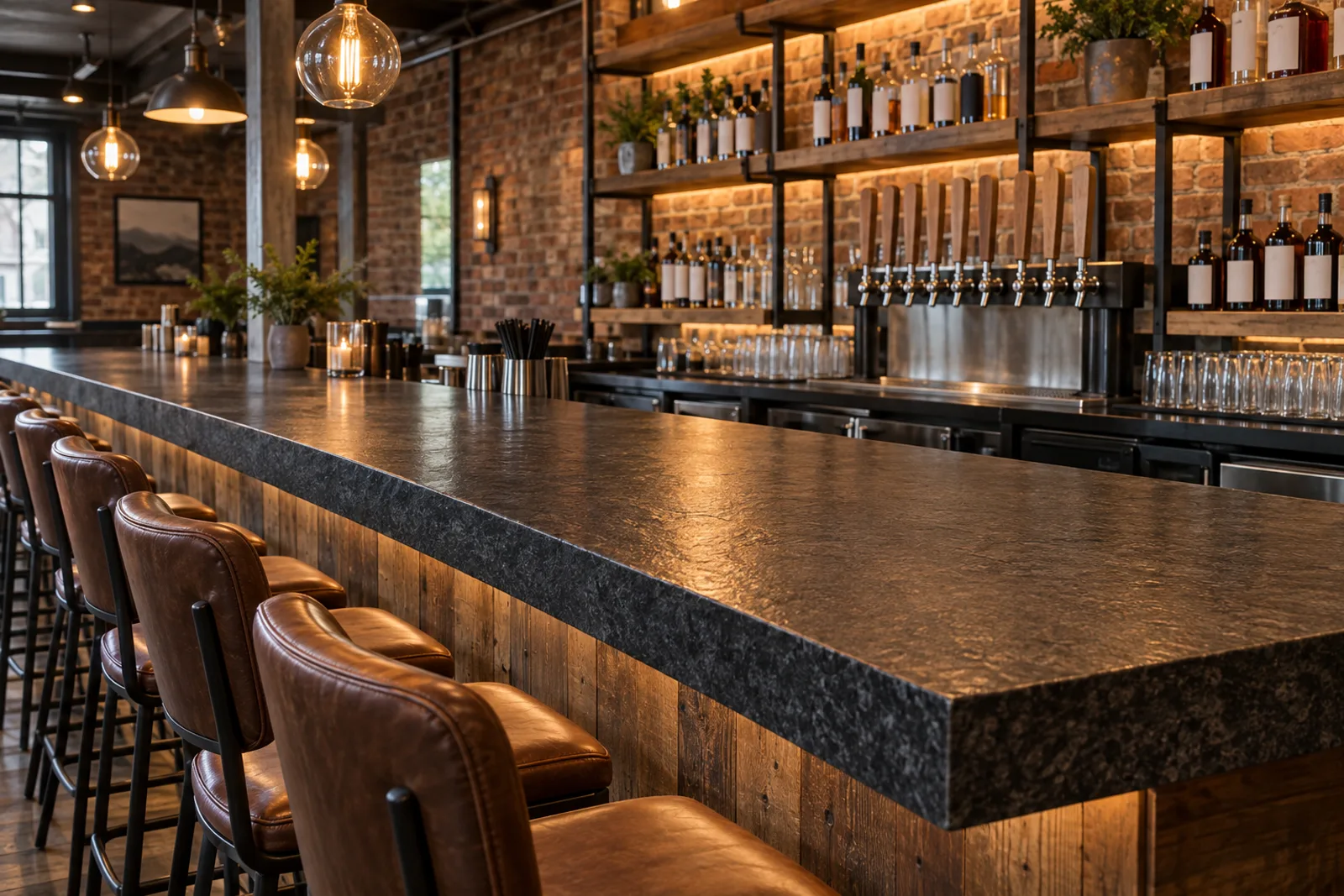
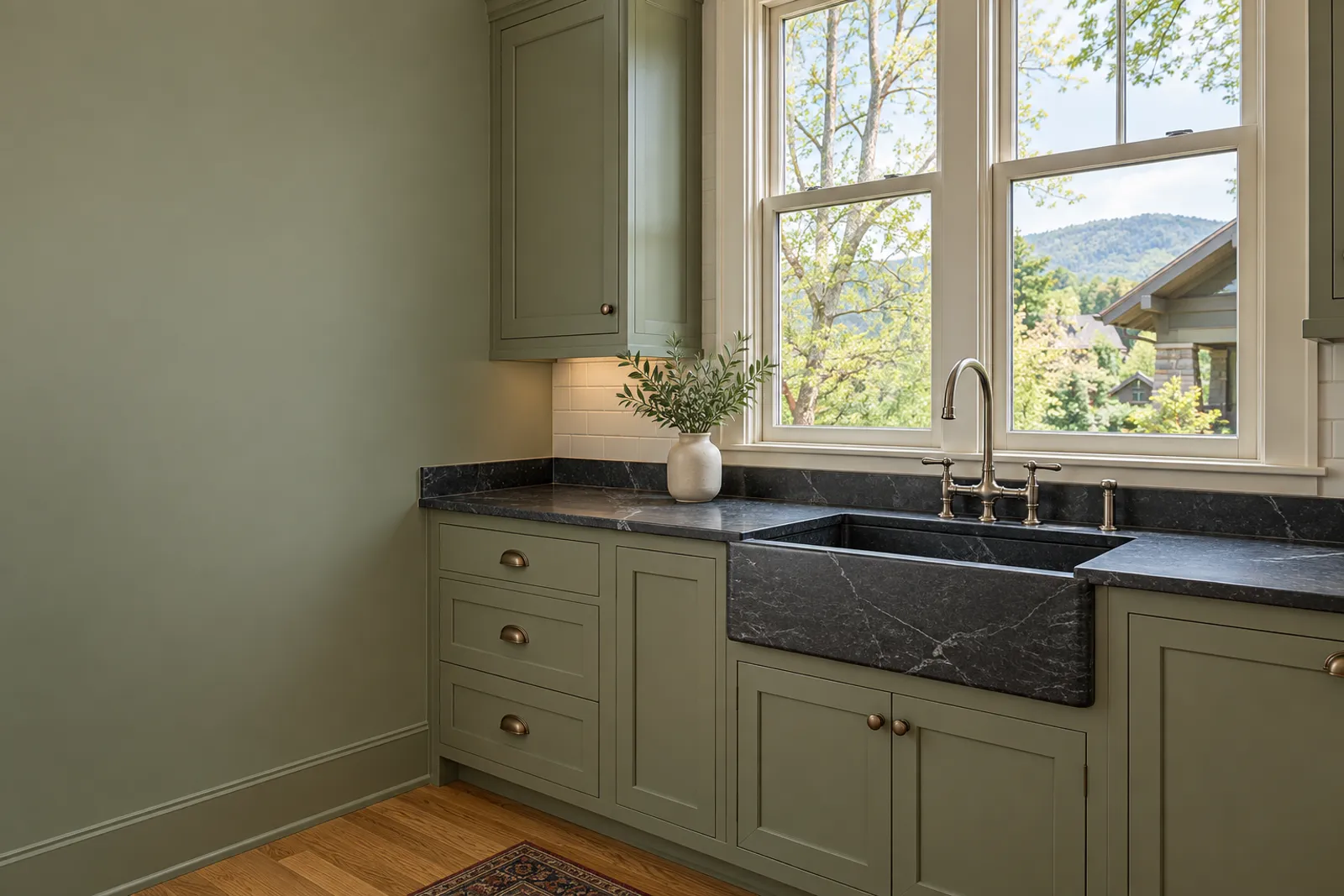
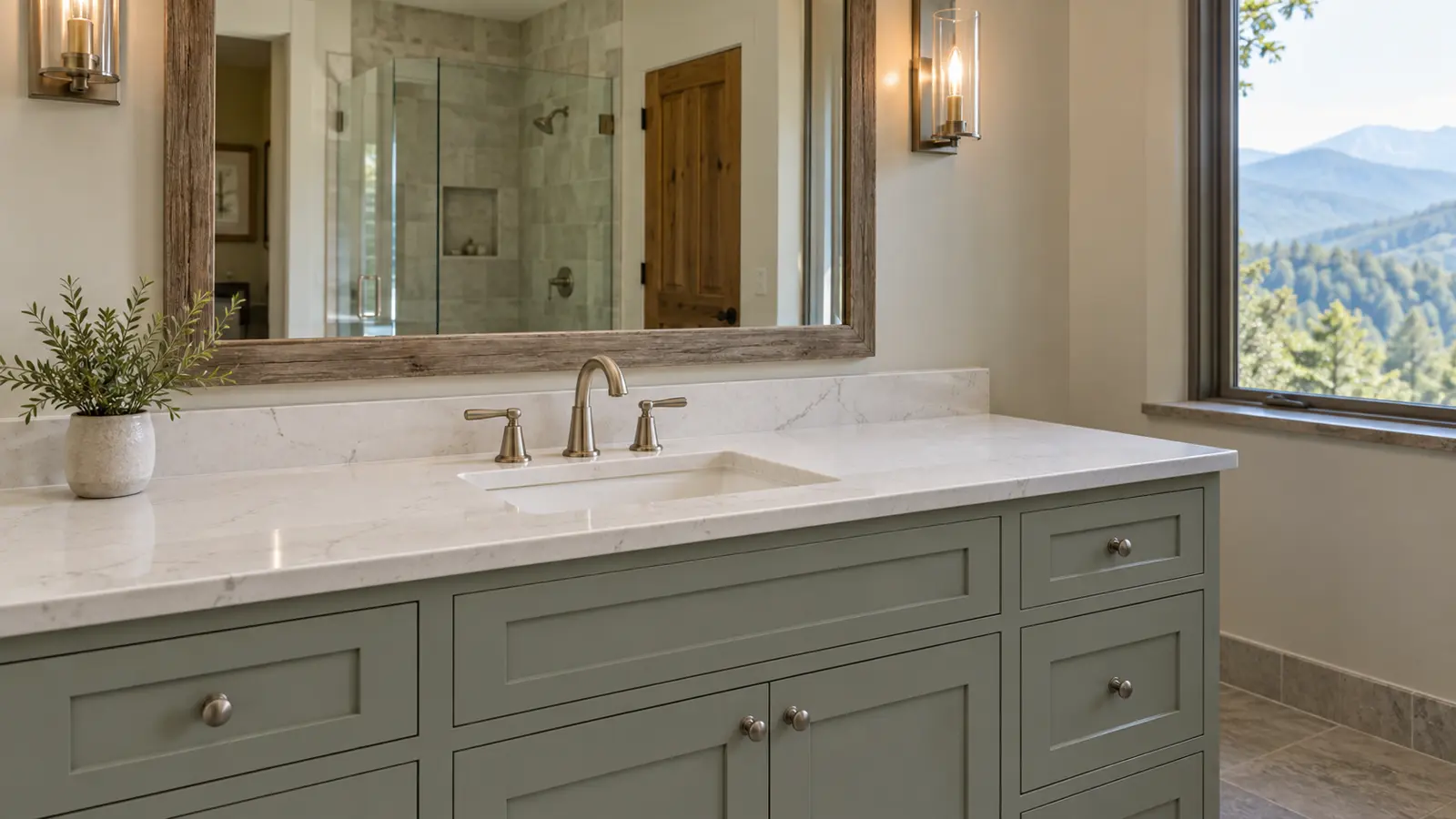
Marble with strong movement and veined quartzite make the most dramatic waterfalls, and they are also the least forgiving, since a mismatch of a finger's width is visible across a room. Granite, a coarse-grained rock of quartz, feldspar and mica, has a speckled grain that hides small shifts. Solid and lightly veined quartz is the easiest to match.
So the choice of stone and the vein layout are made together, on the slab, before anything is ordered for fabrication.