
Real Quartzite Countertops, Tested Before You Buy
Buncombe Custom Countertops is Buncombe County's specialist in quartzite countertops in Asheville, NC, specializing in natural quartzite kitchen tops, book-matched quartzite islands and mitered quartzite edges. We offer quartzite vanity tops and tall quartzite splash panels behind a range.
- Free in-home measure
- Slab approved before any cut
- Licensed, bonded & insured
Get a free countertop estimate
Or call (828) 470-1105. Calls only, we do not receive text messages.
About our quartzite countertops
Our team provides diamond-tooled fabrication for one of the hardest stones in a kitchen, delivering stain-resistant countertops for luxury homes and hard-wearing surfaces for both residential and commercial projects. We walk the supplier's yard with you to scratch and etch test the slab you want, and the seam layout is marked on that same slab and approved before any cut in our shop.
From a glass scratch test at the yard to mitered edge joints, installation and a first sealing where the stone needs one, our team handles every detail. Serving Asheville, Fairview and Black Mountain, we plan the carry route to the kitchen at the measure, so a premium slab arrives in one piece.
Why Buncombe Custom Countertops
How We Work
The crew that measures your kitchen is the crew that sets the tops.
Quartzite or soft marble: why the label is not enough
Real quartzite is a hard, dense stone that scratches glass and does not etch from lemon juice, but some slabs sold as quartzite are marble or dolomitic marble, which are softer and do etch. The Natural Stone Institute says it directly: quartzite is commonly mislabeled, and sometimes marble or dolomitic marble carries the quartzite name. The trade name on the rack is a sales label, not a geological test.
The difference is in what the stone is made of:
- Quartzite forms when sandstone is heated and compressed deep in a mountain belt until its quartz grains fuse. The British Geological Survey classifies a metamorphic rock as quartzite only when it is at least 80 percent quartz by volume.
- Quartz rates 7 on the Mohs hardness scale. Window glass rates about 5.5, so real quartzite is harder than the glass you test it on.
- Marble is calcite or dolomite that has recrystallized. Calcite rates 3 on the Mohs scale, and the mineral dolomite 4 or less.
- Acids attack the carbonate in marble, which is why vinegar and lemon cleaners are ruled out for it. Dolomite reacts more slowly than calcite, bubbling feebly in dilute acid where limestone reacts vigorously, so a dolomitic stone can look tougher than it is at a quick glance.
Why it matters for your kitchen: you may pay a quartzite price for a stone that behaves like marble, and find out when the first lemon wedge leaves a dull ring. Wikipedia's quartzite entry puts real quartzite as harder and more resistant to stains than granite. A mislabeled slab is neither.
The process
How the slab test works before you buy
Two quick tests at the yard settle whether a slab is real quartzite: a glass scratch test and an acid etch test. Ask the supplier which offcut or sample edge of that same stone you may test, then run both.
Step one: the glass scratch test
Press a rough edge of the stone firmly across a glass tile. Real quartzite bites into the glass with a gritty, grinding feel and leaves a clear scratch. A softer stone skates across it, leaves a faint mark or none, and often leaves a powdery trail that rubs off.
Step two: the etch test
Set a few drops of lemon juice or vinegar on a polished area and leave them for about fifteen minutes, then wipe it dry. Real quartzite is unchanged. Marble and dolomitic marble show an etch: a dull spot, or a patch lighter or darker than the polish around it.
Step three: read the results together
A slab that scratches glass and does not etch is behaving like quartzite. One that fails either test is a softer stone, whatever the tag says. It may still be beautiful; it just needs to be bought, priced and cared for as marble.
Step four: approve the layout
Once the slab passes and you buy it, the seam layout is marked on that slab for your approval before any cut, so the stone you tested is the stone in your kitchen.
Why quartzite costs more to fabricate
Quartzite costs more to cut than granite because it is harder, so every saw pass, edge and sink cutout takes longer and wears the tooling faster. Hard stone is cut with diamond blades, which work better wet because water carries away heat and dust. On a CNC router, machining stone is closer to grinding than cutting, and a harder stone grinds more slowly. Mitered edges, where two pieces meet at 45 degrees to look like a thick slab, add precise work on top of that.
Quartzite is also a form of silica. Cutting, grinding and polishing natural and manufactured stone can release fine crystalline silica dust, and OSHA's construction standard notes that water applied to the blade substantially reduces the dust stone cutting creates. That is a strong reason all shaping happens on a shop floor, not in your kitchen, with only small adjustments made on site.
The price is also the market's. Quartzite sits at the top of the natural stone ladder, and named stones such as Taj Mahal or Mont Blanc carry premium slab prices before any fabrication starts.
Sealing and stains on real quartzite
Real quartzite resists stains better than granite, and some tight-grained quartzites need no sealer at all, while more porous varieties benefit from one. The Natural Stone Institute gives Taj Mahal as an example of a quartzite so tightly bonded it does not need sealing, and Calacatta Macaubas as one porous enough to benefit from protection. We check the slab you choose with a water test before installation and seal it if it darkens.
Daily care is simple for the real thing: warm water and a mild soap, with no fear of lemon juice or wine. If your stone failed the etch test and you bought it anyway because you love it, treat it as marble, keep acidic spills off it, and expect a softer polish over time. That is a fair choice, as long as it is made knowingly.
Quartzite countertop cost in Asheville
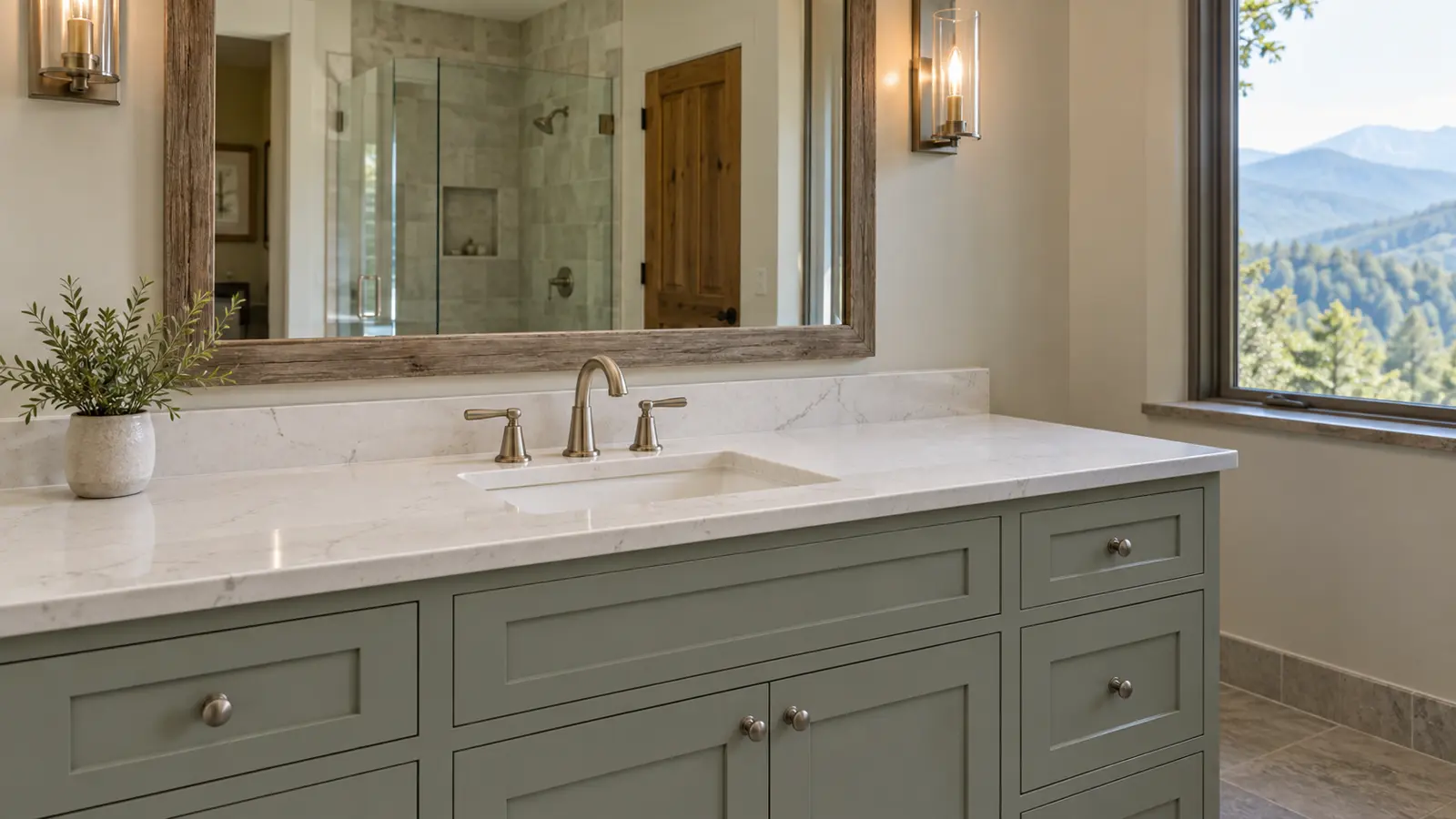
Quartzite countertops in Asheville are typically estimated at roughly $80 to $250 per square foot installed, the widest range of any stone we cut, because slab prices vary so much between named quartzites. A large kitchen with an island in quartzite is usually estimated at roughly $8,000 to $20,000 before unusual features.
What moves a quartzite price:
- The slab itself, which is often the largest part of the cost.
- Square footage and the number of slabs, plus any book-matching that needs two consecutive slabs.
- Edge work, especially mitered edges that make the stone look thicker.
- Seams and their placement on a strongly veined stone.
- Cutouts for an undermount sink, a cooktop or a prep sink.
- Overhang support at an island.
- Tear-out and disposal of the old top, and cabinet leveling.
- Access: long mountain drives, steps to a raised house and tight turns inside add labor to a heavy, costly slab.
The faucet and drain are disconnected and reconnected by a licensed plumber, which appears as its own item on the quote. All of these figures are estimates, subject to change with slab availability and the details of your kitchen, and the final price is set in the written quote after the free in-home measure.
Quartzite for designers and custom builders
Designers and custom builders specifying quartzite for a client carry the risk of a mislabeled slab, so testing belongs in their process too. Send us the stone name and the supplier, and we can meet your client at the yard for the scratch and etch tests before a deposit, then template on the installed cabinets and schedule the install around the rest of the finish work. Trade accounts are available for repeat projects.
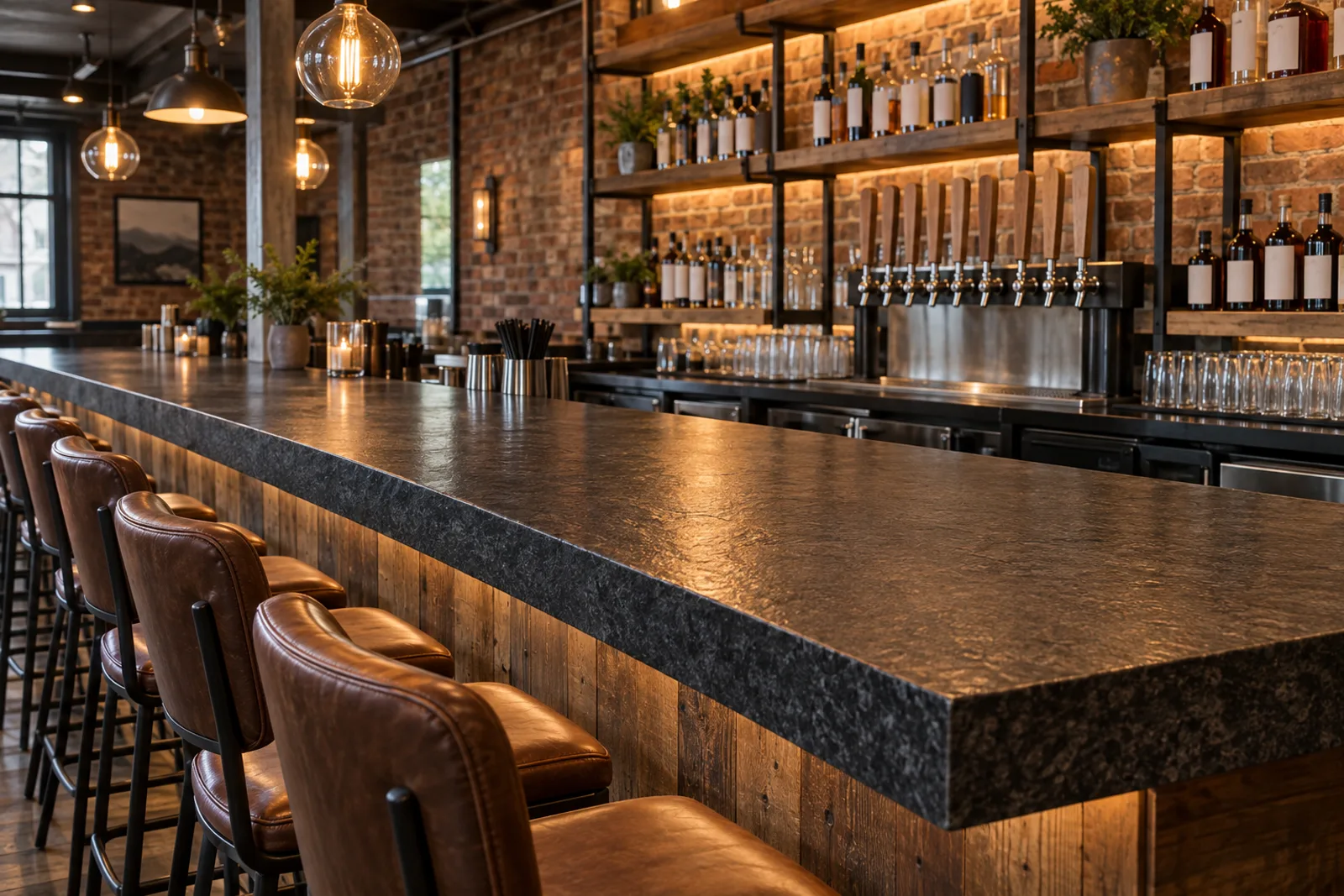
Same Cabinets, New Countertops
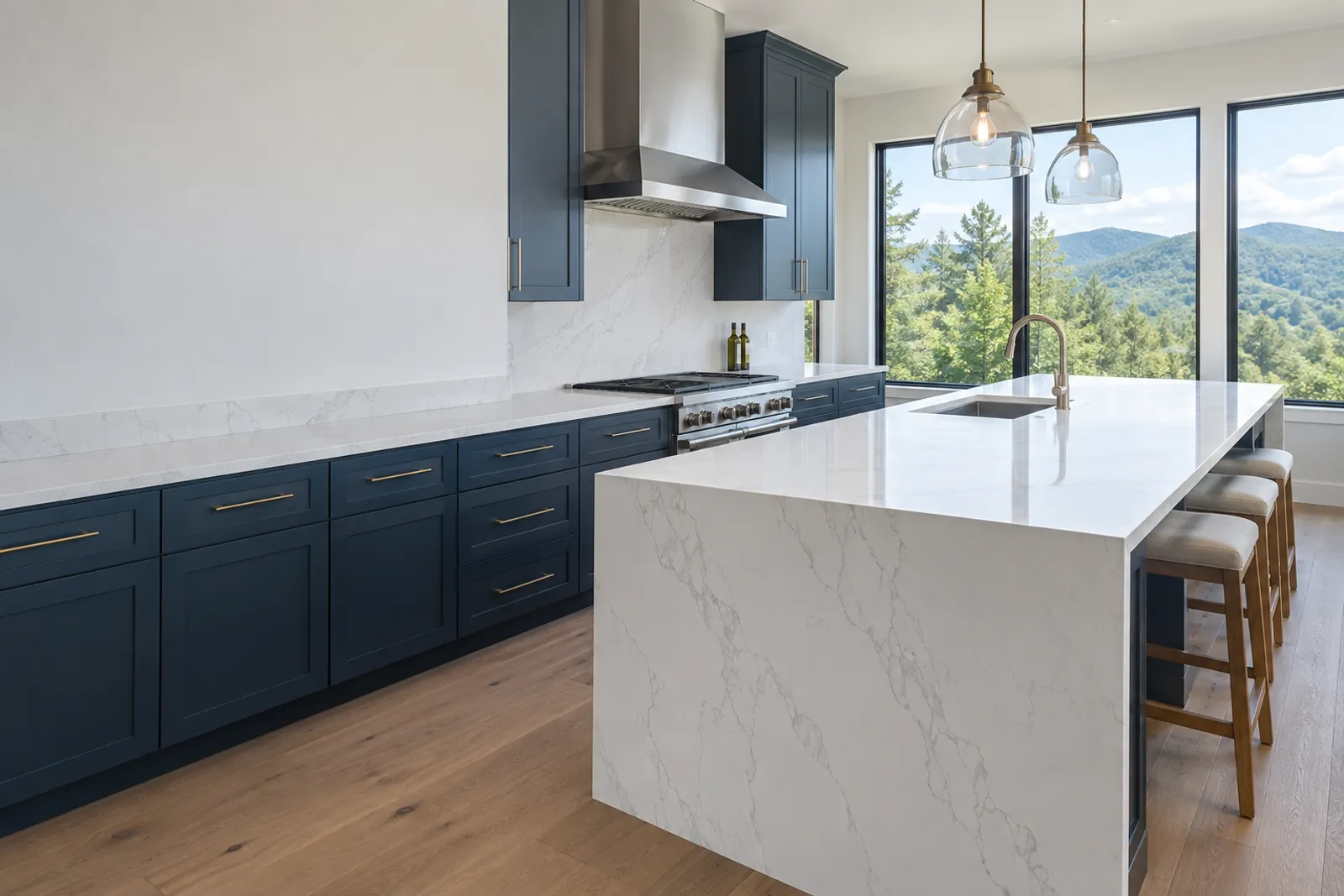
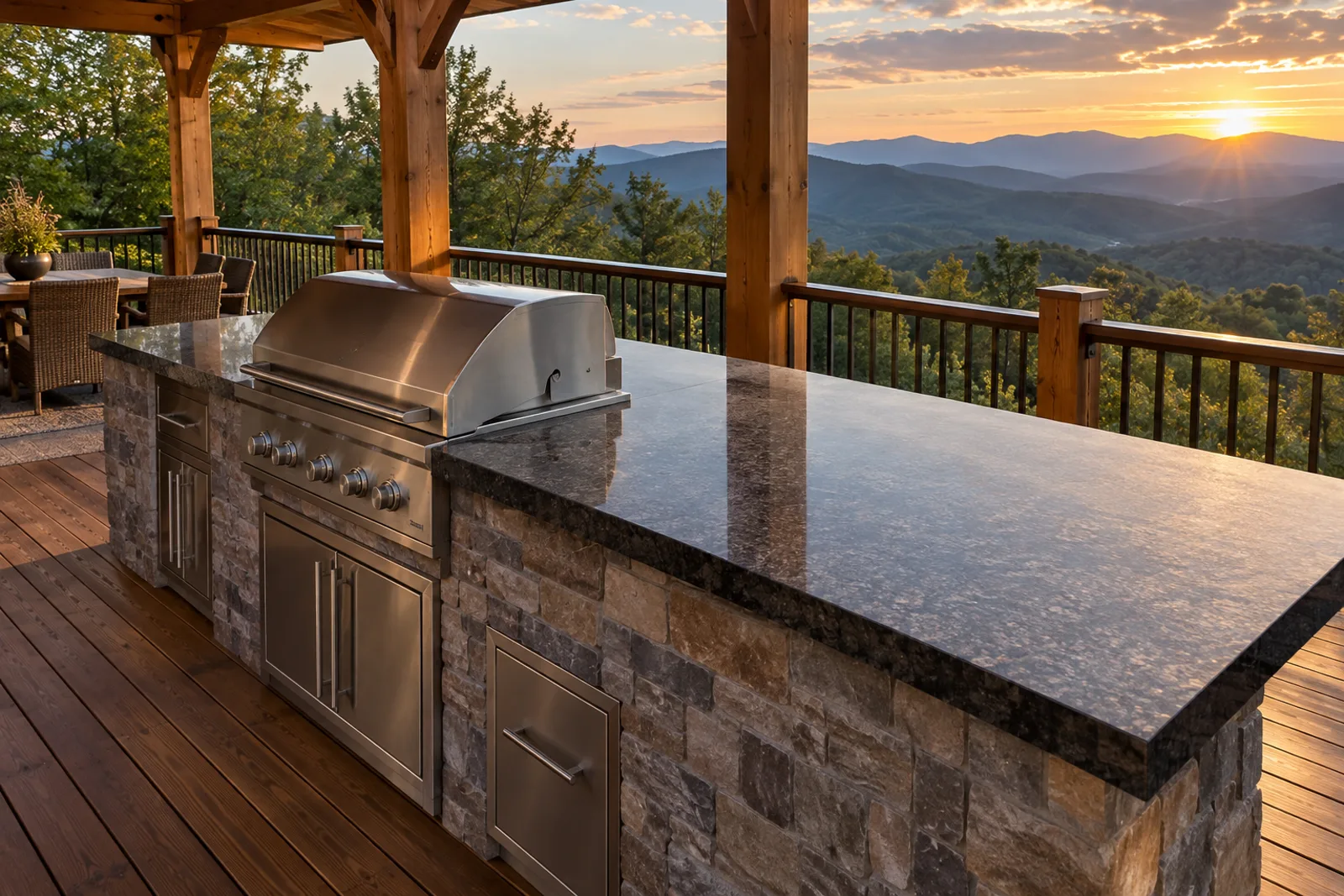
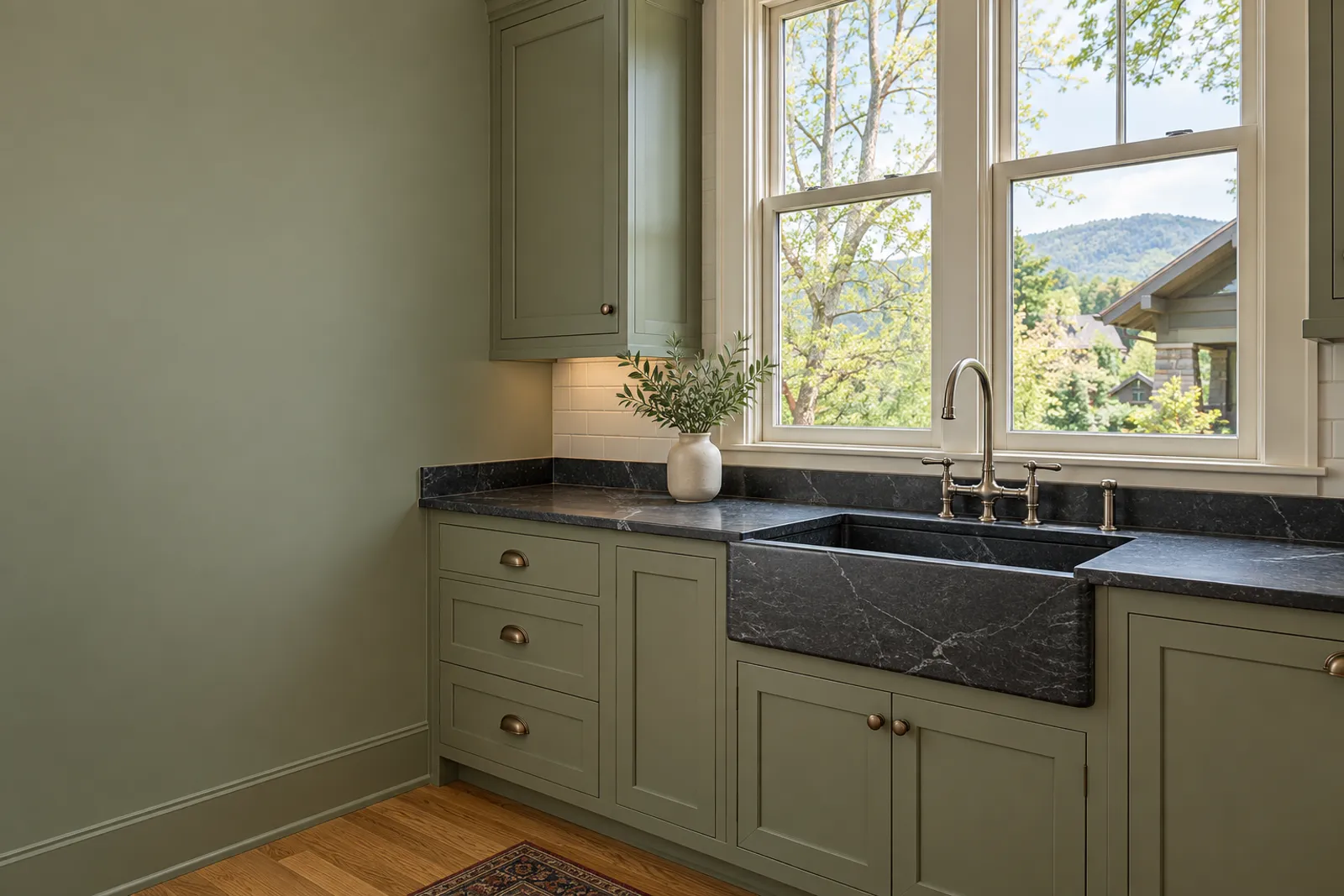
Drag the handle. The cabinets stayed; only the top changed.
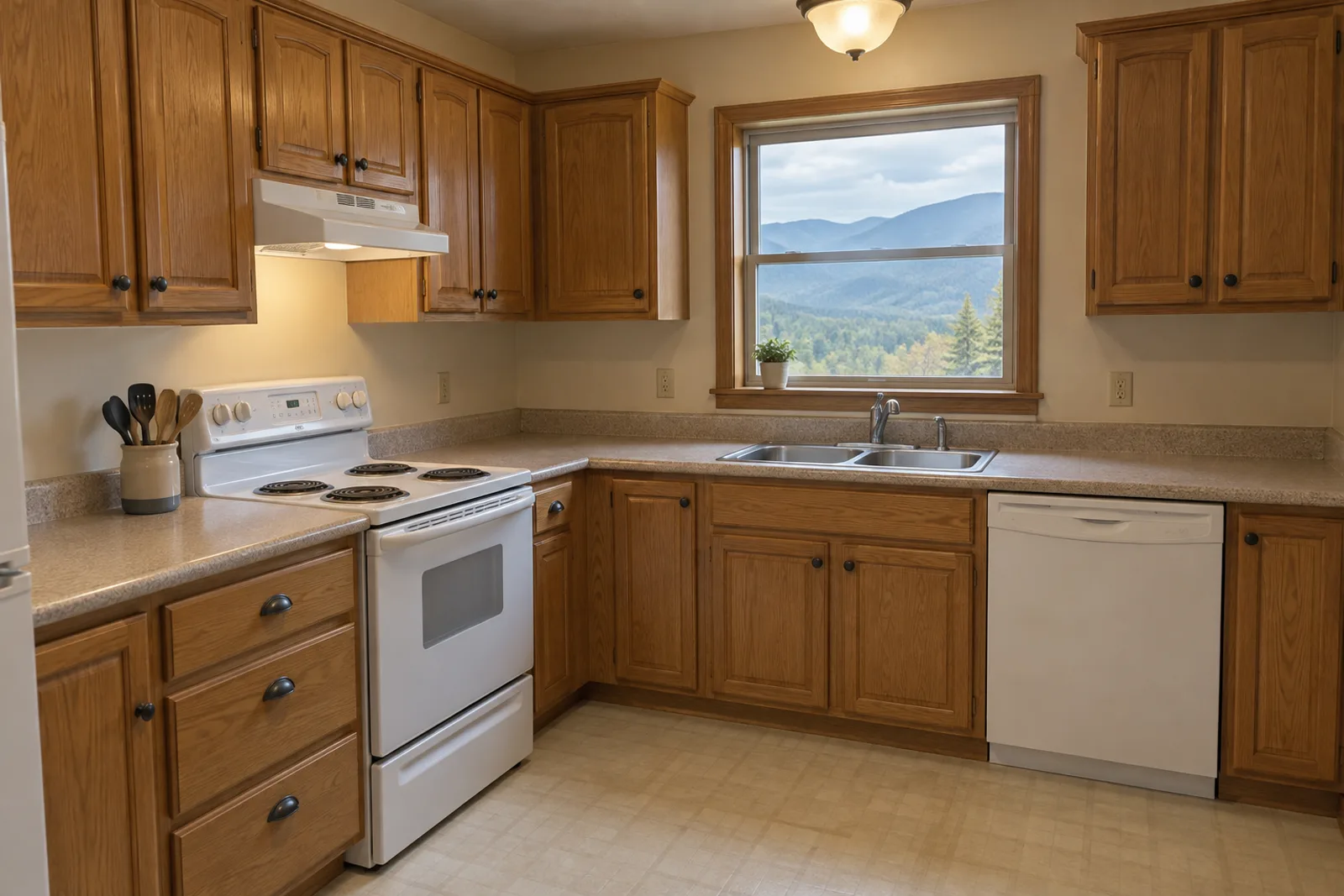
 BeforeAfter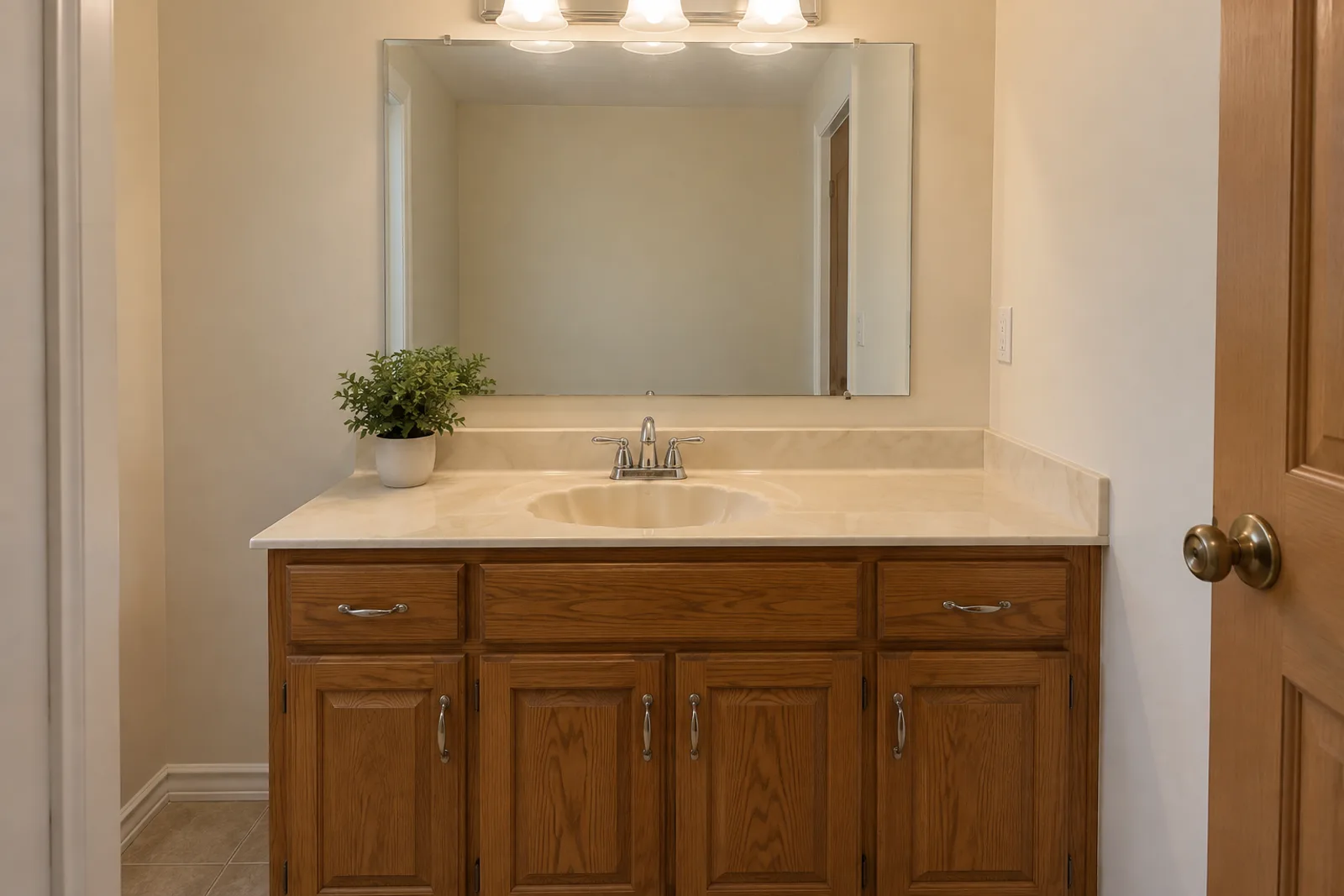
 BeforeAfter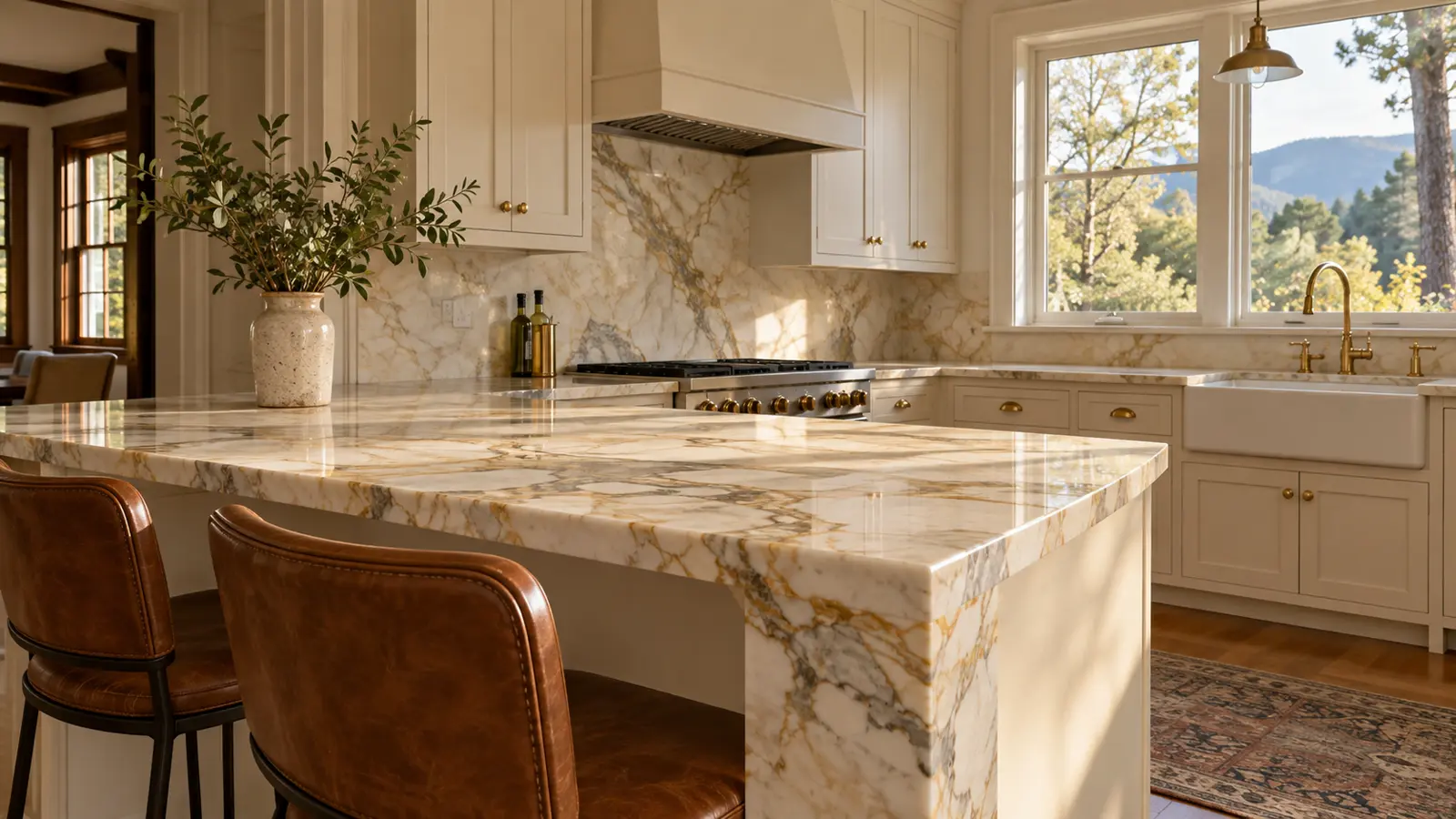
Questions
Quartzite Countertops: Common Questions
How do I know a slab is real quartzite?
Test it. Real quartzite scratches glass and does not etch when lemon juice or vinegar sits on it for about fifteen minutes. A slab that fails either test is a softer stone, usually marble or dolomitic marble, whatever the label says.
Is quartzite worth the extra cost over granite?
It can be, if the slab is real. Genuine quartzite is harder and more stain resistant than granite and gives the marble look without marble's etching. If you like granite's patterns and want to spend less, granite remains a strong choice.
Does quartzite need to be sealed?
Some does and some does not. Tight-grained stones may need nothing, and porous ones benefit from an impregnating sealer. A water test on your slab shows which you have: if a puddle darkens the stone within half an hour, seal it.
What happens if the slab I love fails the test?
You still have choices. You can buy it as the marble it is, at a price that reflects that and with a care routine to match, or look for a real quartzite with a similar look. Either way, you decide before a deposit rather than after installation.
Why is quartzite fabrication slower than granite?
Quartzite is harder, so diamond blades and CNC tools cut and grind it more slowly and wear faster, and mitered edges add careful joint work. That time is part of why quartzite sits at the top of the price range.
How long does a quartzite project take from measure to install?
It depends on slab availability, whether book-matched slabs are needed, and when your cabinets are ready to template. We confirm the dates at the measure and write them on the quote.
Can quartzite go on my existing cabinets?
Usually. We check that the cabinets are sound, level and secured before templating and correct them if they have shifted. Any cabinet that is not fit to carry heavy stone is flagged at the measure, before you buy a slab.
Do you install quartzite across Buncombe County?
Yes. We cover Asheville and the towns and communities around it, including Weaverville, Woodfin, Swannanoa, Candler and Arden. Call with your address to book a measure.
Talk to us about quartzite countertops
Free measures across Buncombe County. Builders, cabinet shops and property owners can send drawings for a bid.
Licensed, bonded & insured. Calls only, we do not receive text messages.