Why standard quartz stays indoors
Standard engineered quartz should not be used for an outdoor kitchen, because the resin that binds it is not fully UV stable. Engineered stone is roughly 90 to 93 percent silica held in a polyester resin, and that resin is why reference sources state it should not be used in outdoor applications. It is also less heat resistant than natural stone, which matters right beside a grill.
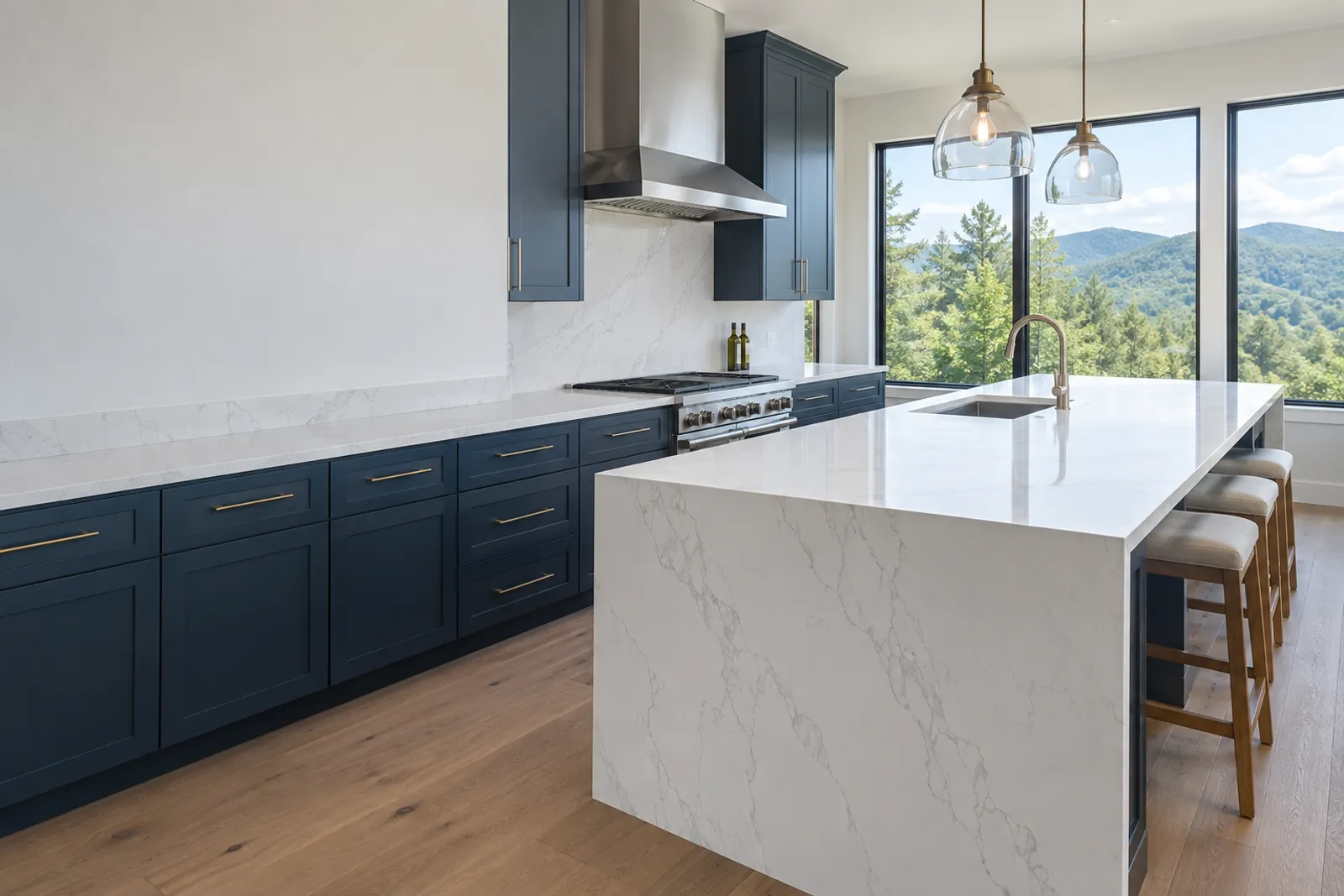
This is the one place on a Buncombe County job where we steer people away from the material they may already have inside. A quartz top that looks perfect in the kitchen can change color over seasons of sun on a south-facing deck, and a covered porch still gets low-angle sun in the mornings and evenings.
Outdoor-rated quartz is a different product
At least one quartz maker now sells a separate outdoor line it describes as UV resistant and tested for weather. That is a distinct product from its indoor slabs, with its own color range. If you want the quartz look outside, that line or a natural stone is the choice, never an indoor slab.