Fabricate only
You template, you install. We cut, edge and finish to your drawing and deliver the pieces ready to set, or you collect them from the shop.

Buncombe Custom Countertops is the leading Buncombe County trade partner for wholesale countertop fabrication in Asheville, NC, specializing in quartz, granite and quartzite tops cut to a cabinet shop's own drawings. We offer fabricate-only countertops and a fabricate-and-install option, chosen job by job.
Send your drawings for a bid
Or call (828) 470-1105. Calls only, we do not receive text messages.
Our team provides edge profiling and sink and cooktop cutouts, delivering finished tops that go out under your name rather than ours, for both residential and commercial projects. Licensed, bonded and insured, we return a shop drawing with every seam and cutout marked for your sign-off, and each piece is cut in our own shop, not on your customer's floor.
From an under-mount sink opening with a polished edge to a crated delivery at your loading dock, our team handles every detail. Serving Asheville, Woodfin, Black Mountain and Fairview, we deliver to the job site or to your shop, whichever the order names.
Why Buncombe Custom Countertops
The crew that measures your kitchen is the crew that sets the tops.
Wholesale countertop fabrication in Buncombe County is for the business that already owns the customer: the cabinet shop selling a kitchen, the remodeler running the job, the designer specifying the room. You quote and sell the top; we turn your drawing or template into finished stone and hand it back to you. A general contractor hires specialized subcontractors for parts of the work and stays responsible for their quality. A trade account works the same way. Your customer's contract is with you, and the top is one more piece of your job that has to arrive right and on time.
You template, you install. We cut, edge and finish to your drawing and deliver the pieces ready to set, or you collect them from the shop.
Your crew sets the cabinets and we send a templater, then you take it from there with your own installers.
We handle the whole top, from template to set, as your subcontractor, and the job stays yours on paper and on site. The account chooses per job, not once for all time. A shop that installs its own laminate tops might send every stone kitchen to us for the full service and still order fabricate-only for a vanity it can carry in one trip.
We accept your own templates and your own shop drawings, and we cut to them. A shop drawing is produced by the fabricator, contractor or supplier and carries more detail than the construction documents, which is exactly why yours is the one to work from when your team did the measure. Stone fabrication now runs digitally, and a DXF file can be brought straight into slab layout, so a drawing exported from your cabinet design software saves a redraw. Physical templates in strip or sheet are fine too.
Every run with finished lengths and depths, including the front overhang past the cabinet face. Wall conditions: which ends butt a wall, which are finished, and where a backsplash starts and stops. Sink and cooktop models with the maker's spec sheet or cutout template attached. Edge profile, thickness and any mitered or built-up edge. Preferred seam locations, or a note that seam placement is ours to propose. Base cabinets are built to a standard 24 inches deep, and a kitchen countertop typically finishes 25 to 26 inches front to back. A drawing that shows 24 on a counter depth is usually a cabinet dimension copied across, so we flag it before cutting rather than after.
A common engineered quartz slab is 3040 by 1440 millimeters, so an L-shaped kitchen or a long island often needs a seam. Where the seam goes is marked on the drawing we return, and nothing is cut until you approve it.
Turnaround is set per order when the drawing is approved and the material is confirmed, and it is written on the order. Stocked colors move fastest; a special-order slab your customer chose sets its own pace.
Your customer never sees our brand unless you want them to. A white-label product is one a producer makes and another company rebrands so it appears to be its own, and a trade account can run exactly that way.
The reason it matters is simple: the kitchen is your sale, and a fabricator who markets to your customer at the install is competing with you on your own job.
Accounts order the same materials their customers ask them for, and each one behaves differently in the shop and in the kitchen.
Engineered stone is 90 to 93 percent silica by weight bound in 7 to 10 percent polyester resin, pressed under vacuum. It is less heat resistant than natural stone and its resins are not completely UV stable, so it is the wrong spec for an outdoor kitchen, and we will tell your team when a drawing puts it outside.
A coarse-grained igneous rock with a density of about 2.65 to 2.75 grams per cubic centimeter, so a long piece is heavy and needs a planned carry.
Harder and more stain resistant than granite, but some softer marble and dolomite are sold under the name, so a slab should be tested before your customer commits.
Marble etches under acids like vinegar and lemon; soapstone rates 1 on the Mohs scale and develops a patina. Both suit a designer's specific brief more than a spec-sheet kitchen.
Before you send work to any fabricator, ask to see its written silica exposure control plan, because the stone is cut under your job name. OSHA's 2016 rule cut the permissible exposure limit for respirable crystalline silica from 250 to 50 micrograms per cubic meter over an eight-hour shift.
The construction silica standard, 29 CFR 1926.1153, requires a written exposure control plan and a designated competent person, and it notes that applying water to a blade when cutting stone substantially reduces dust. In September 2023 OSHA launched a focused inspection initiative in the engineered stone fabrication and installation industries, noting that engineered stone contains at least 93 percent silica. Engineered-stone silicosis cases show a shorter latency and a faster decline than natural stone cases, and Australia banned engineered stone from 1 July 2024.
None of that is a sales point. It is a question every cabinet shop and remodeler is entitled to ask a fabrication partner, and one you should get a straight answer to.
A wholesale fabrication account in the countertop trade is typically estimated at roughly $20,000 to $200,000 a year in work, per account, and the square footage you send and the material mix set where yours lands. That is a trade ticket range, not a promise of volume or a price list.
For reference, installed prices on the retail side are typically estimated at roughly $40 to $100 per square foot for granite and $60 to $150 per square foot for quartz. Fabricate-only work comes in below installed pricing because the install labor is not in it, and the written quote on each order shows the line items.
These figures are estimates and subject to change with slab costs and the job itself, and your written quote sets the final price on each order. To start, send a current job's drawings and finish schedule for a bid.
Opening a trade account takes one real job and a short conversation about how you like to work.
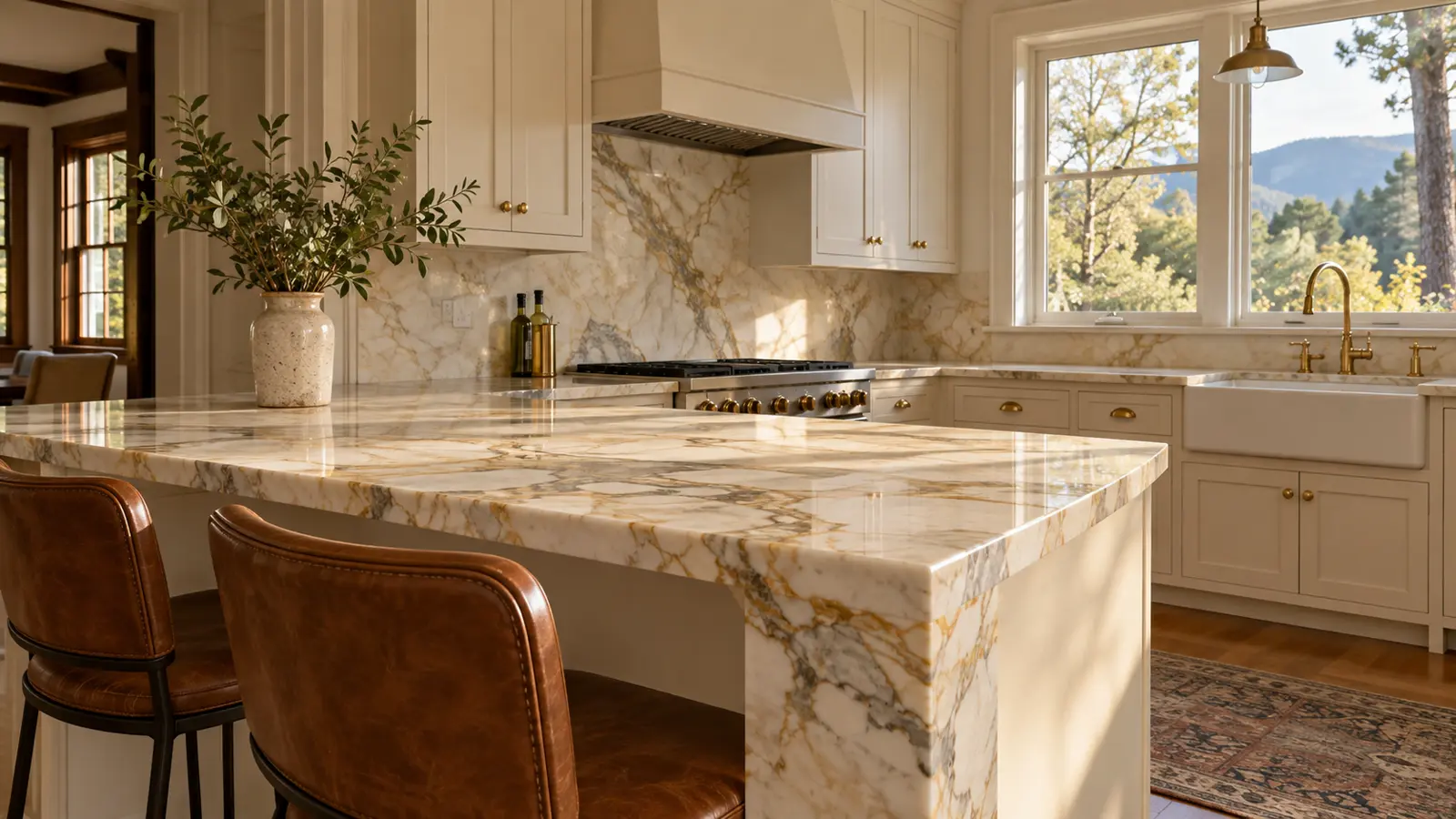
Drag the handle. The cabinets stayed; only the top changed.
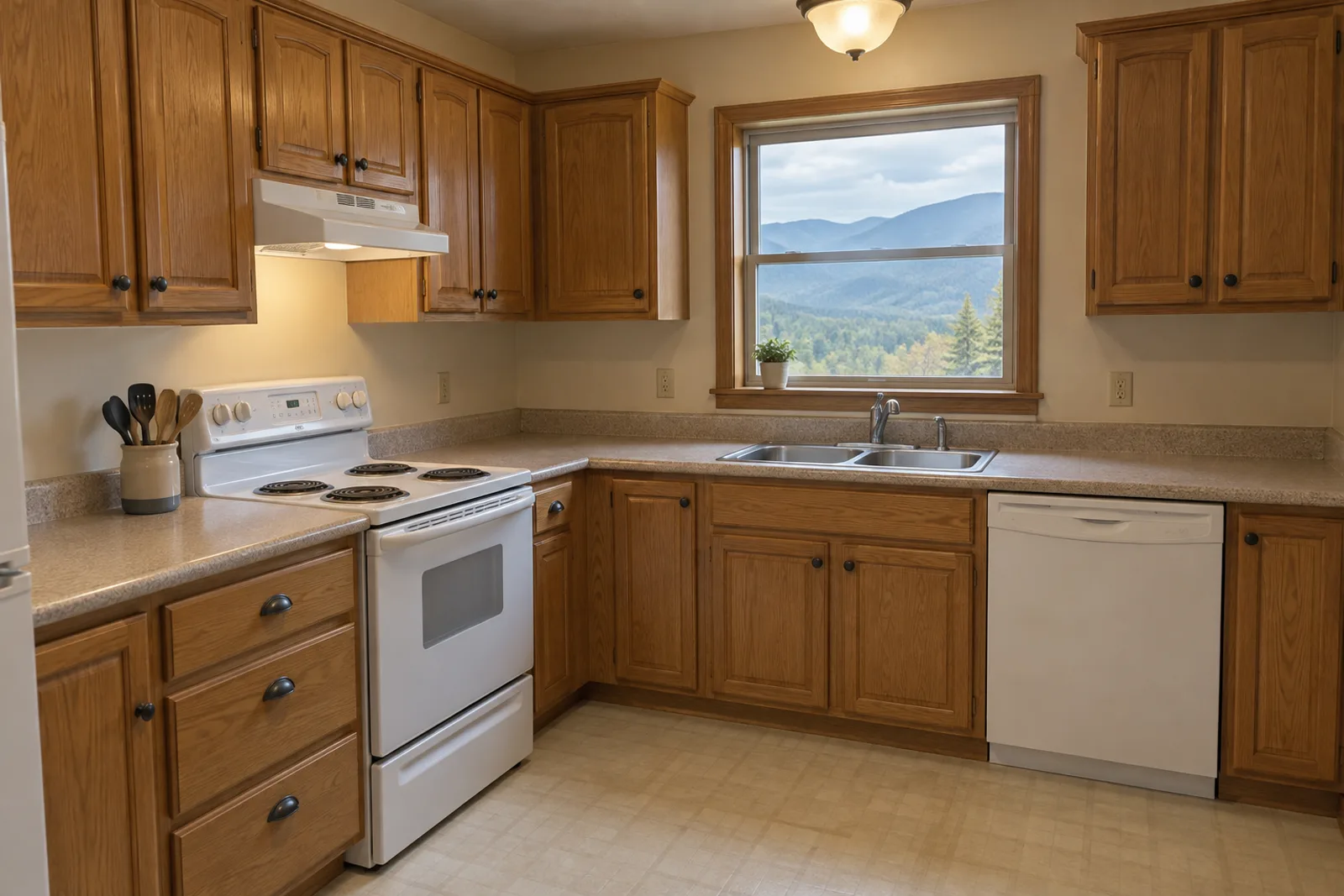
 BeforeAfter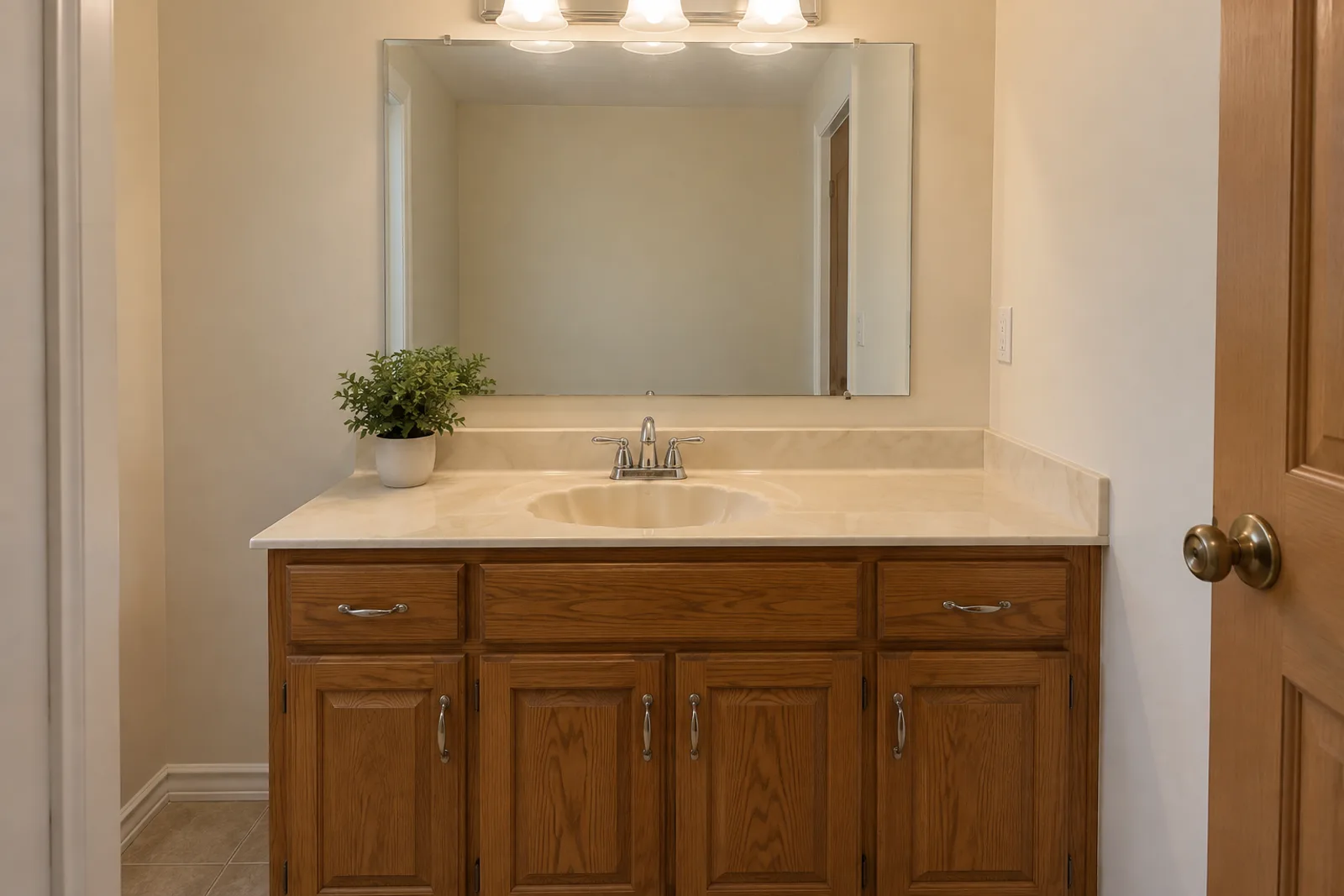
 BeforeAfter
The process
We come to the house, look at the cabinets, the walls and the way in from the driveway, and talk through materials and edges.
You get the slab, the edge, the cutouts, the seam plan and the dates in writing. Nothing is cut until you sign off.
Once the cabinets are set and level, we template them, then cut and finish the tops in the shop to that template.
We set and join the tops, then walk the finished kitchen with you before we call it done.
Also from our shop
Questions
Yes. We cut to your own templates or shop drawings, including DXF exports from cabinet design software. Anything that looks off, such as a cabinet depth copied onto a counter depth, is flagged on the drawing we return before a cut is made.
Both. An account chooses fabricate-only, template-and-fabricate, or fabricate-and-install on each job, so a shop with its own installers can still send us a heavy island to set.
Not unless you want them to. Paperwork, labels and delivery go out under your job name, and if we install, the crew arrives as your installer.
Yes. Pricing for a repeat account reflects the square footage and material mix it sends, and each order still gets its own written quote with the final number.
We cut the openings and set the sink in the stone. The faucet and drain are connected by a licensed plumber, yours or your customer's, because plumbing is licensed separately in North Carolina.
The approved shop drawing is the record of what was ordered. If a top does not fit because the measure was off, we work out the recut with you, and the drawing shows where the difference came from.
Yes. A single vanity, a bar top or a fireplace hearth is ordered the same way as a kitchen: a drawing, the material, and a written quote before cutting.
Ask when you open the account. Where pickup suits an order, your crew needs a truck and an A-frame for it; otherwise the tops are delivered, and either way the pieces are labelled for your job.
Free measures across Buncombe County. Builders, cabinet shops and property owners can send drawings for a bid.
Licensed, bonded & insured. Calls only, we do not receive text messages.