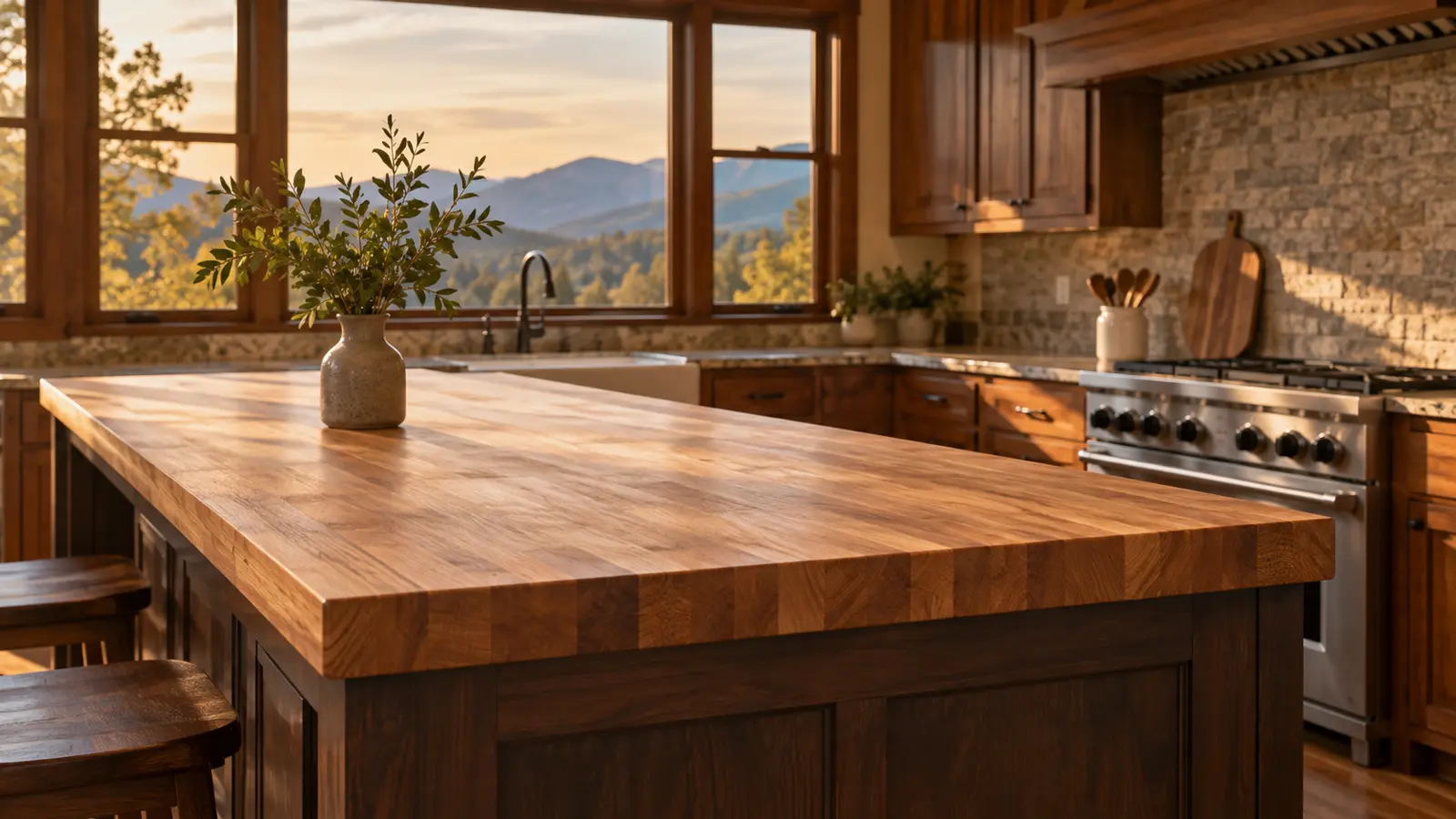
Movement and pattern direction
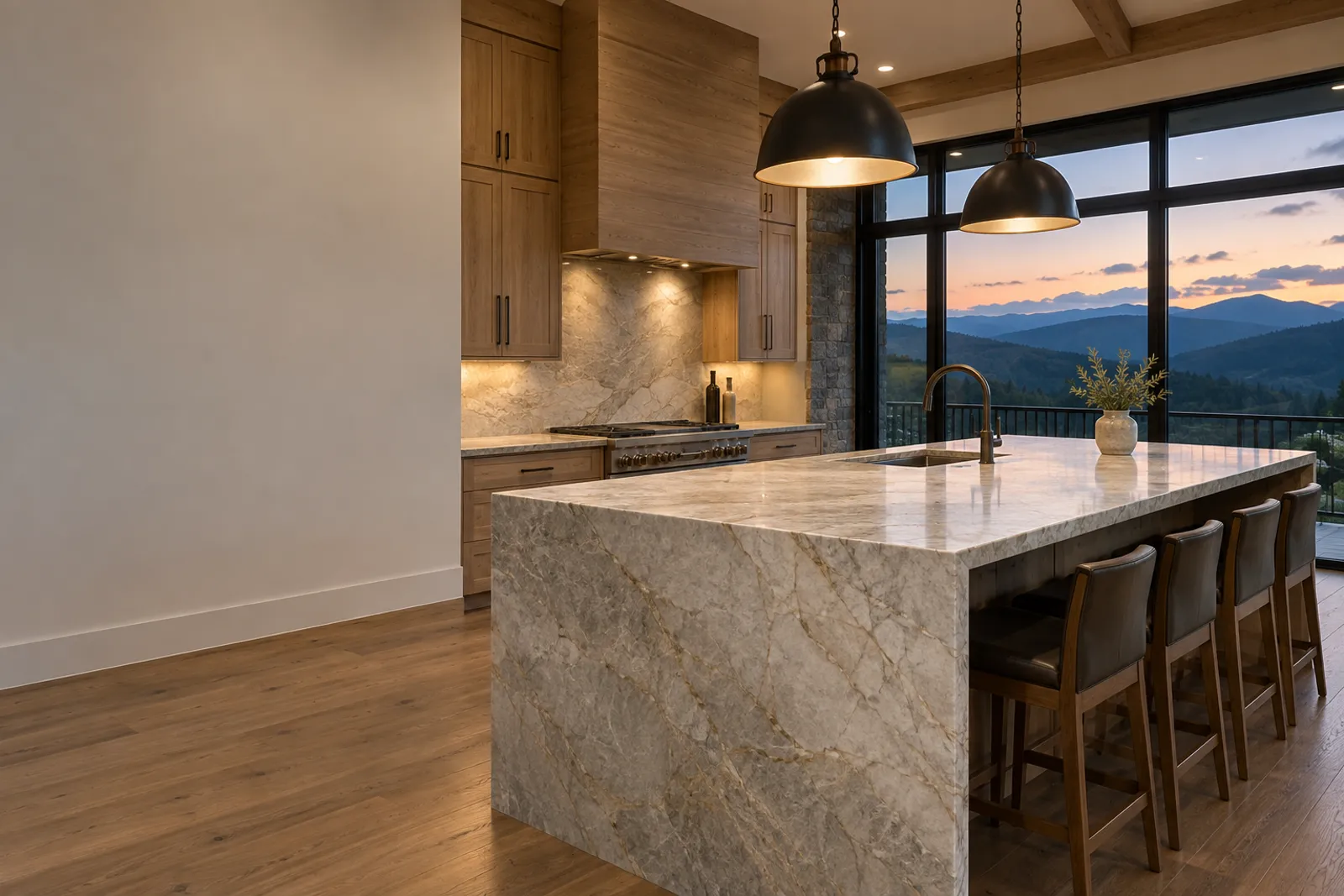
A slab with strong movement has a direction. Note which way it runs, because the seam layout will need to carry it around an L or across an island.

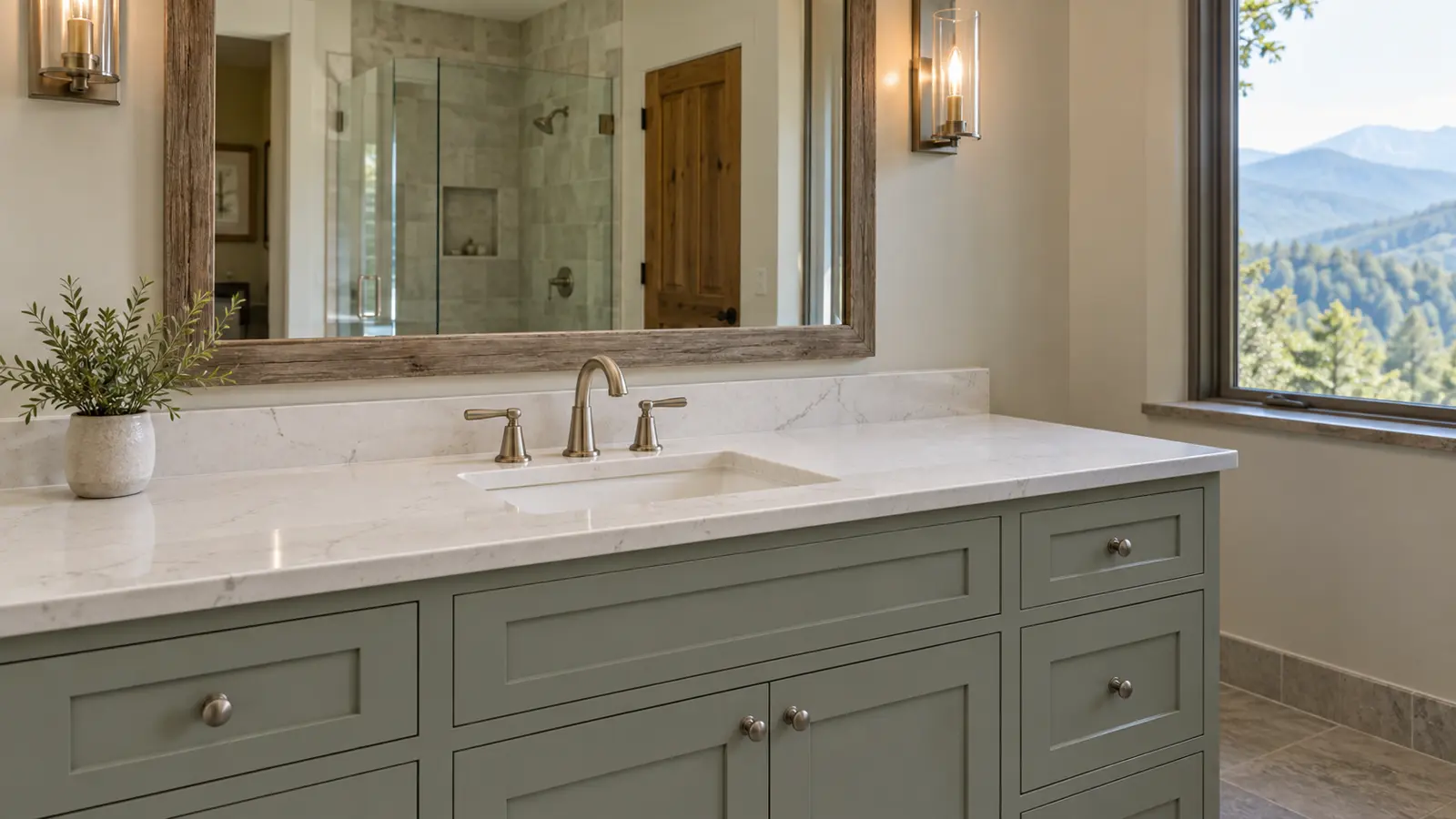
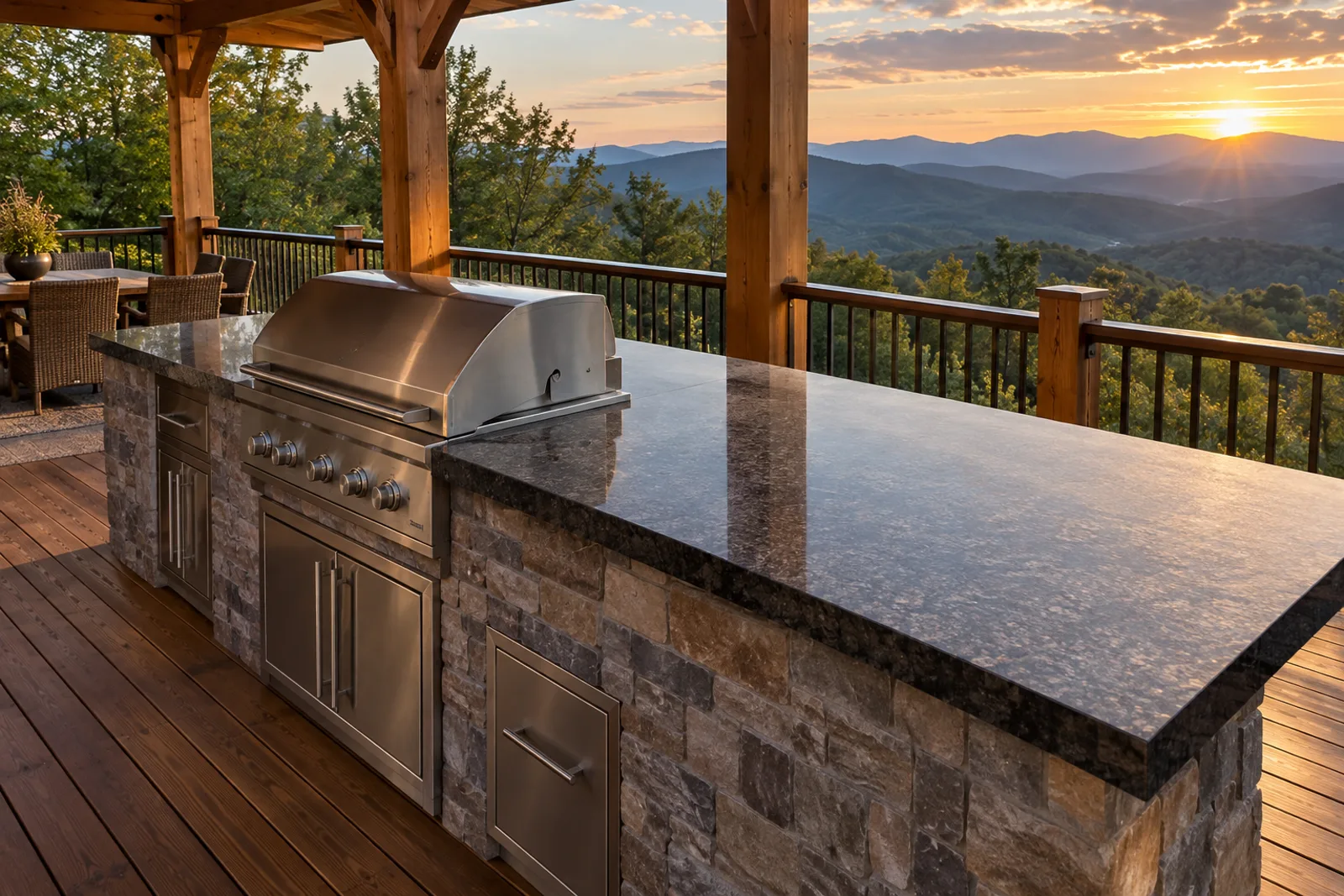
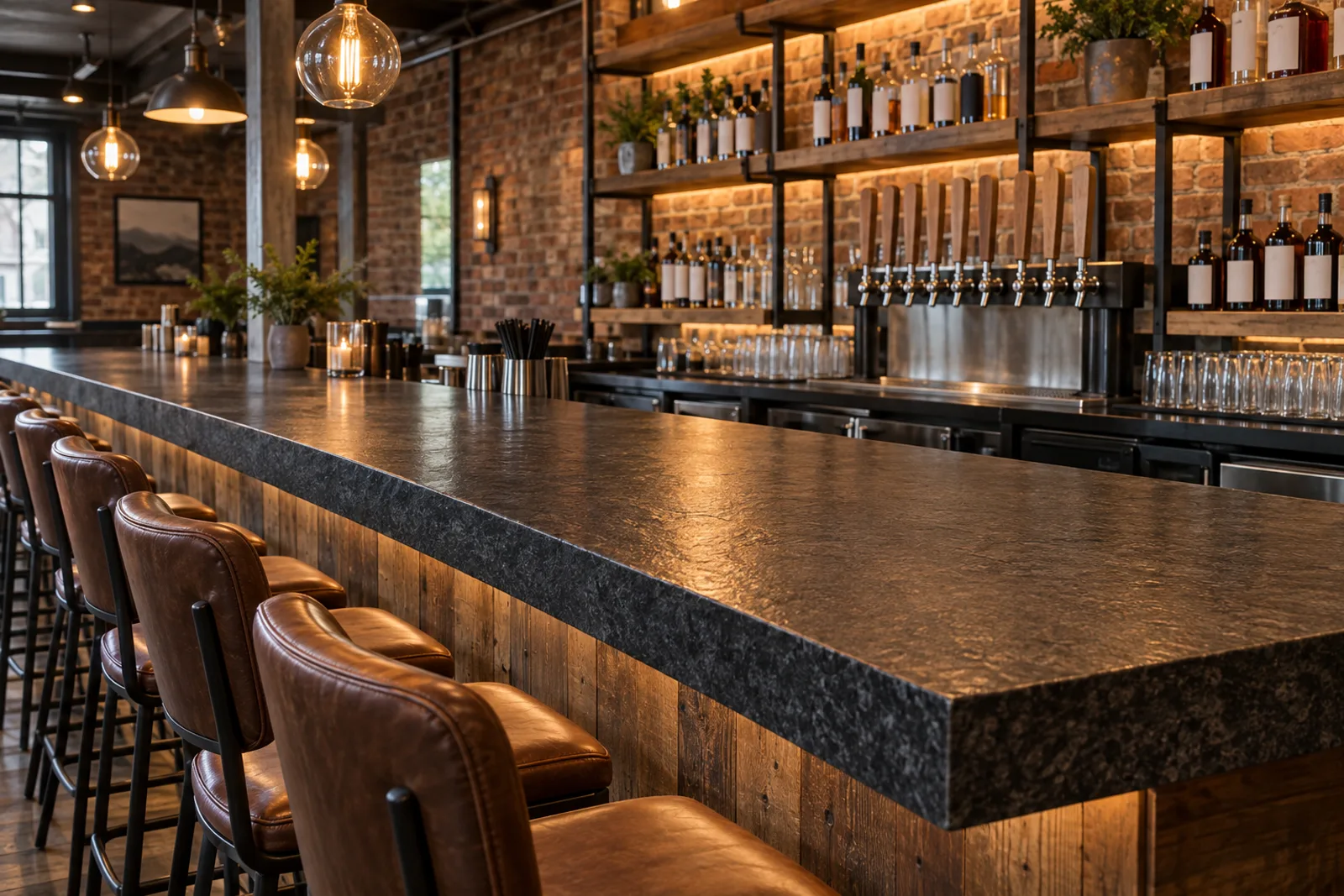
Buncombe Custom Countertops is Buncombe County's leading fabricator of granite countertops in Asheville, NC, specializing in natural granite kitchen tops, full-slab granite islands and hand-finished granite edges. We offer granite vanity tops and granite bar tops cut from the same stone as the kitchen.
Get a free countertop estimate
Or call (828) 470-1105. Calls only, we do not receive text messages.
Our team provides impregnating sealer application on every granite job, delivering stain-resistant countertops for working kitchens and long-lived stone surfaces for both residential and commercial projects. We lay out the seams on the exact slab you chose, and you approve that layout before a single cut is made in our shop.
From matching the grain across a seam beside the sink to tear-out of the old top and the first coat of sealer, our team handles every detail. Serving Asheville, Candler and Arden, we line up your slab viewing and the measure so the stone you choose and the templating stay in step.
Why Buncombe Custom Countertops
The crew that measures your kitchen is the crew that sets the tops.
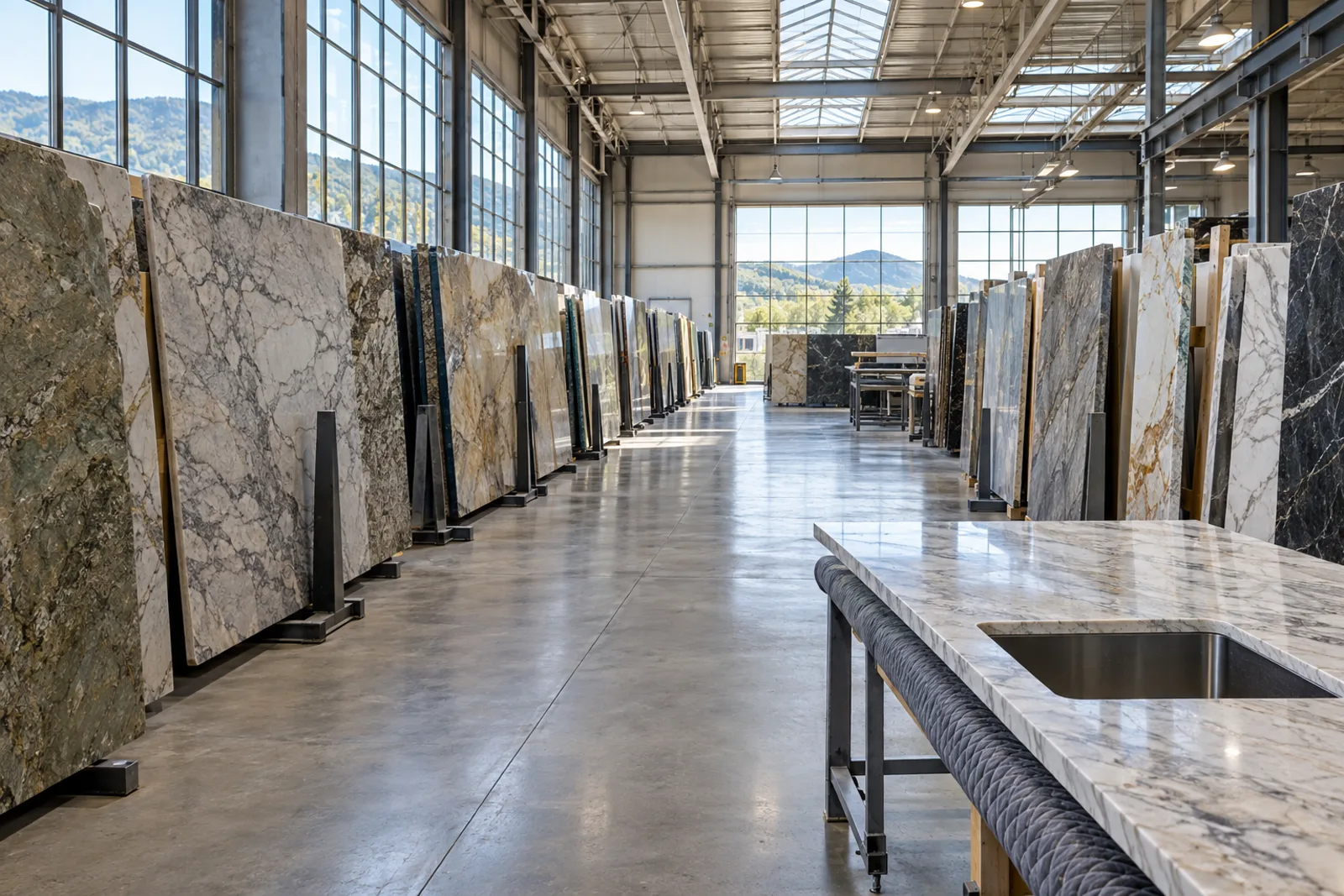
With granite you pick the actual slab your countertops will be cut from, because a small sample cannot show what a full sheet of natural stone looks like. Granite is a coarse-grained igneous rock made mostly of quartz, alkali feldspar, mica and plagioclase, and the mix of those minerals decides whether a slab reads white, pink or gray. Two slabs sold under one color name can differ a great deal, and granites with large flowing patterns vary the most. The Natural Stone Institute's consumer guidance says it plainly: view the exact slab or slabs that will be fabricated for your kitchen, so you know they match what you expected from the sample. When you visit the stone supplier's yard, look for these on each slab:
A slab with strong movement has a direction. Note which way it runs, because the seam layout will need to carry it around an L or across an island.
One end of a slab can be darker than the other. If your kitchen needs two slabs, look at them side by side, not one at a time.
Granite carries small fissures and pits from how it formed. Most are part of the stone, but you should see them before you buy rather than find them on the island.
Ask whether the slab covers your square footage with the seams in sensible places. We check that against your template before anything is cut.
Once you have picked the slab, the seam layout is drawn on that slab and shown to you before cutting, so you decide where the joints fall and how the pattern crosses them. Fabricators have long laid highly patterned stone out in its final position for the customer to inspect, and it is the step that turns a busy granite from a gamble into a plan.
Where a seam can go is also a question of weight and access. Granite averages 2.65 to 2.75 grams per cubic centimeter, heavier than the same volume of most building materials, so a long run of stone is a heavy piece to carry. In a mountain home, the drive, the porch steps and the tightest turn in the hallway decide how long a single piece can be. We walk that route at the measure and plan seams the carry can actually handle, placed where the pattern hides them best.
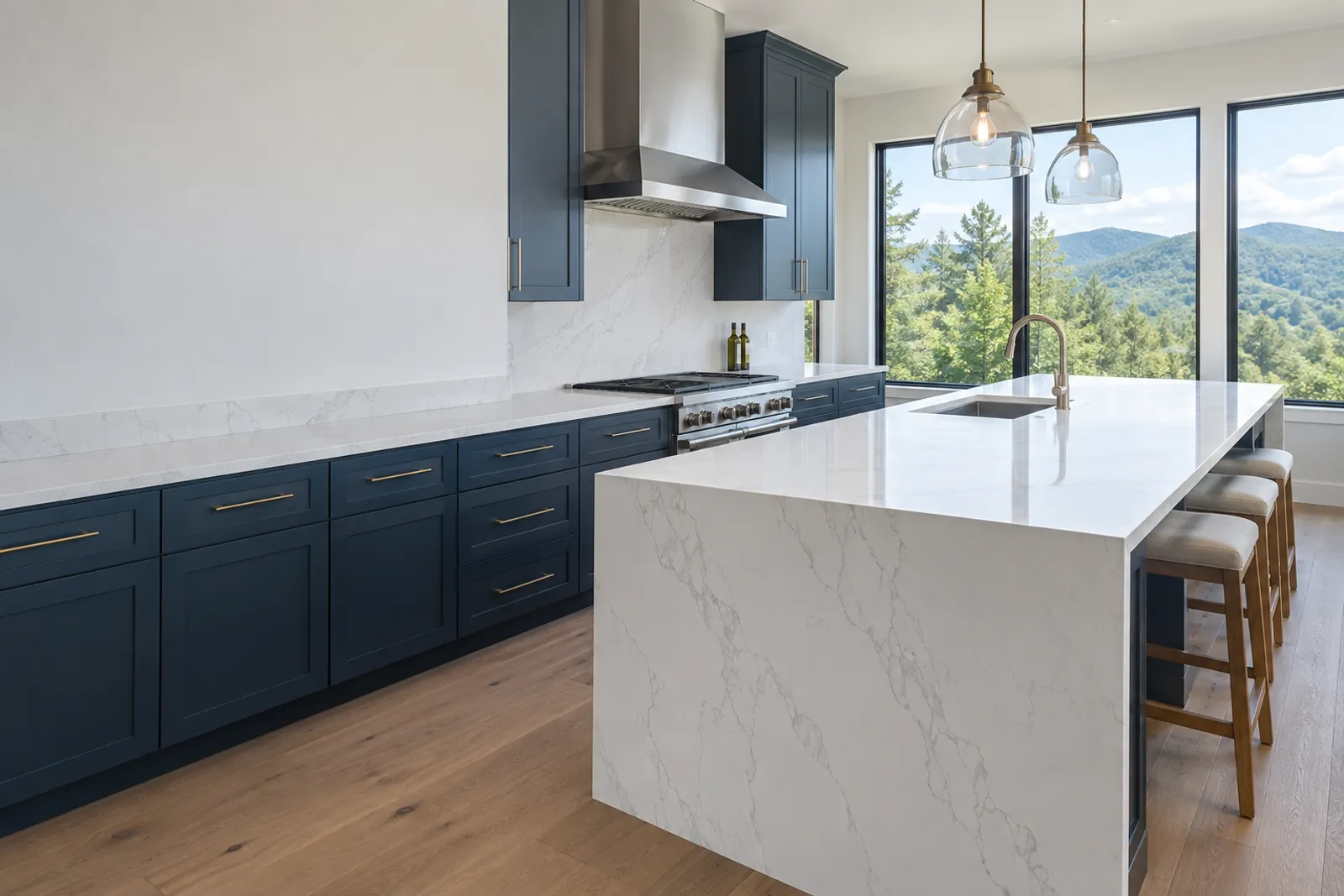
Most granite needs sealing now and then, because natural stone can absorb liquids that stain it; a good impregnating sealer keeps that from happening, and on many tops it lasts for years. The need for sealing is the common drawback of natural stone, and newer oleophobic impregnators have cut the interval to about once every five to ten years on most materials. The Natural Stone Institute notes that many sealers last ten years or longer before they need reapplying, and that a homeowner can usually reapply one by wiping it on and buffing off the excess.
You do not have to guess when it is time. Pour a small puddle of water, about three inches across, on a few spots of the counter and wait. If the stone darkens within half an hour, it is absorbing water and is due for sealing. If it stays the same color, the seal is doing its job.
Granite is naturally resistant to acids, so a splash of lemon juice or vinegar does not etch it the way it would etch marble. Warm water and a mild soap are all the daily routine needs. Lighter granites tend to show absorption sooner than dark ones, so test the pale areas first.
Granite takes heat better than engineered quartz: a hot pan straight from the oven can go onto a well-sealed granite top without harming it, which is why cooks who move a lot of cast iron often choose it. Quartz, by contrast, relies on a resin that manufacturers say to protect from hot cookware.
A few sensible limits still apply:
Granite is also tough. Its compressive strength usually sits above 200 megapascals, and it is typically massive, meaning it lacks the internal layering that lets some stones split. That strength is why a granite island handles years of groceries, homework and heavy mixing bowls with little more than a wipe.
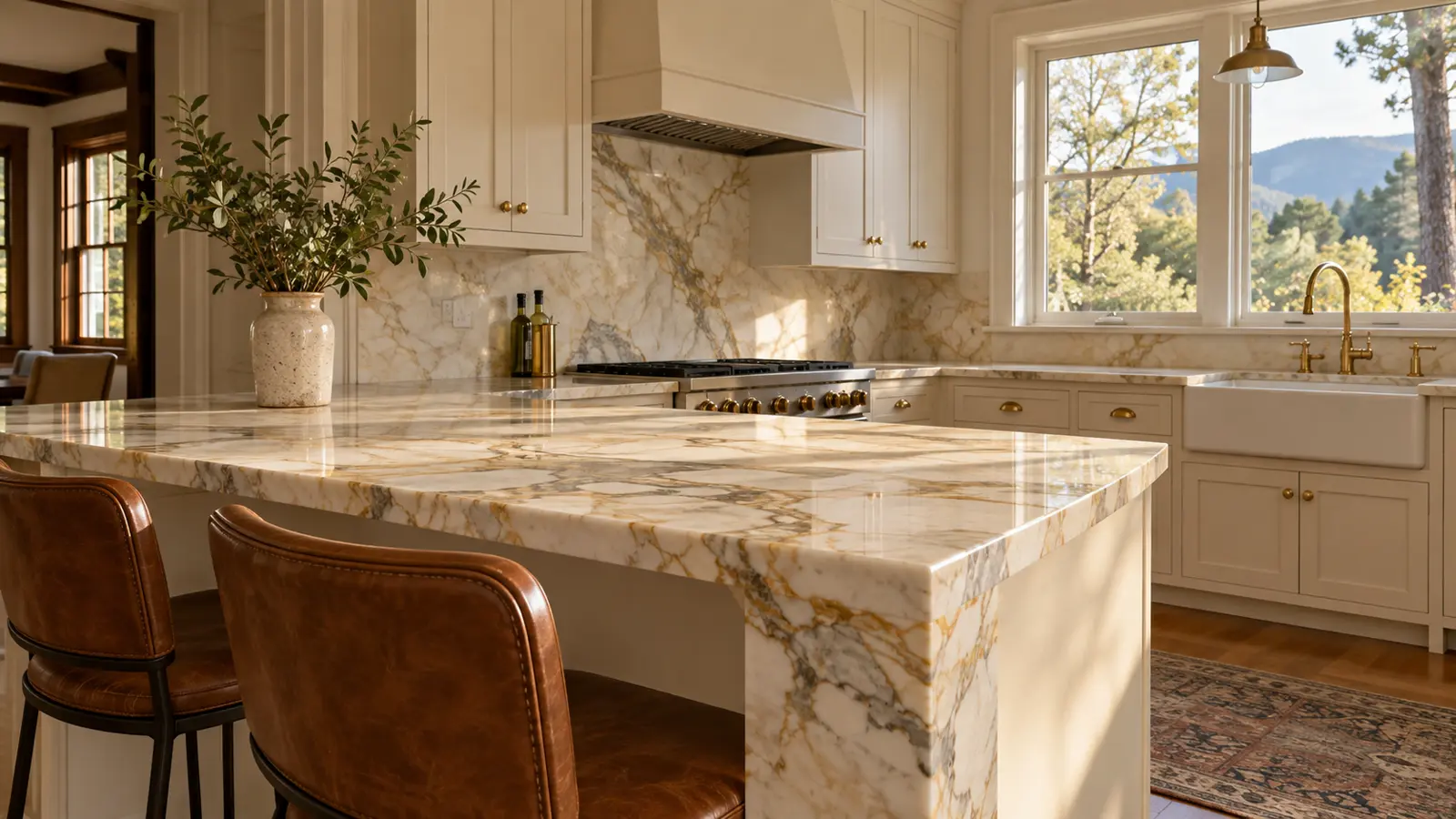
Granite countertops in Asheville are typically estimated at roughly $40 to $100 per square foot installed for the common color levels, with exotic granites generally estimated at roughly $100 to $200 per square foot. The level of the slab you pick is the biggest single driver, and it is one more reason to choose the stone in person.
What moves a granite price:
A licensed plumber disconnects and reconnects the faucet and drain; that line is priced separately so it stays visible. Sealing later on, if you prefer to have it done rather than do it yourself, is typically estimated at roughly $150 to $400 a visit. Every figure here is an estimate, subject to change with slab prices and site conditions, and your written quote after the free in-home measure sets the final price.
Granite is the volume workhorse of the trade, and it suits buyers who price many kitchens at once. A builder can offer a level-one granite as standard and let buyers step up to a premium slab. A rental or vacation-home owner gets a surface that shrugs off heat and, once sealed, needs little attention between guests. Remodelers and cabinet shops can send their clients to pick a slab and have us template on the installed cabinets. For repeat work, call and ask about a trade account.
Drag the handle. The cabinets stayed; only the top changed.
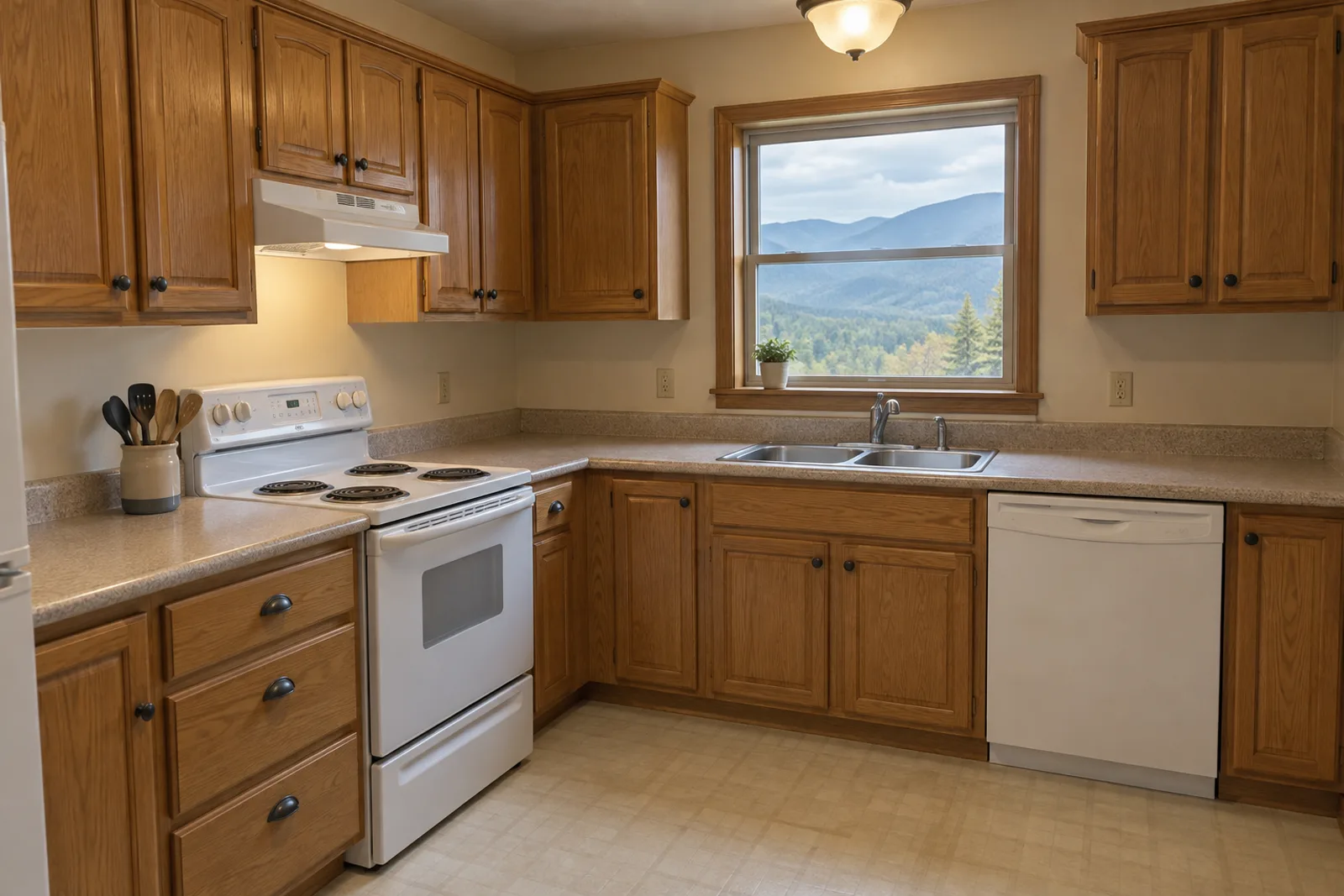
 BeforeAfter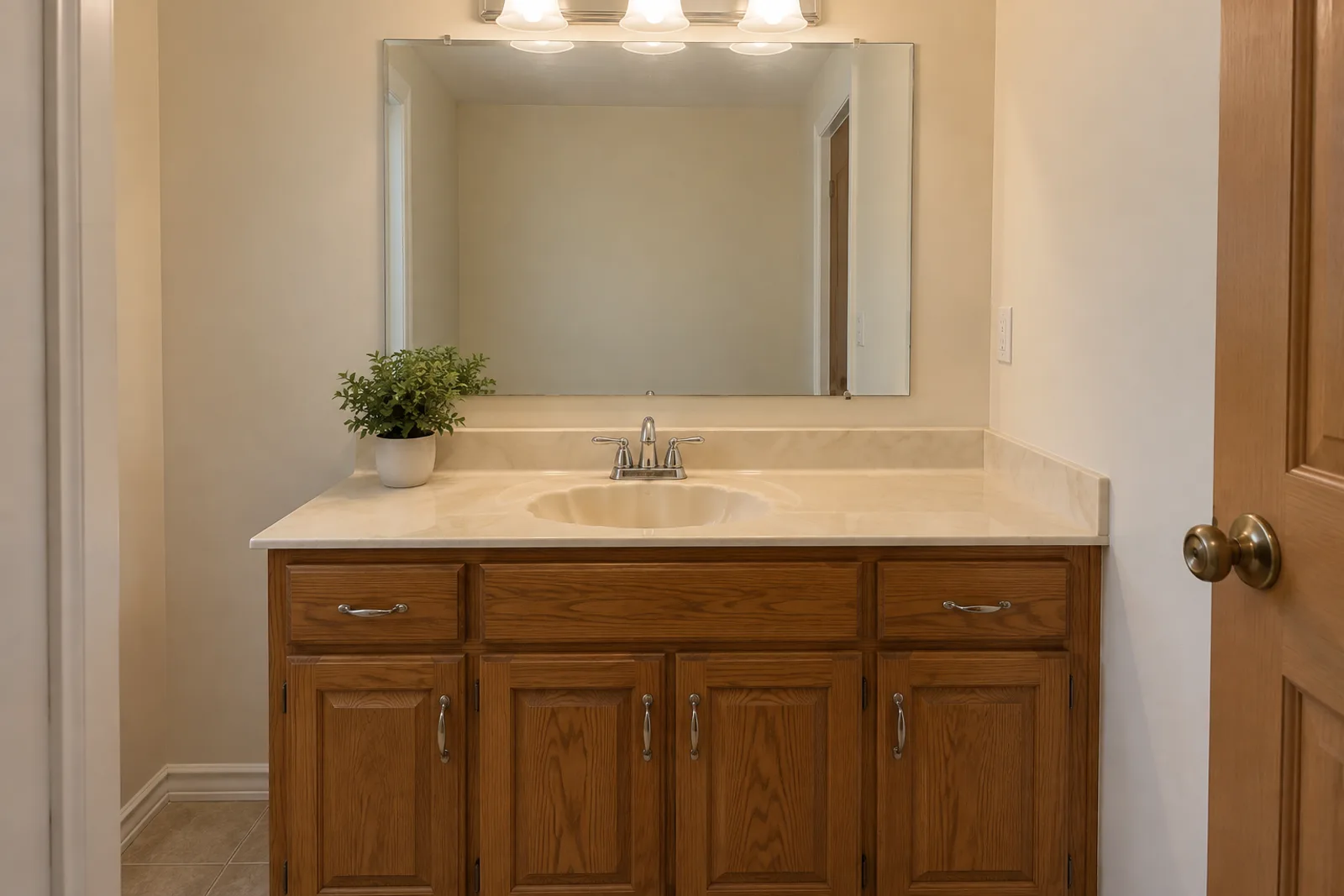
 BeforeAfter
The process
We come to the house, look at the cabinets, the walls and the way in from the driveway, and talk through materials and edges.
You get the slab, the edge, the cutouts, the seam plan and the dates in writing. Nothing is cut until you sign off.
Once the cabinets are set and level, we template them, then cut and finish the tops in the shop to that template.
We set and join the tops, then walk the finished kitchen with you before we call it done.
Questions
We strongly recommend it. Granite varies from slab to slab, so the stone supplier's yard is where you see the real color, pattern and any fissures. We can tell you which suppliers to visit, then check your chosen slab against the template before cutting.
It depends on the stone. With a modern impregnating sealer, many tops go five years or more between applications. Do the water test once or twice a year: if a small puddle darkens the stone within half an hour, reseal.
Yes, a pan from the oven can go directly on well-sealed granite. Use a trivet for appliances that run hot for hours, avoid sudden hot and cold swings in one spot, and remember the stone stays hot after the pan comes off.
Mostly the slab level you choose and how many slabs the layout needs, followed by edge profile, seams, cutouts, overhang support, tear-out and access to the house. The figures on this page are estimates; the written quote after the measure sets the price.
Often, yes. Granite is heavy, so we check the cabinets are sound, level and secured at the measure, and level them before templating if they have settled. If a cabinet cannot carry stone, you will hear it before you commit.
That depends on whether your slab is in stock, when your cabinets are ready and how complex the layout is. We set the templating and install dates at the measure and put them on the quote.
It can be. Uneven floors usually mean cabinets that are out of level, and that is corrected before templating so the granite sits flat and the seams close tight. We check the cabinet run and the walls at the measure.
We cut and polish the sink opening in the shop and fix an undermount sink to the stone during installation. The faucet and drain are disconnected and reconnected by a licensed plumber, listed on its own line in the quote.
Free measures across Buncombe County. Builders, cabinet shops and property owners can send drawings for a bid.
Licensed, bonded & insured. Calls only, we do not receive text messages.